What the slab contains
- a unique certificate number
- security features and a hologram
- a tamper-evident construction
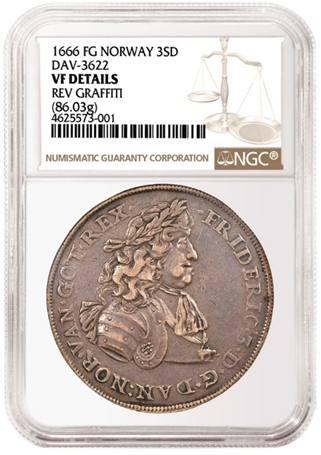
- a label with the identification and grade

Grading guide
Certifying coins and banknotes is an important step for collectors and investors who want to confirm the authenticity, condition and market standing of their material. NGC is among the most respected authorities worldwide, and its grading now serves as a common language across many markets.
This page sets out the whole process clearly: from the first submission through the Sheldon scale to what the abbreviations on the label actually mean and when grading makes economic sense.
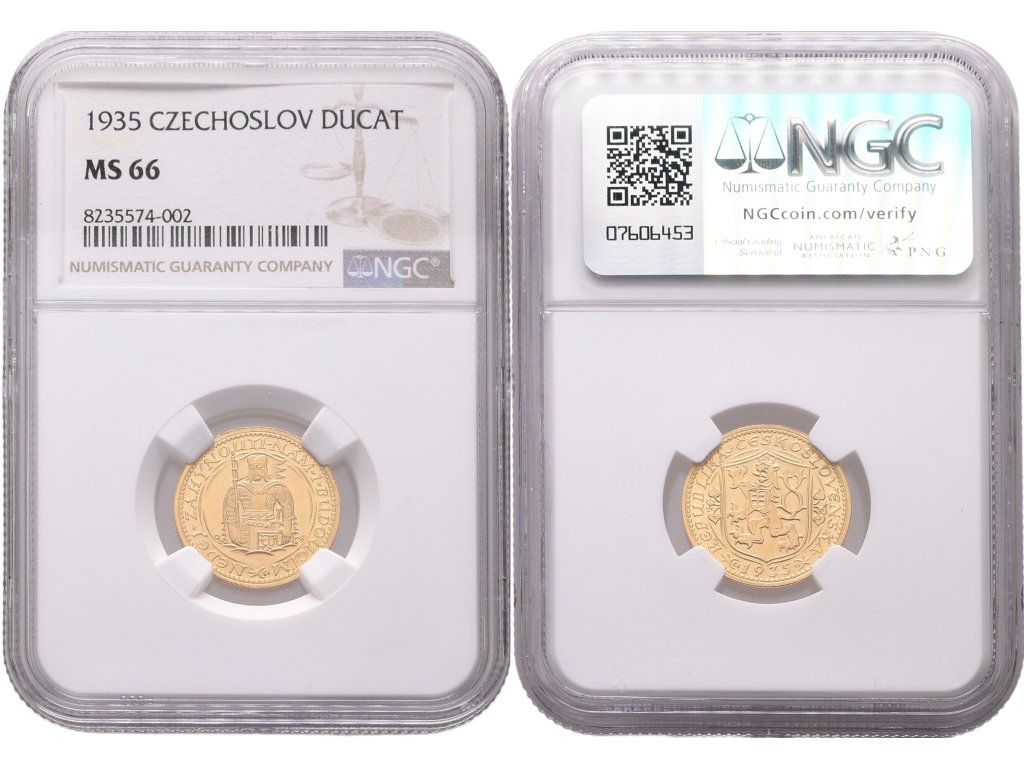
Grading is the expert verification of a coin's or banknote's authenticity, quality and condition by an independent authority. At NGC the whole process rests on a standardised grade that gives collectors and buyers clear information about the item's quality.
The result is more than a number. It is trust, an easier sale, better price orientation and protection of the material in a slab with a unique certificate number.
We go through the material with you, photograph it, draw up a contract and prepare it for certification. You don't have to deal with logistics or communicate with NGC directly.
The coin or banknote enters the certification process through NGC's official facilities. With us you also keep control over the intake paperwork and the price.
Expert numismatists verify the item's authenticity, checking for surface interventions, suspicious alterations and other risk markers.
The item receives a grade on the standardised Sheldon scale (1–70), with any supplementary designations such as Proof, Cameo or Details.
The result is sealed in a protective plastic holder with a unique certificate number, security features and online verification.
NGC certifies a wide range of coins, from ancient and historical pieces to modern strikes. In practice this means grading suits not only American material but also notable Czech and European pieces.
NGC grading scale
The international standard for grading coins. Each grade lifts the value in steps — above all in the Mint State band (MS60–MS70), where one or two points mean a difference of tens of per cent.
| Grade | Number | Description | Impact on price |
|---|---|---|---|
| PO · Poor | 1 | Barely identifiable. Heavily damaged, scarcely legible. | Only for extremely rare types. |
| AG · About Good | 3 | Heavily worn but identifiable. Detail lost. | Collector value only for rarities. |
| G · Good | 4–6 | Outlines intact, inner detail mostly worn away. | A fraction of the price of higher grades. |
| VG · Very Good | 8–10 | Main detail legible, marked wear to the fields. | Still well below collector prices. |
| F · Fine | 12–15 | Most detail visible, wear apparent on the raised areas. | The price floor for ordinary collector strikes. |
| VF · Very Fine | 20–35 | Detail sharp, wear confined to the highest points. | A good compromise between price and grade. |
| EF · Extremely Fine | 40–45 | Light wear to the highest points, the rest as struck. | Attractive to investors. |
| AU · About Uncirculated | 50–58 | Traces of circulation visible only under a loupe. Mint lustre largely intact. | The threshold of the price jump to Mint State. |
| MS · Mint State | 60–70 | Uncirculated. The fine distinction between MS60 and MS70 can drive price differences by an order of magnitude. | MS65 vs MS66 = a 30–50% price difference for rare strikes. |
After certification the coin is placed in a protective plastic holder — the slab. It protects the item against damage and rough handling, and at the same time serves as an important layer of evidence for any future sale.
The slab is not just protection. It is also a market standard. The buyer sees at once what they are holding and can verify the result in the NGC database.
Verify the certificate number in the NGC database and check that the label matches the recorded result.
Open certificate verificationRarity statistics for graded coins and the option to see how a particular piece ranks within its type.
Open CensusNo signs of circulation, MS60–MS70 range.
Collector finish with polished fields and a frosted relief.
A special strike on the border between proof and regular production.
A coin with characteristics similar to a proof strike.
Pronounced contrast between fields and relief.
Colour designations for copper coins.
Top Pop The designation for the best-preserved example of its kind in the NGC database.
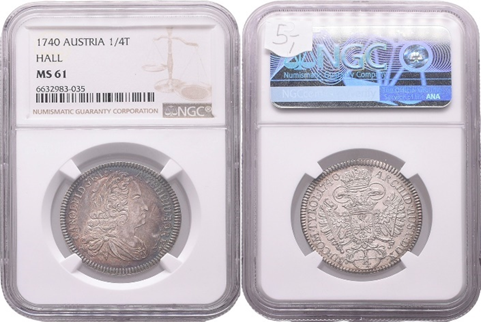
A coin with no signs of wear. Detail, lustre, contact marks and overall eye appeal are decisive.
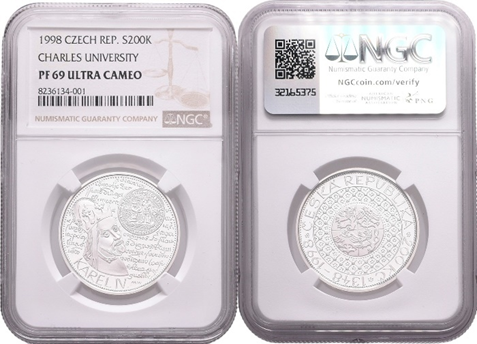
Struck with polished dies, giving deep lustre in the fields and a contrasting relief. Made primarily for collectors.

A special category between proof and regular strikes. For some historical issues it is a much sought-after designation.
Country, year, denomination and, where applicable, mint, type and catalogue reference.
For example MS 65, PF 67 UC or AU Details. This is where the main commercial significance of the whole grade lies.
A unique certificate code by which the piece can be looked up in the NGC database.
Security features on the slab make it quick to tell whether the holder has been tampered with.
Coins with damage, cleaning or another problem may receive an NGC Details grade. This means they are authentic but do not receive a full numeric grade on the Sheldon scale.
For such pieces it is important to understand that even an authentic coin can be considerably weaker commercially than a regularly graded example.
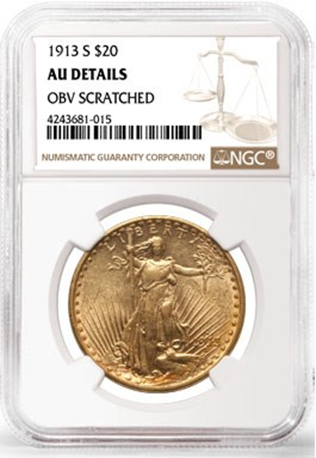
A 1–70 scale developed by William H. Sheldon. Today it is the worldwide standard for grading coins: the higher the number, the better the condition.
On the NGC website, in the Verify Certification section, enter the certificate number from the slab. The system shows the recorded result and a basic description of the coin.
The coin is genuine, but because of a problem — for example cleaning, scratches or damage — it does not receive a standard numeric grade on the Sheldon scale.
No. It is most valuable for more expensive, rarer or commercially sensitive pieces. For ordinary circulation coins the cost of the service may exceed the benefit.
Top Pop denotes the piece with the highest grade recorded for its type in the NGC database. Such coins often command a substantial premium over other examples.
Want to take grading further? We follow this guide up in practice — with a price, an assessment of suitability and an agreement on the next steps.