Bank transfer
A bank transfer is a cashless transfer of money between bank accounts, in which the amount is debited from the payer's account and credited to the recipient's account. It is a basic instrument of modern payments, used for wages, invoices and ordinary payments between people.
Cashless transfers developed out of the need to limit the physical movement of cash and to reduce the risk associated with transporting coins or banknotes. Already in medieval commercial centres there were forms of accounting transfers between merchants and moneyers, which made it possible to "settle" obligations by an entry in a book. Later bills of exchange and other instruments became widespread, which secured payment at a distance, and banking practice was gradually professionalised.
In the modern period and especially in the 19th century, clearing mechanisms arose which enabled banks to settle payments with one another in bulk. Instead of each payment being settled separately in cash, the banks compared receivables and liabilities at the end of the clearing period and paid only the differences. This accelerated payment transactions and opened the way to the mass use of accounts. With the development of business and state administration, the importance of regular transfers grew: wages, taxes, payments to suppliers and later also household payments.
History
In the 20th century automation significantly transformed transfers. Standardised payment orders, variable payment identifiers and later electronic systems appeared, which shortened processing time. In international payments, standards became established that enable secure communication between banks and unambiguous identification of accounts. Gradually the transfer became an "invisible" part of everyday life: most people use it without having to understand the complexity of the clearing in the background.
Today there are domestic and foreign transfers, instant and standard ones, and the payment infrastructure is crucial for the functioning of the economy. Transfers have moreover enabled the emergence of a number of follow-on services (direct debits, standing orders, bulk payments) which automate recurring payments. Historically, the bank transfer therefore represents one of the most important steps from money as a physical object to money as an accounting entry.
How a transfer is entered and what makes it up
The basic details of a bank transfer are the amount, the currency, the recipient's account and the identification of the payer. In practice standardised formats are used for the account number (for foreign payments, for example, IBAN) and the bank identifier (for example BIC/SWIFT). For correct matching, a message to the recipient and payment symbols or references are often added, which serve as the internal identifier of the payment.
The speed of the transfer depends on the type of payment and the clearing system: standard transfers are processed in batches, while instant payments take place in near-real-time mode, provided both banks and the infrastructure support it. Transfer parameters are supplemented by limits (daily limits of the account or channel), fees and possibly exchange-rate conversions for foreign currencies. As regards "properties", it is important that the transfer is traceable by references and that its execution is bound to authorisation (for example, logging into banking and confirming the payment), which is the main security element of cashless transactions.
In our auction and shop
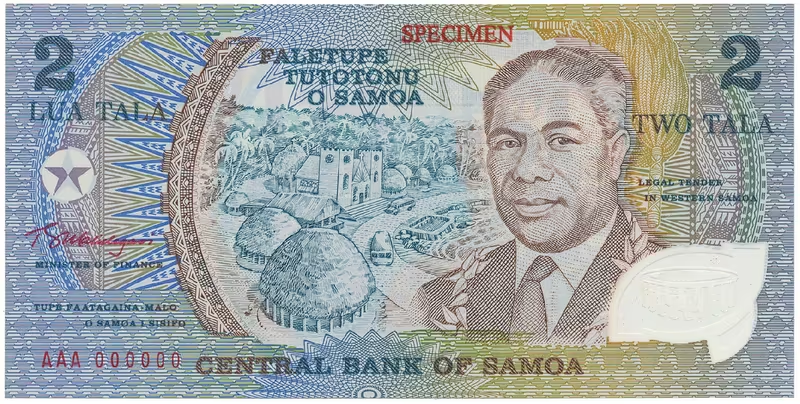
- Code: BSAMOA031AS
Samoa, 2 Tala (1990), bankovní vzor, AAA 000000, přetisk SPECIMEN, plastová, P.31as
Samoa 2 Tala (1990), bankovní vzor, AAA 000000, přetisk SPECIMEN, plastová, P.31as N/UNC
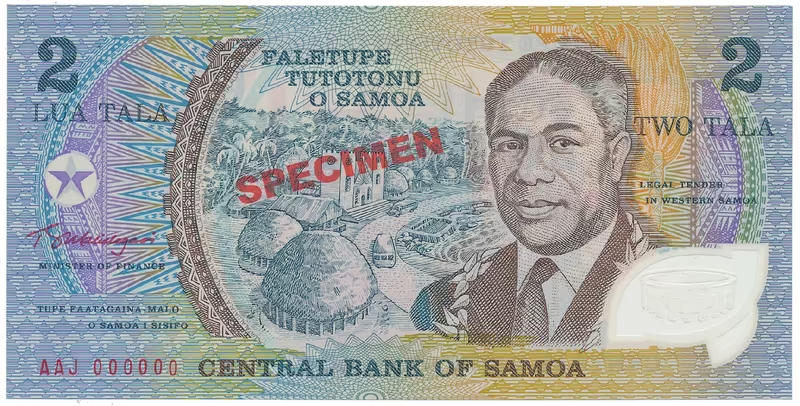
Skladem 1 ks - Code: BSAMOA031ES
Samoa, 2 Tala (1990), bankovní vzor, AAJ 000000, přetisk SPECIMEN, plastová, P.31es
Samoa 2 Tala (1990), bankovní vzor, AAJ 000000, přetisk SPECIMEN, plastová, P.31es N/UNC
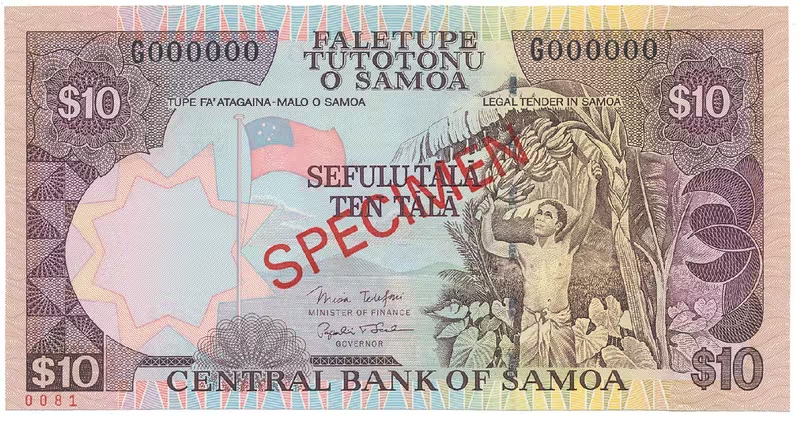
Skladem 1 ks - Code: BSAMOA034BS
Samoa, 10 Tala (2002), bankovní vzor, G 000000, přetisk SPECIMEN, P.34bs
Samoa 10 Tala (2002), bankovní vzor, G 000000, přetisk SPECIMEN, P.34bs N/UNC
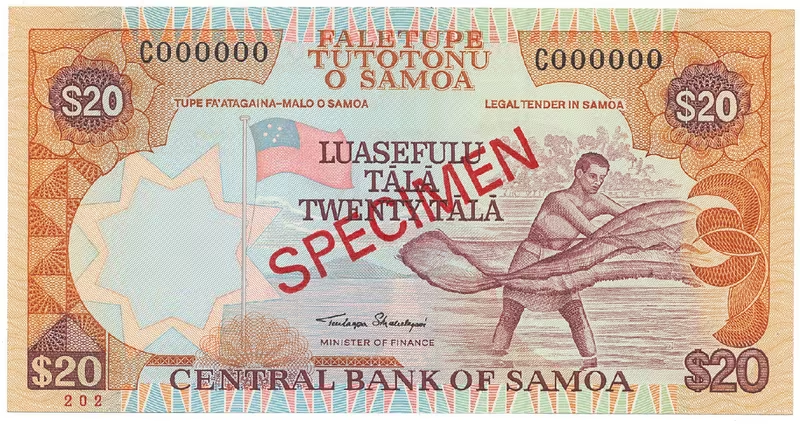
Skladem 1 ks - Code: BSAMOA035AS
Samoa, 20 Tala (2002), bankovní vzor, C 000000, přetisk SPECIMEN, P.35as
Samoa 20 Tala (2002), bankovní vzor, C 000000, přetisk SPECIMEN, P.35as N/UNC
Skladem 1 ks