Bill Gates
Bill Gates is an American entrepreneur, programmer and philanthropist who co-founded Microsoft and became a symbol of the computer revolution that democratised access to information technology. His vision of "a computer on every desk and in every home" transformed society and created the largest software empire in the world.
William Henry Gates III was born on 28 October 1955 in Seattle, Washington, into a prominent family with a long tradition in business, law and public service. His father William H. Gates Sr. was a respected lawyer and partner in a prestigious law firm; his mother Mary Maxwell Gates served on the boards of several major companies, including First Interstate Bank and United Way, where she met IBM CEO John Opel, who later played a key role in Microsoft's history. The grandparents on both sides were successful bankers and entrepreneurs, which created an environment where money and investment were discussed naturally.
Young Bill was a problem child with a tendency to obsessive behaviour and outbursts of anger when things did not go his way. At the age of thirteen his parents sent him to the exclusive private Lakeside School, where in 1968 he discovered his passion: computers. The school leased a terminal connected to a GE mainframe, and Gates spent every free moment programming in BASIC. There he also met Paul Allen, an older student who shared his enthusiasm for computers and became his lifelong business partner.
Gates and Allen founded their first company, Traf-O-Data, while still in secondary school; it analysed traffic data for municipal authorities using the Intel 8008 processor. Although the venture was not financially successful, it gave them valuable experience with hardware and business. Gates demonstrated exceptional talent for mathematics and programming, achieving an almost perfect score of 1590 out of 1600 in SAT tests, and was admitted to Harvard, which he entered in 1973 with a vague idea of a career in law or mathematics.
At Harvard Gates spent more time playing poker and programming in the computer centre than studying, often working into the early hours. His roommate Steve Ballmer, later CEO of Microsoft, recalls how Gates could ignore lectures for weeks and then study intensively for two days and pass exams with distinction. In December 1974 Allen showed Gates an article in Popular Electronics magazine about the Altair 8800, the first personal computer, which became the moment that changed their lives.
Without access to the Altair computer itself, Gates and Allen wrote an interpreter of the BASIC programming language for it, while simulating its processor on the Harvard mainframe. When in March 1975 their software worked flawlessly at the first demonstration at the headquarters of MITS in Albuquerque, they secured the contract and Gates decided to leave Harvard in his third year. His parents were disappointed, but his father as a lawyer helped to found Microsoft (originally Micro-Soft) on 4 April 1975.
History
The first years of Microsoft were chaotic: a small team of programmers worked continuously in rented offices in Albuquerque; Gates checked every line of code and often rewrote the work of others if it did not meet his standards. His perfectionism and workaholism created tension but also a culture of excellence. In 1979 Microsoft moved to Seattle and Gates made a key decision: instead of selling software, he began selling licences, meaning that manufacturers paid for every computer sold with their software.
The breakthrough came in 1980 when IBM was looking for an operating system for its first personal computer. Gates used his mother's contacts to obtain a meeting, and in one of the most ingenious business moves in history he bought the QDOS operating system from Seattle Computer Products for 75,000 dollars, modified it to MS-DOS and licensed it to IBM with the right to license it to other manufacturers as well. This decision of non-exclusivity, which IBM considered insignificant, enabled Microsoft to dominate the market when IBM-compatible clones appeared.
MS-DOS became the standard for personal computers, but Gates knew that the future lay in a graphical user interface. After a visit to Xerox PARC and seeing the first Mac, he started development of Windows, which after several unsuccessful versions succeeded with Windows 3.0 in 1990 and definitively dominated the market with Windows 95. Gates's "embrace, extend, extinguish" strategy, of accepting a standard, extending it with proprietary functions and squeezing out competition, became a synonym for Microsoft.
In the 1990s Gates transformed Microsoft from a developer of operating systems into a software giant dominating office software (Office), internet browsers (Internet Explorer), gaming consoles (Xbox) and enterprise solutions. His aggressive business tactics, including product bundling and predatory pricing, led to antitrust lawsuits. The Department of Justice investigation and the trial in 1998 to 2001 almost broke up Microsoft; Gates had to testify before Congress, and his image as a ruthless monopolist damaged his reputation.
In 2000 Gates handed over the position of CEO to Steve Ballmer and gradually withdrew from day-to-day management to devote himself to philanthropy. With his wife Melinda he founded in 2000 the Bill & Melinda Gates Foundation with an endowment of 28 billion dollars, which became the largest private charitable foundation in the world. His "Giving Pledge" of 2010, a commitment to donate the majority of one's wealth, inspired dozens of billionaires, including Warren Buffett, who donated the majority of his fortune to the foundation.
Business strategy and technological vision
The Gates Foundation focuses on global health, where it financed the development of vaccines, the distribution of antimalarial drugs and almost eradicated childhood polio. In agriculture it supports a green revolution in Africa; in education, the reform of American schools. His investments in sanitation, clean energy and solutions to climate change represent billions of dollars per year. During the COVID-19 pandemic the foundation invested hundreds of millions in the development of vaccines and their distribution in developing countries.
His books The Road Ahead and How to Avoid a Climate Disaster have influenced the global discussion of technology and climate. Gates publishes annual letters summarising the foundation's progress and the challenges facing humanity. His divorce from Melinda in 2021 after 27 years of marriage surprised the world, but both continue to lead the foundation. At the age of 68, Gates devotes most of his time to philanthropy, investments in clean tech and warnings about future pandemics.
Gates's entrepreneurial genius lay in understanding that in the technology industry control of standards is more important than technological superiority, which he demonstrated by his strategy of licensing software rather than selling it. His vision of the software industry as a high-margin business with zero marginal costs was ahead of its time and created a model that technology companies still follow today. Gates was also the first to grasp the network effect: the more people use a given piece of software, the more valuable it becomes for all users.
His management style was notoriously confrontational: the famous "Bill meetings" were intellectual battles, in which Gates aggressively questioned every assumption and ruthlessly criticised insufficiently considered ideas with shouts of "That's the stupidest thing I've ever heard!" At the same time, however, he respected those who could stand up to him with good arguments. His ability to absorb a vast quantity of technical detail and at the same time to see the strategic picture was unique.
Gates's philanthropic philosophy of "catalytic philanthropy" applies entrepreneurial principles to the solution of social problems: identifying market failures, measuring results, scaling up successful solutions and a willingness to take risks on unproven approaches. His conviction that technology and innovation can solve humanity's greatest problems, from diseases to climate change, represents a techno-optimism that critics label naive, but which has achieved measurable results in saving millions of lives.
In our auction and shop
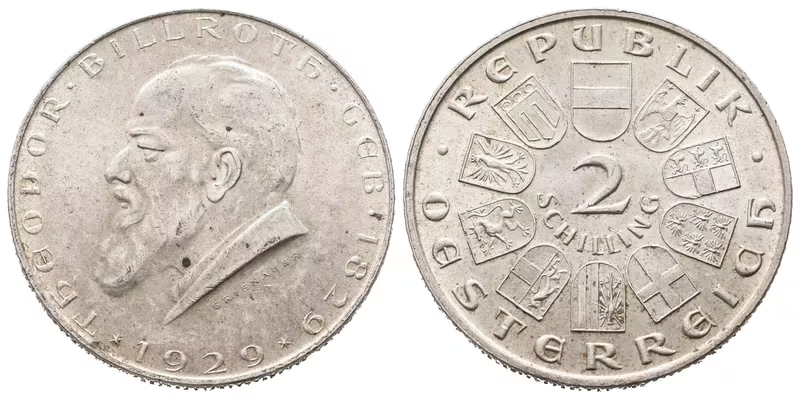
- Code: SRAK1-B1929.2
Rakousko, 2 Schilling 1929 - Billroth
Republika, 1919 - 1934/1938 2 Schilling 1929 - Theodor Billroth, KM.2844, krásná zachovalost, patina, lesk
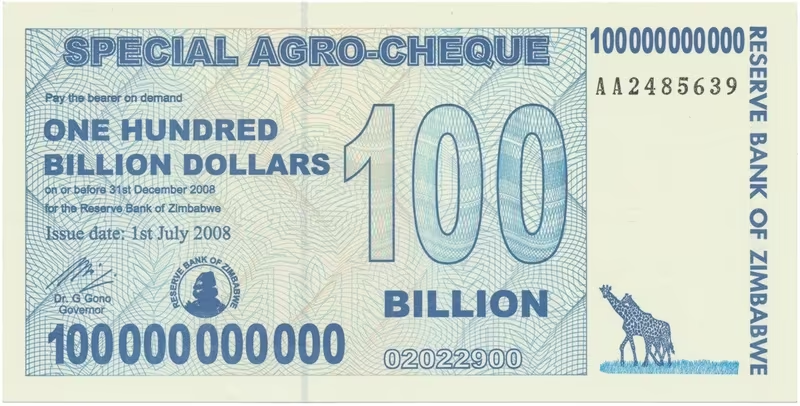
- Code: BZIMB064
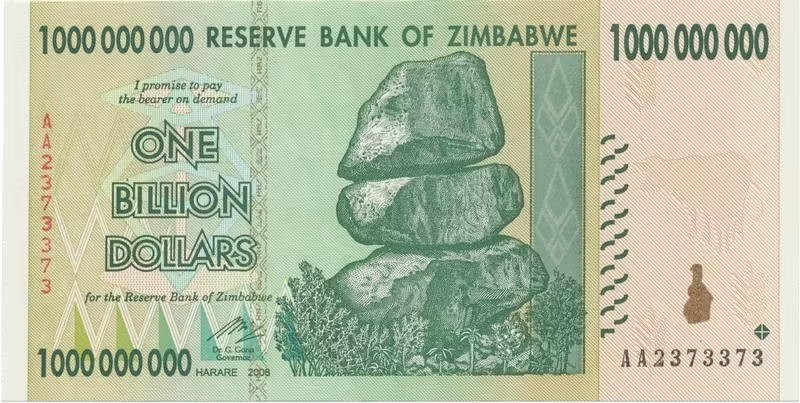
- Code: BZIMB083
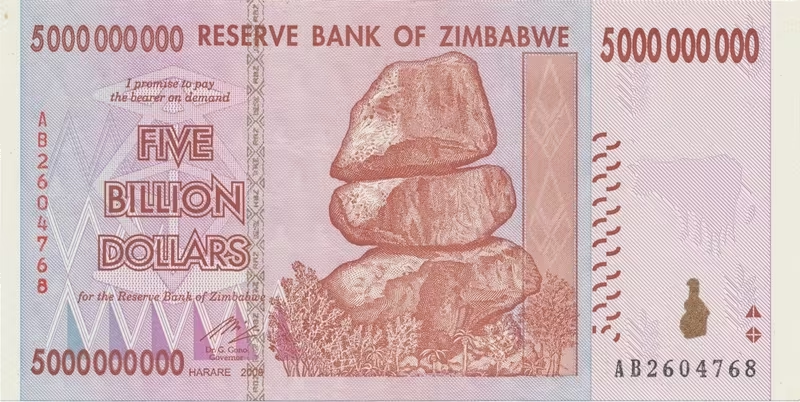
- Code: BZIMB084