Investment
Investment is the placing of money, time or labour with the aim of raising future value and achieving profit or other benefit. It may take the form of purchasing assets (shares, bonds, real estate, gold), education or business and is always associated with a certain degree of risk.
The idea of investing is older than modern financial markets. Already in antiquity people stored their surpluses in cattle, land, supplies or precious metals, because these were assets that retained value better than rapidly spoiling goods. At the same time a form of "investment in trade" also developed - the financing of expeditions and caravans in exchange for a share in the profit. Gradually institutions also arose that made it possible to lend at interest and thereby to separate immediate consumption from future return. Alongside the practical side, ethical and legal aspects were always addressed: whether the interest was reasonable, who bore the loss and how trust between parties was protected.
In the Middle Ages and the early modern period investing was significantly linked with money, coinage and state finances. The development of towns, long-distance trade and crafts required capital that began to be gathered with merchant families, bankers and later with institutions. In this period precious metals and coins were becoming important not only as a means of exchange but also as "stored value". When the quality of the currency deteriorated or uncertainty grew, people often returned to gold and silver in the most reliable form. It is precisely for this reason that large silver coins, gold ducats and later standardised bars had a special standing in the economy: they were portable, generally recognised and less dependent on local conditions.
The modern era brought a fundamental change: investment began to be "dematerialised". Alongside property in the form of land, goods or metal, securities came to the fore, which represented a claim on future income. States issued bonds in order to finance wars and infrastructure, entrepreneurs founded companies and sold shares in order to grow without paying for everything from their own resources. The rise of joint-stock companies and exchanges created an environment in which the value of an investment began to be measured not only by "intrinsic" value but also by the expectations of the market. With this grew the need for rules, supervisory institutions and trustworthy information.
History
In the 20th century investing spread among the wider public. The development of banking, pension systems and funds made it possible to invest even for people without large capital. At the same time it became clear how strongly investments are influenced by inflation, monetary regimes and political upheavals. In the environment of paper money and later electronic accounts the relation between risk and return gained new significance: safer assets usually bring lower returns, while more dynamic assets fluctuate but may in the long run rise more. Modern investing therefore rests on planning, diversification and work with horizon - that is, on how long an investor can do without capital and what degree of fluctuation they can withstand.
From the historical perspective it is important that the forms of investment change but the basic principle remains: investment is deferred consumption with an uncertain outcome. It is precisely for this reason that alongside modern instruments the role of "tangible" assets such as real estate, precious metals or certain numismatic items persists. This is not a return to the past, but rather a reminder that some investors look for assets that are not dependent only on the promise of a counterparty and that can fulfil the role of long-term insurance in uncertain times.
In practice investments are divided by the nature of the assets: financial (shares, bonds, funds), real (real estate, business) and alternative (precious metals, collector items). It is key to distinguish whether the investor expects regular income (for example interest or rent) or rather a rise in price over time. Each investment has three basic features: expected return, risk and liquidity. As a rule, higher return tends to be paid for by higher fluctuation or worse marketability, and the greatest mistake is to confuse short-term swings with a "definitive loss" without a plan.
Types of investment, risk and practical principles
The practical basis is the investment horizon, a reserve for unexpected expenses and diversification. The investor should know when they will need the money, what loss they can bear in the short term and how much fees cost. With funds and exchange-traded products costs and taxes also decide; with real estate, maintenance, legal risks and location. With precious metals and coins the difference between the "investment" and "collector" components is important: investment gold is usually valued mainly according to the metal and the spread between buy and sell, while collector coins may rise markedly, but their price depends on rarity, preservation and demand. In both cases safe storage, verifiability of authenticity and whether the investor counts on a quick sale or on long-term holding play a role.
A good investment therefore does not begin with the choice of the "hottest" product, but with a clear goal: why I am investing, for how long and with what risk. Only then does it make sense to choose instruments that suit the goal - whether it is long-term building of wealth, protection of purchasing power, or a combination of both.
In our auction and shop
- Code: MC011-LOTBack in stock
Soubor mincí 10 Koruna 1930 - 1932
Československo (1918 - 1939) Soubor 10 kusů mincí - 10 Koruna 1930 - 1932, Aurea 11, různé zachovalosti, pěkné i oběhové, ilustrační foto Ag (700/1000), 30 mm (10g) Celková hmotnost ryzího stříbra 70 g Ilustrační foto – v případě oběžných mincí…
Skladem 4 ks - Code: MC014Back in stock
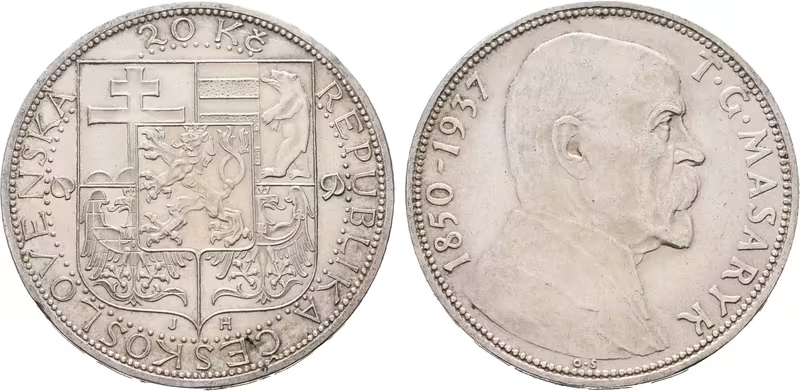
20 Koruna 1937 - T. G. Masaryk
Československo (1918 - 1939) 20 Koruna 1937 - K úmrtí T. G. Masaryka, Aurea 14, ilustrační foto Ag (700/1000), 34 mm (12g) Ilustrační foto – v případě oběžných mincí vydávaných ve vysokých nákladech nebo v případě investičních mincí a mincí ČNB nejsou…
Skladem 2 ks - Code: MC143Back in stock
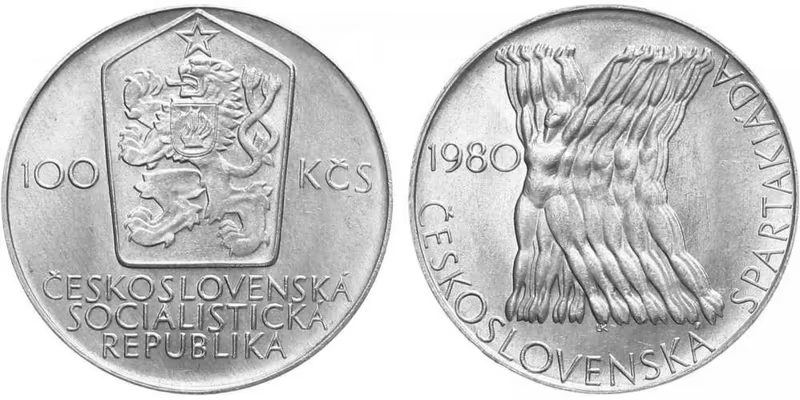
100 Kčs 1980 - Československá spartakiáda
Československo (1953 - 1993( 100 Koruna 1980 - Československá spartakiáda 1980, autor Ladislav Kozák, Aurea 143, běžná kvalita, ilustrační foto Ag 0,500, 29 mm (9 g), raženo 62 428 ks (běžná kvalita), 3 642 ks (proof) Ilustrační foto – v případě oběžných…
Skladem (>5 ks) - Code: MC009-LOT2
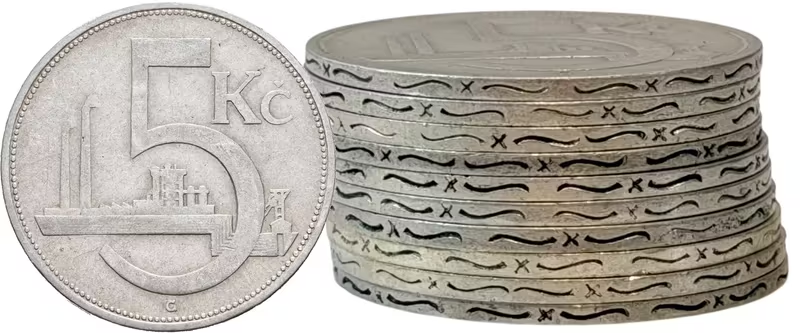
Soubor mincí 5 Koruna 1930
Československo (1918 - 1939) Soubor 10 kusů mincí - 5 Koruna 1930, Aurea 9, oběhová zachovalost, ilustrační foto Ag (500/1000), 27 mm (7g) Celková hmotnost ryzího stříbra 35 g. Ilustrační foto – v případě oběžných mincí vydávaných ve vysokých nákladech…
Skladem 3 ks