Coinage
Coinage is the set of activities and rules associated with the production of coins, their inspection and their release into circulation. It includes the mining and processing of metal, the preparation of blanks, the engraving of dies, the striking itself and the supervision of fineness, weight and the right of the coin to function as official money.
The roots of coinage reach back to antiquity, when standardised pieces of metal guaranteed by the authority of the state or a ruler began to be used in trade. The reason was practical: weighing and testing metal at every transaction was slow and unreliable, while a coin with guaranteed weight and fineness enabled quick trade and the collection of taxes. Coinage thus became one of the basic instruments of state power - whoever controlled the striking controlled part of the economy and confidence in money.
In antiquity, coinage often had a markedly political dimension. The coin bore the image, titulature and symbols which reminded the public of the legitimacy of the ruler and the authority of the state. At the same time it was an area sensitive to crises: war expenses or a shortage of metal could lead to extraordinary issues and to the reduction of fineness, which manifested itself in circulation by rising prices and mistrust. Already then it held that the quality of a coin was not only a technical question but also a question of reputation.
The Middle Ages brought a fragmentation of minting power. The right of coinage was held by rulers, bishops, towns and some nobles, and coins from various places mixed in circulation. Alongside the small denarii, larger denominations, for example the groschen, which corresponded better to the growing trade, gradually established themselves. In central Europe, silver mining and the rise of mining centres played a fundamental role, because without metal coinage is not possible. At the same time coinage became professionalised: minting ordinances, control assays and offices came into being, which were to oversee that the coin corresponded to the regulations.
History
In the early modern period, coinage was significantly transformed thanks to the large silver coins of the thaler family and thanks to the gradual mechanisation of production. The hammered strike with irregular edges began to give way to presses, which were able to create a more uniform shape, a sharper relief and a better-protected edge. It was the edge (milling, inscriptions) that became one of the key elements of the fight against clipping and counterfeiting. In this period, state centralisation was increasingly asserted: coinage gradually concentrated into several important mints and became a direct instrument of fiscal and monetary policy.
The 19th and 20th centuries brought a fundamental turning point: most circulating coins ceased to be "valuable through metal" and became money based on trust in the state. Precious metals withdrew into the role of reserves, bullion coins and commemorative issues, while ordinary circulating tender was struck from cheaper alloys. Coinage was industrialised, precise inspection procedures and protective features were introduced, and alongside circulating tender, a collector programme of coins and medals developed. Today, coinage is linked not only with the economy but also with the cultural representation of the state.
The minting process begins with the material: the metal is processed into the required alloy and blanks of precise weight are prepared. There follows the production of the dies, which bear the motif and the legend, and the striking itself under high pressure. Part of modern production is also the working of the edge and ongoing quality control, so that every coin meets the prescribed parameters. With precious metals the fineness is also strictly monitored, because this determines the intrinsic value of the coin.
How coinage works and why it is important
Coinage has several functions. Economic - it ensures circulating tender for everyday payments. Political - the coin bears the symbols of the state and is a "small official document" in metal. And historical - coins are durable and well preserved, so that they form an important source for the history of trade, propaganda and everyday life. For numismatics, therefore, coinage is the key to understanding why a coin looks as it does: its shape, edge, relief, inscription and metal are always the result of the technology, economy and power of the period.
In our auction and shop
- Code: XB1657
Mincovnictví Leopolda I. 1657 - 1705
Zdeněk Nechanický Mincovnictví Leopolda I. 1657 - 1705 Hradec Králové 1991, 323 stran, brožované, velmi pěkná zachovalost, nep. opotřebovaný přebal
Skladem 2 ks - Code: XB-1585
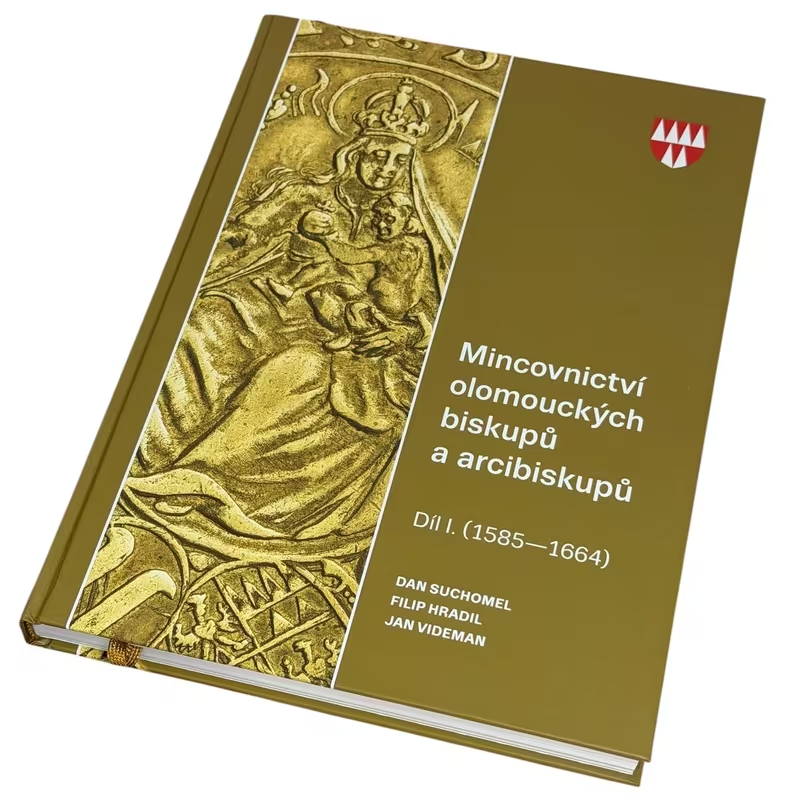
Mincovnictví olomouckých biskupů a arcibiskupů, I. díl
Dan Suchomel, Filip Hradil, Jan Videman Mincovnictví olomouckých biskupů a arcibiskupů, díl I. (1585 - 1664) Praha 2026, 236 stran a vyobrazení, vázané, nové! Publikace tematicky navazuje na oblíbený a obtížně sehnatelný sběratelský katalog z pera…
Skladem (>5 ks) - Code: XDSAS
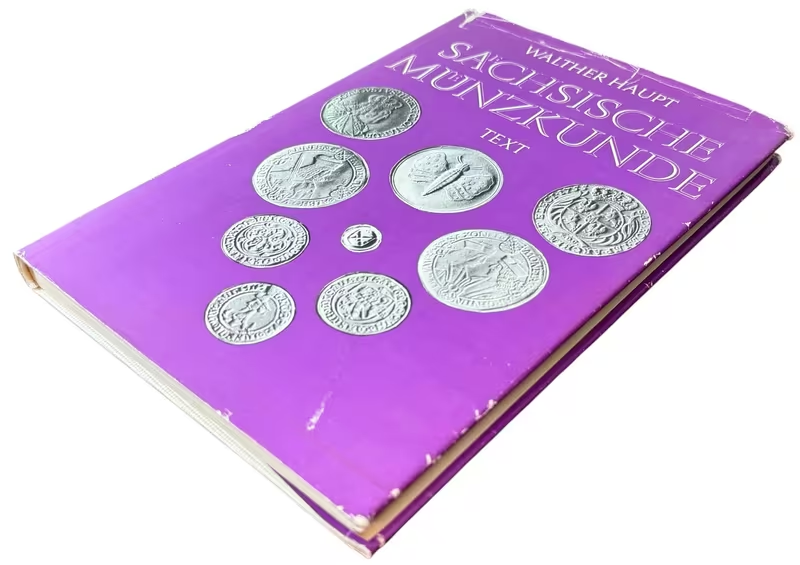
Saské mincovnictví
Haupt, Walther Sächsische Münzkunde, I. a II. díl Hamburk 1974, 301 stran a 141 tabulek s vyobrazeními, vázané, poškozený papírový přebal jinak pěkná zachovalost
Skladem 1 ks - Code: XB-JECNY.1
Vývoj českého mincovnictví
Ječný Josef Vývoj českého mincovnictví Plzeň 1929, 52 stran a mnoho vyobrazení, vázané
Skladem 1 ks