Mint
A mint is a place where coins are produced - from the preparation of metal and blanks through to the striking itself and the inspection of finished pieces. In the past this was a set of workshops and storerooms under official supervision; today a mint is a highly specialised operation with mechanical striking and strict security of material and production…
The mint belongs among those institutions which are closely connected with the rise of state power and confidence in money. For ancient and early medieval mints we often do not know the precise form or extent, because few direct reports have survived and production could have taken place in more provisional conditions. We have a clearer picture only from the time when larger silver denominations established themselves in central Europe and production began to concentrate into permanent operations. By then the mint was no longer merely a "place where the die struck", but an organised whole with linked activities, which had to function smoothly so that striking on a larger scale and the maintenance of quality and accounting order were possible.
In the classic medieval and early modern mint, the work was divided into several steps. First the precious metal was procured and checked, followed by its preparation (including refining and the mixing of the alloy) and casting into metal strips or bars. In further workshops the material was beaten and worked to the prescribed thickness, then blanks were prepared from it - either by cutting out, punching out, or other methods depending on the period and the technology used. Only the prepared blanks then passed to the striking itself, which took place in the so-called strikers' workshops, where dies were worked by hand or later mechanically. An important part of the process was also the inspection of weight and quality, because deviations in weight or fineness could mean a loss of confidence in the currency and financial damage to the sovereign.
The mint usually included the residence and office of the senior official. At its head stood the mintmaster, who was responsible for the running of the entire operation, for the management of the metal and for ensuring that issues corresponded to the prescribed parameters. His responsibility was often reflected directly on the coins: the mintmaster could vouch for them with his mark, which helped to trace the origin of an issue and to assign responsibility in disputes. Because there were many tasks, the mintmaster usually had assistants and clerks, and in some systems also a deputy who supervised inspection and quality. Larger mints functioned as complex "manufacturing enterprises" of their day, where technical skill met strict administrative agendas.
History
Alongside the officials, the craft workers were key. A special role was played by the mincir, who in the workshop took over the cast material and beat it into strips of the correct thickness, from which semi-finished products and blanks were prepared. It was here that waste and scraps also arose, which had to be recorded and returned to further smelting. After being levelled and cleaned, the blanks went on to be struck. In practice, therefore, a mint was not one room with an anvil, but a chain of departments, where any error could affect the resulting coin - and for this reason inspection was required at several points of production.
With the transformation of coinage in the modern period, the mint as an operation also changed. Gradually, mechanical technologies were added, production was sped up and made more precise, and the emphasis on standardisation and security increased. Alongside smelting and striking equipment, the modern mint often also includes a studio where an artistic design is converted into working tools: from a model a negative image for the die is created, and further steps follow which lead to series production. Whereas previously the quality depended on the manual work of individual engravers and on the longevity of the dies, today the process is much more precisely controlled and repeatable - and at the same time better protected against the misuse of material.
For collectors the mint is important not only as a "coin factory", but also as an identifying trace. A particular mint often determines the style of an issue, the quality of execution, sometimes even differences in the legend or small marks. For certain periods, the mint mark or the mintmaster's mark is one of the main guides to precise identification of a type. Mints also usually kept records of received metal and delivered coins, which helps historians and numismatists to understand the extent of striking, the economic conditions and how the state worked with the currency.
Operation, professions and points of interest for collectors
The internal arrangement of the mint explains why differences appear on coins which are not obvious at first sight. A change of die, a different working procedure in preparing blanks or a different setting of the alloy could lead to variants of the same denomination. With older coins, the limits of hand production may also be evident: slight shifts of the image, uneven pressure or fluctuations of weight within the permitted tolerance. Precisely for this reason it pays to perceive the mint as the "origin" of a coin - similarly as the issue data on banknotes - and when collecting to track where the given issue comes from and how it fits into the broader system.
In the modern period the mint is also an institution which strikes not only circulating tender but often also commemorative coins and medals. This opens to collectors the possibility of comparing ordinary production with representative issues, where the emphasis is on artistry, quality of surface and limited mintage. Whether it is a medieval workshop with a chain of manual operations, or a present-day highly secured operation, the common denominator remains one thing: the mint is a place where metal becomes trustworthy tender.
In our auction and shop
- Code: XB-1000
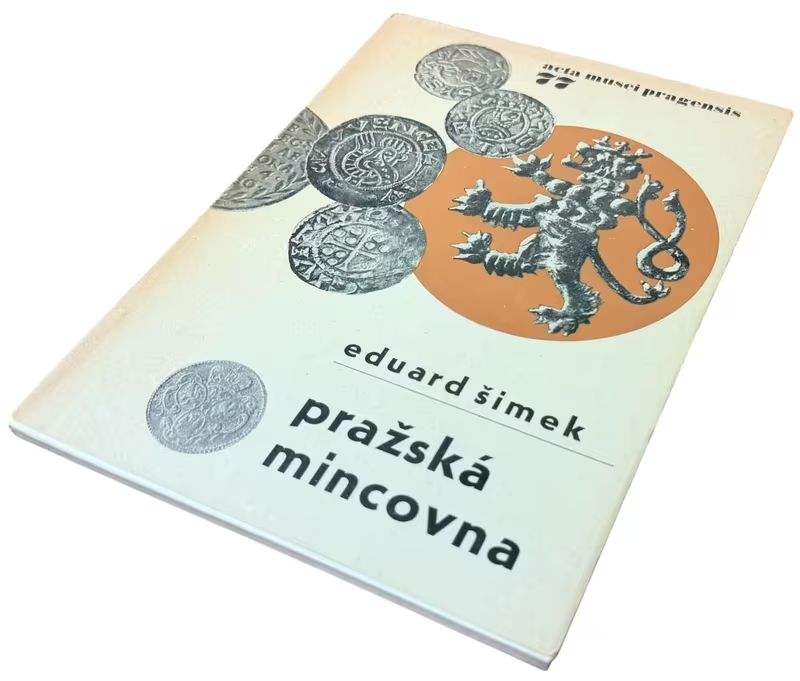
Pražská mincovna
Šimek, Eduard Pražská mincovna devět století české mince - katalog výstavy Praha 1977, 38 stran a 48 stran vyobrazení, brožované, pěkná zachovalost
Skladem 1 ks - Code: MC138-PROOF6
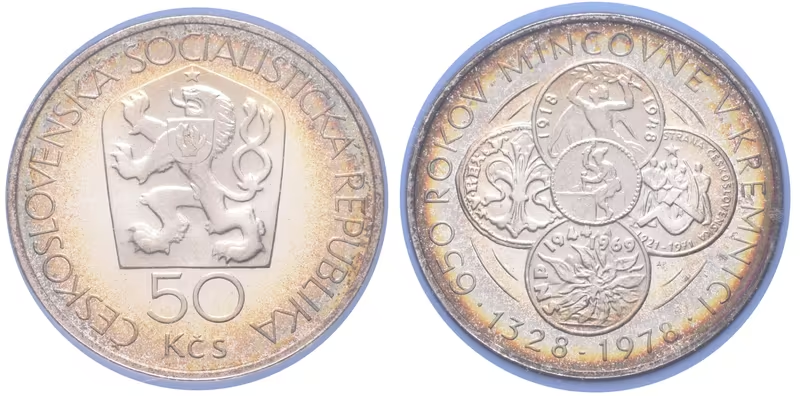
50 Kčs 1978 - Mincovna Kremnica, PROOF
Československo (1953 - 1993) 50 Koruna 1978 - 650. výročí mincovny v Kremnici, autor Andrej Peter, Aurea 138, PROOF Ag 0,700, 31 mm (13 g), raženo 70 076 ks (běžná kvalita), 2 708 ks (proof), původní plastová kapsle, patina v ploše - viz foto
Skladem 1 ks - Code: MC138-PROOF5
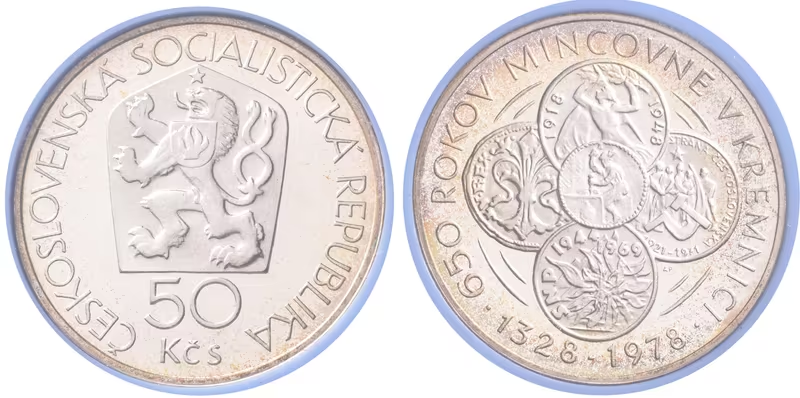
50 Kčs 1978 - Mincovna Kremnica, PROOF
Československo (1953 - 1993) 50 Koruna 1978 - 650. výročí mincovny v Kremnici, autor Andrej Peter, Aurea 138, PROOF Ag 0,700, 31 mm (13 g), raženo 70 076 ks (běžná kvalita), 2 708 ks (proof), původní plastová kapsle, patina v ploše - viz foto
Skladem 1 ks - Code: MC138-PROOF4
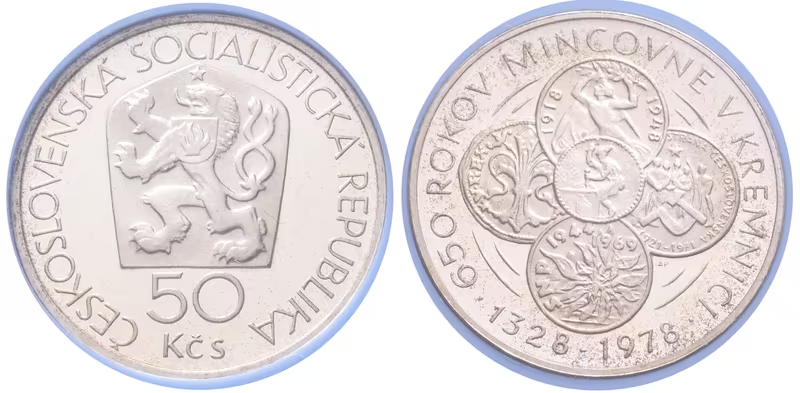
50 Kčs 1978 - Mincovna Kremnica, PROOF
Československo (1953 - 1993) 50 Koruna 1978 - 650. výročí mincovny v Kremnici, autor Andrej Peter, Aurea 138, PROOF Ag 0,700, 31 mm (13 g), raženo 70 076 ks (běžná kvalita), 2 708 ks (proof), původní plastová kapsle, patina v ploše - viz foto
Skladem 1 ks