Commemorative coin
A commemorative coin is a coin issued to mark an important event, an anniversary or a personality, usually with a thematic motif and a clear date. Unlike ordinary circulating coins it is intended mainly for representation and collectors, although it usually has a stated face value.
Commemorative coins appear as early as antiquity, when rulers and cities used the coin as a "public medium" — easily portable and widely legible. Whereas ordinary circulating mintage primarily served practical purposes in payment, commemorative strikes emphasised an exceptional moment: a victory, the founding of a city, the accession of a ruler, a dynastic event or an important building. The coin was the ideal carrier, because it spread among the people and at the same time bore the authority of the issuer, whether a ruler, a town community or a state.
In the European environment of the early modern period and especially during the thaler era, commemorative coins developed in close relationship with the ordinary coinage system. They often matched the metal and weight of standard coins of a certain type (for example thalers or ducats) and differed mainly in subject and purpose of issue. This is important: a commemorative strike of that time did not have to be a "different coin", but rather a special issue of the same denomination that was meant to commemorate a specific event. This category also includes some coronation strikes, or strikes issued for peace treaties, the conclusion of alliances or important visits.
Commemorative coins also played a significant role in the 19th century, when the culture of public jubilees and state celebrations spread. The state and royal courts realised that the coin could combine the practical character of "money" with representation. Portraits of reigning persons, commemorations of anniversaries of rule, dynastic events or motifs linked to the history of the country therefore appeared on commemorative strikes. These were often coins that formally resembled circulating currency, but their significance was ceremonial and intended for collectors.
History
In the Czech and Czechoslovak environment, commemorative coins gradually became a distinct and very popular area. Alongside traditional gold and silver strikes, series intended directly for collectors also emerged. Typically, commemorative coins have a face value and the legal status of a coin, but at the same time they are not intended for ordinary circulation. In practice they are mostly sold at a price derived from the metal, execution and collector demand, while the face value mainly fulfils the role of an "official framework" and a symbol of state guarantee.
The development of commemorative coins shows how the relationship between money and representation has changed over time. Whereas in the past a commemorative strike could genuinely circulate alongside ordinary coins of the same denomination, in the modern era the collector and presentation purpose has prevailed. Even so, the commemorative coin remains an important testimony of its era: it bears the official interpretation of events, the artistic style of the time and the conception of what is "worthy of memory".
A commemorative coin is usually struck in various metals, most often silver and gold, sometimes also as a bimetallic piece. The decisive factors are the thematic motif and the quality of execution: the coin may have an ordinary finish or a top collector quality with a polished field and a matt relief. Subjects include important personalities, historical milestones, architecture, science, sport and cultural traditions. In numismatics, clear dating, artistic quality and a limited print run are also valued.
Motifs, execution and the difference from a medal
For collectors it is useful to distinguish a commemorative coin from a commemorative medal. A medal is not legal tender and has no face value, whereas a commemorative coin is an official coin with a denomination and an issuing authority. This is also reflected in cataloguing: for commemorative coins the denomination, year, material, weight, diameter, edge and issue data are recorded, while for medals more emphasis is placed on the author, print run and purpose of issue.
When buying and storing commemorative coins, the condition of the surface and the original packaging are decisive. With modern strikes, even a small fingerprint or scratch can significantly lower the collector value. With older commemorative strikes it is conversely important to assess whether later alterations, unsuitable cleaning or interventions on the edge have occurred. The rule is always that the coin best preserves its value when it has a clean history, good condition and clearly documentable parameters.
In our auction and shop
- Code: YE-48-51
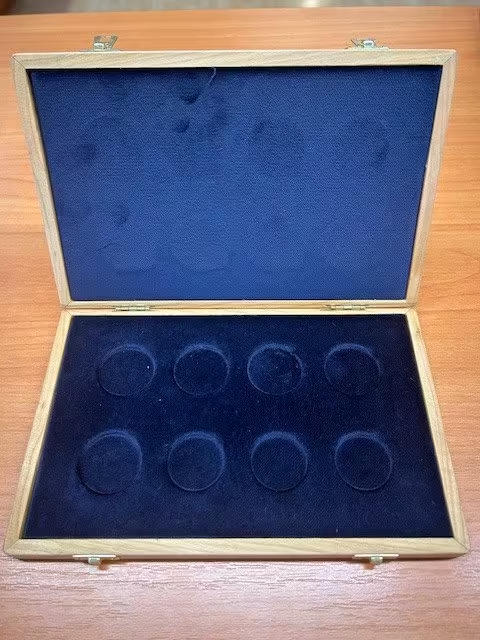
Etue na mince - Ag pamětní mince 1948 - 1951, dřevo
Dřevěná etue na 8 kusů pamětních mincí 1948 - 1951. Luxusní etue ze dřeva. Určeno na 5x 100 kč a 3x 50 kč. V sametu je přesná prohlubeň na každý kus mince. Mosazné panty i zavírání. Povrchová úprava - matný lak.
Skladem 5 ks - Code: MCZ142-X
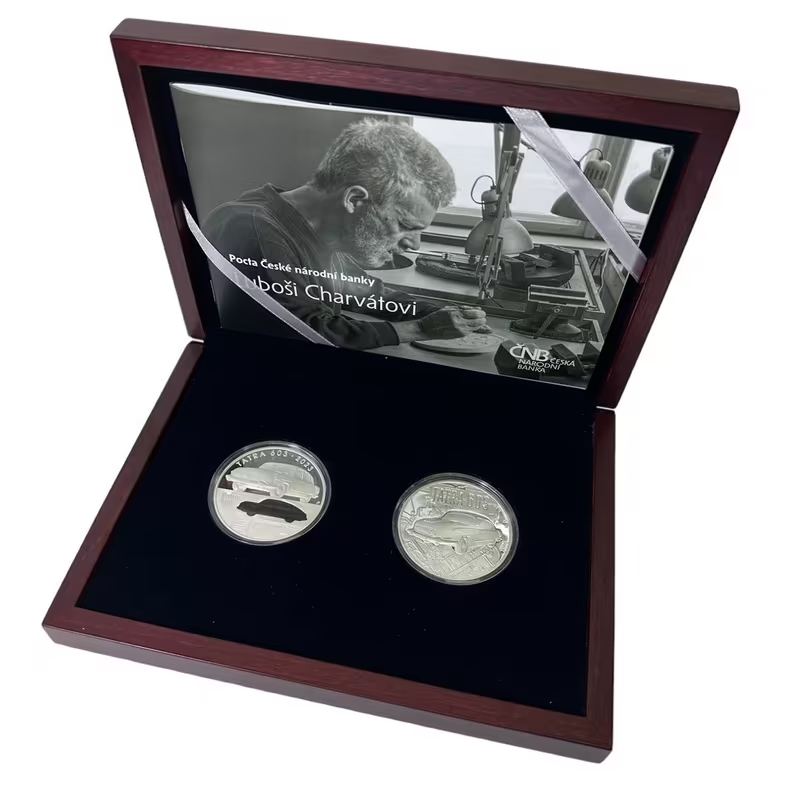
Sada Tatra 603 - pamětní mince a medaile, PROOF
Česká republika (1993 - ) Pocta České národní banky Luboši Charvátovi 500 Kč 2023 - Osobní automobil Tatra 603, Ag 0,925, 40 mm (25 g), autorka Petra Brodská, Aurea C242 Medaile s motivem osobního automobilu Tatra 603 autora Luboše Charváta, Ag 0,925, 40…
Skladem (>5 ks) - Code: YE-AU10000
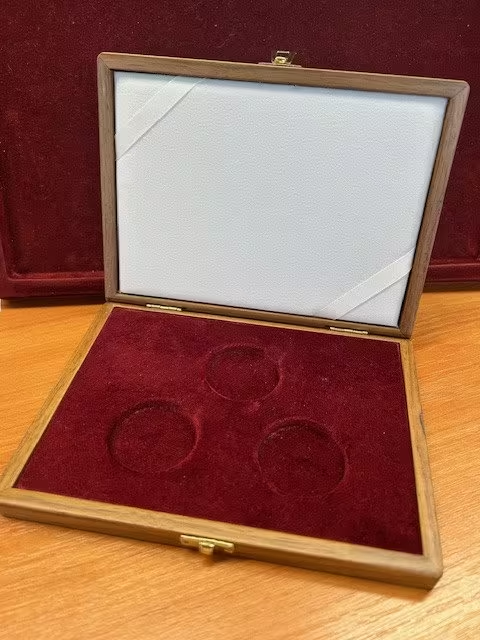
Etue na mince - zlaté mince 10 000 Kč, dřevo
Dřevěná etue na 3 ks pamětních mincí Pro zlaté pamětní mince - Zlatá bula, Cyril a Metoděj, Jan Hus, výročí ČSR, výročí měny a Ludmilu. Luxusní etue z ořechového dřeva. V červeném sametu je přesná prohlubeň na každý kus mince. Mosazné panty i zavírání.…
Skladem (>5 ks) - Code: YBCNB2-38
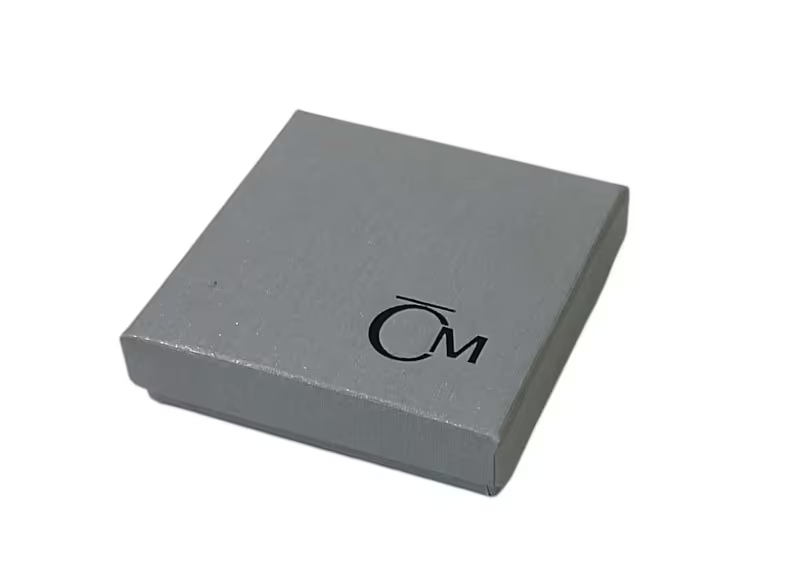
Etue na medaili ČM, průměr 38 mm, papír
Etue na stříbrné pamětní mince České mincovny. Papírová etue vykládaná modrým sametem, velmi kvalitně zpracováno. Mince i s plastovým přebalem dokonale zapadne do vylisované prohlubně. Otvor o průměru 38 mm.
Skladem (>5 ks)