Culture
Culture is the sum of material and spiritual values created by human society, encompassing art, science, education, customs, and ways of life. The cultural development of society has always been reflected in the artistic execution of coins and medals, which represent significant cultural artefacts documenting the aesthetic ideals, technical sophistication…
The cultural development of the Czech lands was from the beginning influenced by their location at the crossroads of European routes. The Great Moravian culture of the 9th century combined Byzantine Christianity with the local Slavonic tradition. The arrival of Cyril and Methodius in 863 marked the beginning of Slavonic literature and liturgy. The Glagolitic alphabet and Old Church Slavonic laid the foundations of a distinctive cultural identity, which was reflected in the symbolism of early Czech coins depicting St Wenceslas.
The Romanesque culture of the 11th and 12th centuries brought monumental architecture and the development of Latin learning. The founding of Benedictine and Premonstratensian monasteries created centres of learning. The first chronicles, legends of saints, and liturgical chants arose. Cosmas wrote the first Czech history. Romanesque art was reflected on denarii too, depicting stylised figures and symbols. Cultural exchange took place through pilgrimage routes and trade paths.
The Gothic culture under the Přemyslids and the Luxembourgs reached the European level. Charles IV elevated Prague to the cultural metropolis of Central Europe by founding the university, building the New Town, and supporting the arts. St Vitus Cathedral, the Charles Bridge, and Karlštejn were created. Literature shone in the Dalimil Chronicle and the writings of John of Středa. The Prague groschen with a crown and lion became a symbol of the kingdom's cultural and economic maturity.
History
The Hussite Revolution created a specific culture linked to Reformation and national consciousness. Hussite chorales, the Jistebnice Kancionál, and the Czech Bible shaped the national language. Taborite military practice created an original military culture. The Unity of the Brethren developed pedagogy and social thought. The cultural legacy of Hussitism influenced Czech identity for centuries. Utraquist symbols appeared on the coins of Utraquist sovereigns.
The Renaissance and the Baroque brought cultural flowering and also tragic ruptures. Rudolphine Prague became a centre of European Mannerism, science, and occultism. After the Battle of the White Mountain came re-Catholicisation, but also an unprecedented flourishing of Baroque art. Jan Amos Comenius created in exile a pedagogical work of global significance. Baroque culture left an indelible imprint on architecture, music, and the visual arts, which was reflected also in richly decorated Baroque medals.
Material culture comprises architecture, the applied arts, and craft production. The Czech lands created specific types of castles, urban planning, and rural architecture. Glassmaking, jewellery-making, and textile production attained European renown. Coinage and medal-making represented the pinnacle of craft art combining technical skill with artistic feeling. The Kutná Hora mint was a centre of technical innovations.
Cultural spheres and their manifestations
Spiritual culture is expressed in literature, music, philosophy, and science. Czech literature created works from medieval legends to modern prose of world significance. Musical culture gave the world composers such as Smetana, Dvořák, and Janáček. Scientific culture contributed the discoveries of Jan Evangelista Purkyně, Jaroslav Heyrovský, and Otto Wichterle. These figures have also been placed on commemorative coins and medals.
Folk culture preserves traditions, customs, songs, and crafts handed down through generations. Folk costumes, popular festivities, legends, and fairy tales form the cultural heritage of the countryside. Urban culture created guild traditions, burgher festivities, and social life. Cultural institutions such as museums, theatres, and libraries preserve and disseminate cultural values. The numismatic collections of the National Museum are among the most significant in Europe.
In our auction and shop
- Code: SPORT90-C2001
Portugalsko, 500 Escudos 2001 - Porto – evropské hlavní město kultury
Portugalsko 500 Escudos 2001 - Porto – evropské hlavní město kultury Ag 0,500, 30 mm (14 g), běžná kvalita
Skladem 1 ks - Code: YE-AU2500
Etue na mince - zlaté mince 2500,- dřevo
Dřevěná etue na 10 kusů pamětních zlatých mincí. Na zlaté mince 2500,-/ 10 století architektury, kulturní památky apod. Luxusní etue ze dřeva. V sametu je přesná prohlubeň na každý kus mince. Mosazné panty i zavírání. Povrchová úprava - matný lak. Barva…
Skladem 1 ks - Code: XBHER
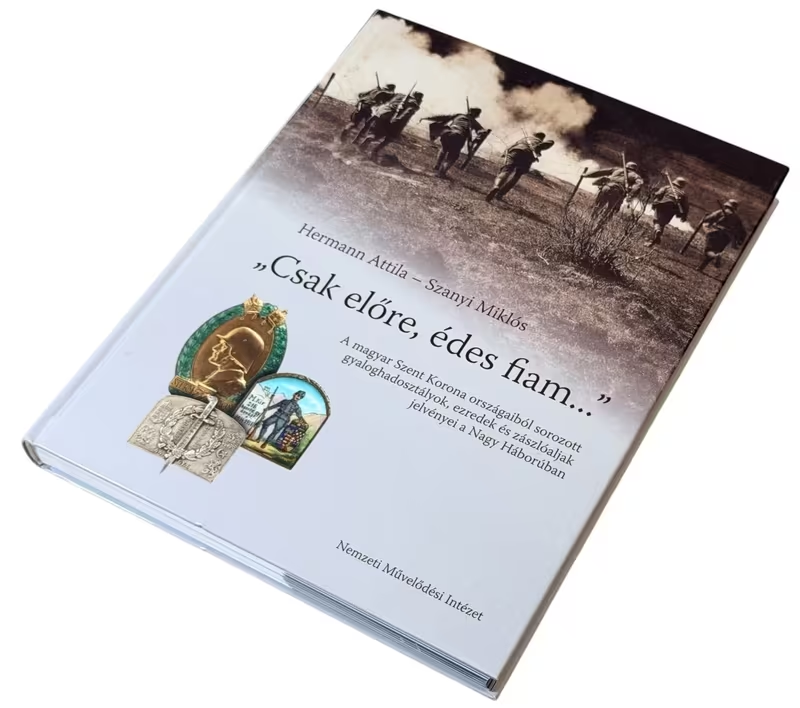
Csak előre, édes fiam…
Autoři: Hermann Attila a Szanyi Miklós „Csak előre, édes fiam…” (v překladu „Jen kupředu, můj drahý synu…“ ) je maďarská historická a faleristická odborná kniha, která slouží jako podrobný katalog čepicových odznaků a vyznamenání pěších divizí, pluků a…
Skladem 1 ks - Code: ZSAUST-AD2014
Austrálie, 100 Dollars 2014 - Year of the Horse
Elizabeth II. (1952 - 2022) Austrálie, 100 Dollars 2014 - Year of the Horse (Rok koně) Au 0,9999, 39,34 mm (31,107 g), 1 Oz, Proof Znamení Koně v čínském horoskopu je spojováno s energií, svobodou a přirozeným charismatem. Lidé narození v tomto znamení…
Skladem 1 ks