Medal
Medals (from the Latin metallum = metal) are coin-like mintages or castings which, unlike coins, have no payment value and serve as commemorative objects for various occasions. These artistic artefacts, struck or cast from gold, silver, bronze and other materials, document significant historical events, personalities and anniversaries from ancient Rome th…
The first medals were made already in ancient Rome, where they were called medallions or contorniates and had the character of a gift. These bronze, silver or gold mintages of a larger diameter than ordinary coins served as gifts from emperors to significant personalities or to celebrate military victories. From the 4th century comes a series of medallions celebrating the Roman Emperor Constantine I the Great, which already bore typical medallic characteristics — a monumental portrait and laudatory inscriptions.
The Middle Ages did not bring significant development in the field of medals, because artistic attention was concentrated on ecclesiastical art. A certain exception was some thicker groschen with prominent relief, such as the heavy groschen of Vladislaus II Jagiellon (1471–1516) bearing the image of St Wenceslas, which already had a medallic character. These mintages stood on the borderline between a functional coin and a commemorative medal.
The real flourishing of medals came in the Renaissance, especially in 15th-century Italy. Pisanello (Antonio Pisano) created in 1438–1439 the first modern portrait medal, of the Byzantine Emperor John VIII Palaiologos. His technique of casting bronze medals with realistic portraits and allegorical reverses quickly spread throughout Europe. Renaissance medals became a prestigious artistic medium commissioned by sovereigns, nobles and wealthy burghers alike.
In the Czech lands, the first real medals began to be created in the 16th century. Jáchymov (Joachimsthal) medals bearing religious scenes represented a specific type of Protestant propaganda. Widely circulated were plague thalers — medallic mintages with biblical motifs and protective prayers against the plague. These "Pestilenzthaler" were worn as amulets and represented an interesting combination of artistic, religious and superstitious function.
History
The Baroque period brought the development of coronation medals. These luxurious mintages of gold and silver were created on the occasion of coronation ceremonies of sovereigns. Well known, for example, are the medals for the Bohemian coronation of Ferdinand III (1627), which in the values of ducats and thalers served as representative gifts. Coronation tokens from less noble metals were tossed among the populace during the festivities.
In the 18th and 19th centuries the striking of medals became democratised. They were no longer commissioned only by sovereigns and high nobility, but also by cities, guilds, universities, associations and societies. Medals arose for a wide variety of occasions — installation medals on entering office, wedding, jubilee, exhibition or school medals. The development of industrial production enabled the mass production of cheaper medals of bronze, tin or zinc.
Under the first Czechoslovak Republic, medal making reached a high level. Medals were struck not only at the state mint in Kremnica but also in private mintage workshops such as F. Anýž, Karnet & Kyselý, L. B. Pichl, Triga or Plastika. Significant sculptors such as Otakar Španiel, Josef Šejnost or Otto Gutfreund created medallic designs that rank among the peaks of European medal making of the 20th century.
Contemporary Czech medal making builds on this rich tradition. The Czech Mint in Jablonec nad Nisou and private firms such as Kronika produce medals for various anniversaries, sporting events or as collector items. Modern technologies enable the use of new materials and techniques — colour printing, holograms, selective gilding or combinations of various metals create medals of unprecedented aesthetic quality.
Production technology and materials
The production of medals uses two basic techniques — striking and casting. Striking on mechanical or hydraulic presses is faster and more economical for larger series. Dies made by reduction from a large plaster model press the relief into the metal planchet. Casting into moulds enables the creation of higher relief and more complex shapes, but is more expensive and slower.
Materials for medals are chosen according to purpose and value. Gold (900–986/1000) for the most significant personalities and institutions, silver (925–999/1000) for jubilee and commemorative purposes. Bronze (an alloy of copper and tin) is the most common material for ordinary medals. Modern medals use tombac (an alloy of copper and zinc), alpaca (copper-nickel-zinc) or even non-metallic materials such as porcelain, glass or plastics.
Military medals represent a specific category with their own traditions. Merit medals, orders and decorations are subject to strict phaleristic rules. They are suspended on characteristic ribbons in national colours, and their wearing is governed by protocol. The collection and study of military medals — phaleristics — is an independent branch of numismatics.
Frequently asked questions
Questions from our knowledge base related to “Medal”. Full answers can be found in Frequently asked questions.
In our auction and shop
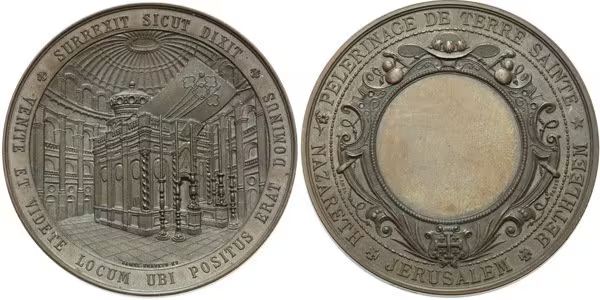
- Code: RX-VAT1900A
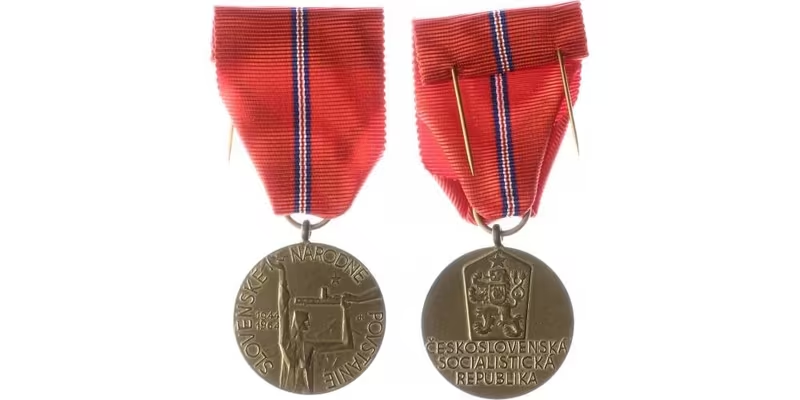
- Code: FC052
Pamětní medaile k 20. výročí Slovenského národního povstání
Českoskovensko Pamětní medaile k 20. výročí Slovenského národního povstání, VM.52, stužka, pův. etue, ilustrační foto
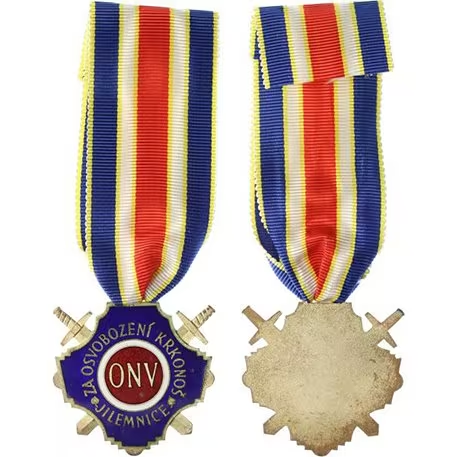
Skladem 4 ks - Code: FC203
Pamětní medaile Okresního národního výboru v Jilemnici
Českoskovensko Pamětní medaile Okresního národního výboru v Jilemnici, VM.203
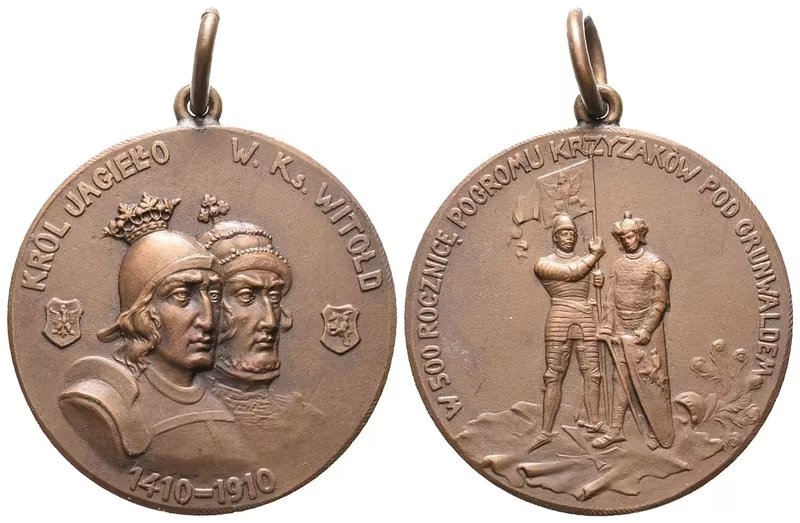
Skladem 1 ks - Code: RX-POL1910
Polsko - AE Medaile 1910 - Bitva u Grunwaldu
Polsko AE Medaile 1910 - K 500. výročí bitvy u Grünwaldu, Král Vladislav Jagello a velkokníže Witold. Ms 32 mm, pův. ouško, krásná zachovalost
Skladem 1 ks