Collecting
Collecting in numismatics is a focused and long-term activity directed at the acquisition, study and preservation of coins, medals, banknotes and other means of payment. It may have historical, artistic and investment motivations, and it rests on systematic identification, documentation and care of the collection.
Coin collecting has a surprisingly long tradition. Already in antiquity there were cases in which people preserved older or foreign coins outside ordinary circulation, but the real flourishing of collecting is connected mainly with the Renaissance. At that time a wave of interest in antiquity, in its art and history, rose in Europe, and coins became an ideal "portable document" of the past. They bore portraits of rulers, the names of cities, inscriptions and symbols, which could be linked with literary sources. From an originally prestigious hobby of the educated classes and courts a way of historical learning was thus gradually born too.
In the 17th and 18th centuries collecting developed further alongside the emergence of coin cabinets and the building of museums. Coins began to be classified more systematically, the first specialist literature arose, and collections changed from "treasuries of curiosities" into thought-out ensembles intended to speak of the history of sovereigns, currencies and states. At the same time a collector's language was being formed: the description of obverse and reverse, of legend, mint marks and other features, which made precise attribution possible. By this collecting began to approach scholarly research, because a quality collection was no longer only about the number of pieces but about their selection, identification and interpretation.
In the 19th century archaeological finds and systematic research brought enormous quantities of new material. Coins were often found in hoards, settlements or graves, and it became clear that their value was not only aesthetic but also evidential: from find assemblages it is possible to deduce trade contacts, date layers and track changes in circulation. Collecting therefore began to rely more on provenance, that is, on the origin of the object, and on the effort to preserve information about where and how a coin entered the collection. From this leads the path to modern standards of records and documentation.
History
In the 20th century collecting spread to a wider public. Apart from coins, notaphily, that is the collecting of banknotes, also distinctly came to the fore, which offers a different type of "story" — alongside state symbolism also graphic design, security features and the history of issues. At the same time the auction market, catalogues and specialisation developed: collectors increasingly chose a narrow focus (for example one denomination, one mint, a particular period or theme). Modern collecting is thus a mosaic of many approaches, from purely historical study through aesthetic collections to collecting with an investment intent.
In recent decades digital technologies have strongly entered collecting. Easier access to photographs, databases and auction results has speeded up both attribution and price orientation, but has at the same time raised the demands on critical assessment. Forgeries and altered pieces appear on the market, and the collector must therefore more than before watch the originality of the surface, the quality of the description and the trustworthiness of the source. At the same time, however, it remains true that collecting is above all a path of learning: a quality collection is often the result of years of study, patience and the gradual building of experience.
Collecting rests on three pillars: selection, identification and care. Selection means that the collection has a clear direction — it may be chronological (for example a particular century), regional (a particular state or mint), material (silver, gold), or thematic (sovereigns, towns, events). Identification involves working with catalogues, comparing variants, reading legends and verifying parameters (weight, diameter, edge). With banknotes one adds the tracking of series, signatures and security features. Care then means correct storage and gentle handling, because damage to the surface can significantly reduce value.
How collecting works in numismatics
A fundamental factor is grade. With coins what matters is the sharpness of the relief, the legibility of the legends, the condition of the edge and the originality of the surface; with banknotes folds, the cleanness of the paper, tears and the overall impression. With more expensive pieces the importance of authenticity and provenance grows. The collector should be able to recognise unskilled cleaning, additional alterations or suspicious signs of counterfeiting. If an investment side is also a goal, it pays to watch not only rarity but also liquidity, that is, how easily a given type can later be sold.
Collecting can also be very "practical": it leads to a better understanding of currencies, history and symbolism. Coins and banknotes are unique precisely in that they combine the everyday economy with political and cultural representation. A good collection is thus not only a set of objects but also a carefully kept story, which shows the development of the state, of money and of society over time.
In our auction and shop
- Code: XE1900-2
Nouzová papírová platidla na území Československa 1900 - 1950
Pavel Hejzlar, Jindřich Holna - Nouzová papírová platidla na území Československa 1900 - 1950 Nově přepracovaný a doplněný soupis nouzových platidel na našem území. Mimořádně pečlivě zpracovaný katalog, doporučujeme nejen sběratelům této oblasti, ale i…
Skladem (>5 ks) - Code: XA-RCV
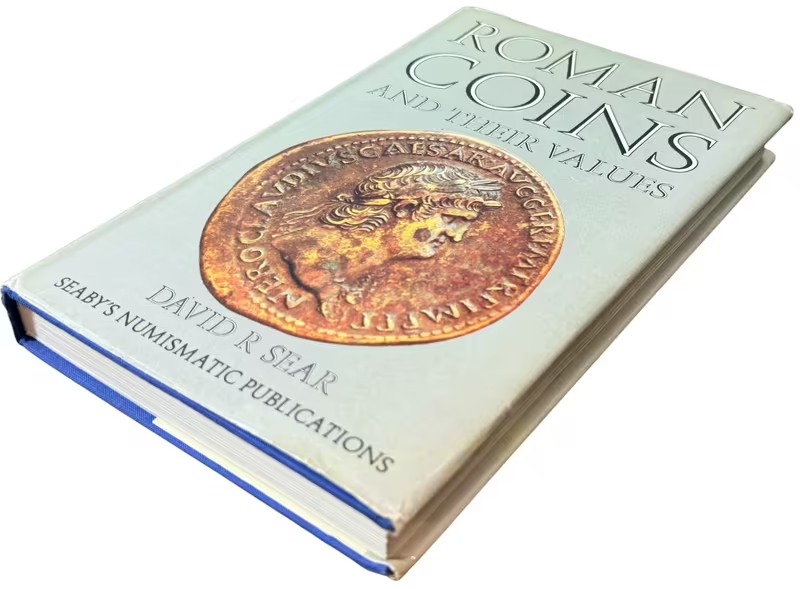
Roman Coins and their values
Sear, R. David Roman Coins and their values Londýn 1974, II. vydání, 376 stran a tabulky s vyobrazeními, vázané, papírový přebal, uvnitř na několika stranách pokrčený papír
Skladem 1 ks - Code: XA-RIC01
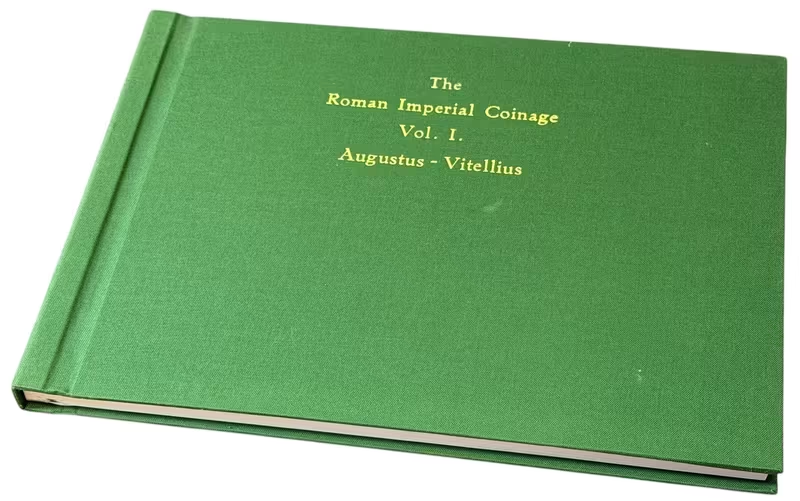
Roman Imperial Coinage Vol. I.
Sutherland, C. H. V. The Roman Imperial Coinage (RIC): Volume I. - Augustus - Vitelius (31 BC - 69 AD) Katalog mincí a medailí římského císařství. Popis jednotlivých mincoven včetně variant. Londýn 1984 (Reprint), 304 stran a 32 tabulek s vyobrazeními,…
Skladem 1 ks - Code: XA-RIC02
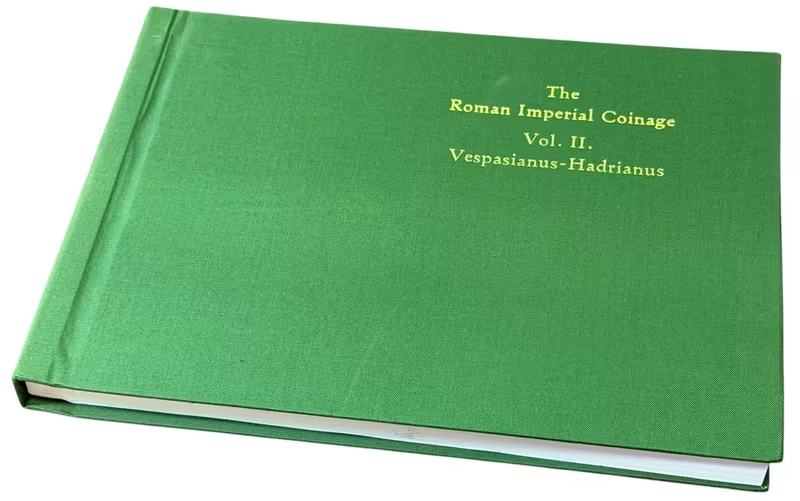
Roman Imperial Coinage Vol. II.
Mattingly, Harold a Sydenham, Edward Allen The Roman Imperial Coinage (RIC): Volume II. - Vespasianus - Hadrianus Katalog mincí a medailí římského císařství. Popis jednotlivých mincoven včetně variant. Londýn 1926 (Reprint), 568 stran a 16 tabulek s…
Skladem 1 ks