Issue
An issue is the release of a new series of coins, banknotes or securities into circulation by a central bank, a mint or another authorised institution. In numismatics, an issue denotes a set of coins struck to a uniform pattern over a given period, differing from preceding and subsequent strikes in motif, denomination or technical parameters.
The concept of an issue has been used in coinage since antiquity, when city-states and empires put out series of coins with a uniform design. Greek poleis struck silver tetradrachms in issues marked with the symbols of the magistrates responsible for the striking. The Athenian owl, Corinthian Pegasus and Macedonian staters represented long-running issues with minimal changes, which ensured confidence in the currency. Every new issue had to be approved by the city council and supervised by officials.
The Roman Empire systematised issue policy. Imperial mints in Rome, Alexandria, Antioch and other cities struck coordinated issues with the portraits of rulers and propaganda motifs. Each issue had a precisely set volume, weight and fineness. The Senate approved issues of copper coins marked SC (Senatus Consulto), while gold and silver strikes were the exclusive right of the emperor. Debasement issues during the Crisis of the Third Century led to inflation and the breakdown of the monetary system.
Medieval coinage issues were irregular and depended on the availability of precious metals. Czech denarii were struck in issues as required by the sovereign, often on accession to the throne or before a military campaign. Renewal issues of the 12th and 13th centuries involved regular replacement of coins several times a year, which constituted a form of taxation. Each issue had a different image — a lion, an eagle, a figure of the ruler — so that valid and invalid coins could be distinguished.
The introduction of the Prague groschen in 1300 marked a revolution in issue policy. Wenceslas II established uniform parameters for a long-running issue of a high-quality silver coin. The Kutná Hora mint struck millions of groschen a year in regular issues. The mint master was responsible for maintaining the weight of 3.9 grams and the fineness of 933/1000. Control marks made it possible to identify individual issues and minting periods. The system operated for more than two centuries with minimal changes.
The early modern period brought planned issues according to the needs of the state treasury. The thalers of the 16th century were struck in large issues for international trade. Each issue had a precisely set mintage; for example, Jáchymov thalers were struck in annual issues of 100,000 pieces. Inflationary issues during the Thirty Years' War, in which the fineness and weight of coins were reduced, led to a crisis of confidence. Kipper coinage was an extreme case, in which issues contained only 10 per cent silver.
History
Maria Theresa introduced a systematic issue policy across the monarchy. The Conventional currency set precise parameters for the issues of all denominations, from kreuzers to ducats. The Vienna mint coordinated the issues of the provincial mints, including Prague. Annual issue plans determined the volume of striking according to economic needs. Maria Theresa thalers were struck in mass issues for the Levantine trade for a century after the sovereign's death.
The 19th century brought a scientific approach to issue policy. The Austro-Hungarian Bank planned issues in line with the money supply and economic growth. The introduction of the gold currency in 1892 required coordinated issues of gold korunas and the withdrawal of silver guilders. Issue statistics were systematically published for the first time. Special issues for anniversaries, for instance silver five-koruna coins for the jubilee of Franz Joseph I, supplemented the ordinary circulating coinage.
The formation of Czechoslovakia in 1918 required the rapid issue of its own currency. The overstamping of Austro-Hungarian banknotes was a provisional issue before the introduction of the Czechoslovak koruna. The first issue of Czechoslovak coins in 1921 was designed by Otakar Španiel. The state notes of 1919 were the largest paper issue in the country's history. Every issue went through approval by the Ministry of Finance and the National Bank of Czechoslovakia.
The communist regime centralised issue policy. The five-year plans determined the volume of monetary issues according to the planned economy. Commemorative issues served propaganda — silver hundred-koruna coins for anniversaries of communist events. The inflationary issues of the 1980s led to a surplus of money without commodity backing. The currency reform of 1953 represented a confiscatory issue, in which old money was exchanged at an unfavourable rate.
The current issue policy of the Czech National Bank is based on inflation targeting. Issues of circulation coins respond to wear and economic activity. Commemorative issues of gold and silver coins serve collector and investment purposes. Each issue passes through approval by the bank board, a design competition and quality control. The issue plan, published in advance, gives notice of forthcoming strikes.
Technical aspects of issues
The issue process begins with planning the volume and parameters of striking. The central bank analyses the money supply, the wear of the circulating coinage and economic forecasts. The issue plan sets denominations, mintages and the schedule. The design is selected through competition and approval. The production of dies requires months of precise work by engravers. Trial strikes verify quality before mass production.
Control of issues encompasses monitoring weight, dimensions, fineness and appearance. Each issue has tolerance limits; for example, a circulation coin may have a deviation of 2 per cent from the nominal weight. Defective pieces are rejected and remelted. Issue documentation contains precise data on mintage, the metal used and technical parameters. Archive specimens are kept by the central bank for future reference.
Withdrawal of issues from circulation proceeds continuously through the exchange of worn pieces. Some issues are withdrawn at once during monetary reforms or design changes. Demonetisation invalidates old issues. The destruction of withdrawn coins takes place under control, with documentation. Precious metals from withdrawn issues are recycled for new strikes.
In our auction and shop
- Code: SNOR-D1993
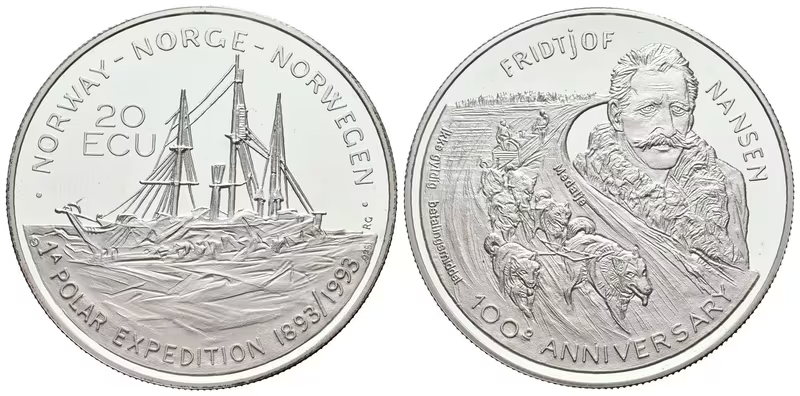
Norsko, 20 ECU 1993 - Fridtjof Nansen, polární expedice Fram, 100. výročí
Norské království (soukromá emise ECU, 1993) 20 ECU 1993 - Fridtjof Nansen, polární expedice Fram, 100. výročí Ag (.925), 38,6 mm (25 g), v kapsli. Stav mince odpovídá fotografii.
Skladem 1 ks - Code: SSVAH-G2024
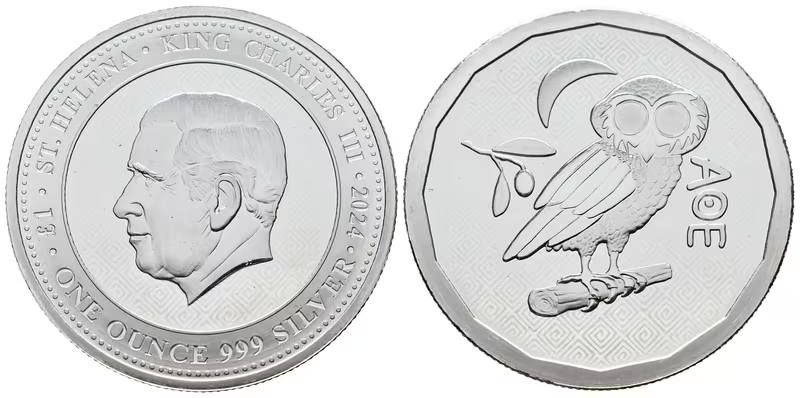
Svatá Helena, 1 Pound 2024 - 1 Oz (Athénská sova)
Svatá Helena, Karel III. (2022 -) 1 Pound 2024 - 1 Oz (Athénská sova), KM# 236 Ag (.999), 39 mm (31,1 g), v kapsli. Emise: 10 000 ks. Mincovna: Silver Towne Mint - USA. Stříbrná uncová investiční mince - 1 Oz. Lit.: KM# 236.
Skladem 1 ks - Code: STON-C1992
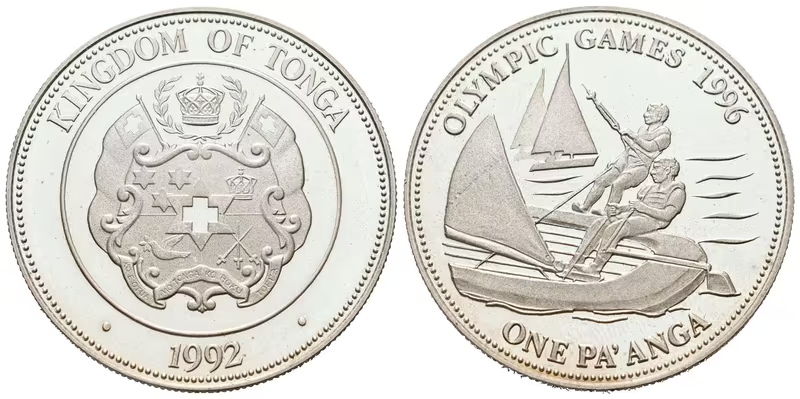
Tonga, 1 Paʻanga 1992 - Plachtění
Království Tonga, Taufaʻahau Tupou IV. (1965-2006) 1 Paʻanga 1992 - Plachtění, KM# 156 Ag (.925), 38,6 mm (31,47 g), proof. Emise: 40 000 ks. Mincovna: Hamburg - Německo. Pamětní neoběžná stříbrná mince; Letní olympijské hry 1996 v Atlantě. Lit.: KM# 156.
Skladem 1 ks - Code: SSPAN-C1990B
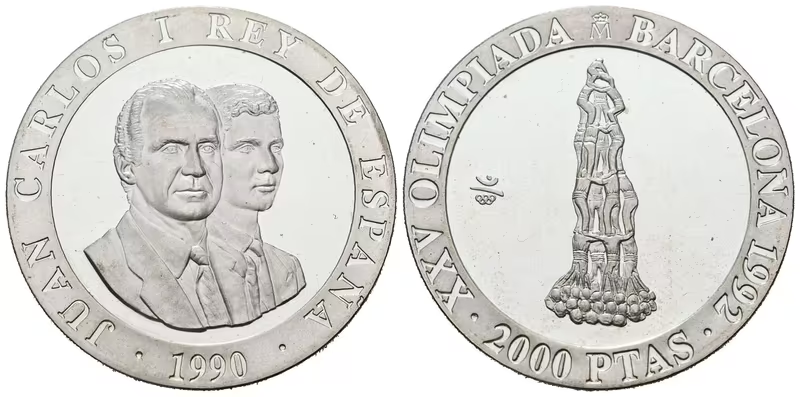
Španělsko, 2000 Pesetas 1990 - Castell
Španělské království, Juan Carlos I. (1975-2014) 2000 Pesetas 1990 - Castell, KM# 863 Ag (.925), 40 mm (27 g), proof, bez kapsle. Emise: 73 510 ks. Hrana: vroubkovaná. Mincovna: Královská mincovna v Madridu - Španělsko. Pamětní neoběžná mince, vydaná k…
Skladem 1 ks