Time test (holding period)
The time test on shares is a rule which determines when a profit from the sale of shares by a natural person can be exempt from income tax, provided the statutory conditions are met (in particular the length of holding). In practice it is one of the most important concepts for small investors, because it decides whether capital gains tax will be payable o…
The time test arose as an instrument of tax policy whose purpose is to distinguish long-term investment from short-term speculative trading. The state thereby pursues two main aims: on the one hand, it does not wish to discourage long-term saving in capital markets, and on the other, it seeks to maintain the taxation of income that has the character of regular gainful activity or frequent trading. In the Czech environment, this logic has been reflected in the statutory rules for the exemption of income from the sale of securities, which have been adjusted over time as the capital market, investment products and tax practice evolved.
The significance of the time test has grown particularly with the spread of accessible investing to the public. While previously only a smaller part of the population came into contact with securities, online platforms, regular investing, dividend strategies and a wide offer of funds and exchange-traded products gradually became common. Once investing became more widespread, the tax assessment of share sales also became a practical question for thousands of people each year. The time test therefore began to function as an understandable "threshold" on the basis of which an investor can estimate in advance the tax impact of a sale.
At the same time, it has become clear that the length of holding itself is not the only factor which the state takes into account. Tax systems commonly work with additional limits, so that the exemption is directed at typical long-term investors and does not apply to large one-off sales or to situations whose character resembles a business activity. In the Czech tax environment, alongside the time test, further conditions therefore apply (for example a limit for exemption based on the volume of income from sales), the aim of which is to set the rules "fairly" across various groups of investors.
History
In recent years, the time test has often been discussed precisely because people's investment behaviour has changed: many investors work with their portfolio on an ongoing basis, rebalance, buy in and sell in parts. This places greater demands on the recording of purchases and sales and on the correct determination of which units of shares were sold in what order. The time test can thus become, from a simple "deadline", a topic which in practice requires discipline in record-keeping and basic familiarity with tax rules.
The time test on shares is typically assessed according to how long you held the security between purchase and sale. If you meet the required holding period, the income from the sale (or rather the profit) may, on meeting additional conditions, be exempt from tax. If you do not meet the holding period, the gain from the sale is usually included in the tax base as other income, while related expenses (typically the acquisition cost and fees) may be claimed against the income.
In real life, it is important that an investor often purchases the same shares repeatedly. The holding period may then differ from piece to piece, since part of the portfolio may "complete" the time test earlier than later purchases. It is therefore practical to keep a record of purchase prices, dates and fees, so that one can correctly determine what exactly is being sold and what the profit or loss is for the given part of the sale. With Czech investors it is common for this information to be provided by the broker in the statements, but responsibility for correct assessment and any taxation always lies with the taxpayer.
How the time test on shares works in practice
The time test concerns the sale of shares and securities in general, not dividends. Dividend income is assessed separately according to different rules. From a practical perspective it is also important that the exemption applies to the income from the sale, but its application may be limited by additional conditions laid down by law (for example, limits and exceptions). Therefore, with larger sale volumes, it is worthwhile to be clear not only about the length of holding, but also about what further requirements apply to the exemption.
In our auction and shop
- Code: XB1300-0402
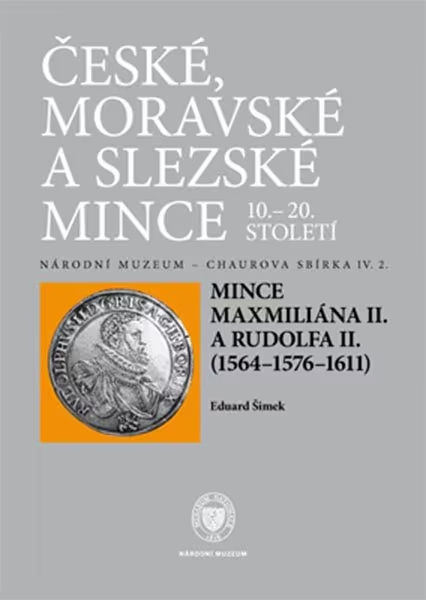
Chaurova sbírka - Mince Maximiliána II. a Rudolfa II. (1564 - 1576 - 1611)
Eduard Šimek České, moravské a slezské mince 10. - 20. století - Mince Maximiliána II. a Rudolfa II. (1564 - 1576 - 1611) , Praha 2011, 432 stran, vázané Předkládaná publikace – druhý sešit čtvrtého svazku edice České, moravské a slezské mince 10.–20.…