Henry of Carinthia
Henry of Carinthia was briefly King of Bohemia (1307–1310) and at the same time Duke of Carinthia, whose rule in Bohemia came after the extinction of the Přemyslids. In domestic politics he collided with the strong nobility and a weak power base, which eventually opened the way for the accession of the Luxembourgs.
Henry of Carinthia (German Heinrich von Kärnten) came from the family of the lords of Gorizia-Tyrol and Carinthia. He entered Czech history above all through his marriage to Anna of Bohemia, daughter of Wenceslas II, by which he gained an important dynastic claim at the moment when the Přemyslid line was nearing its end. After the murder of Wenceslas III in 1306 there came an interregnum in the Kingdom of Bohemia and the rapid alternation of candidates, since the Czech throne was strategically and economically exceptionally valuable.
Henry was summoned to Bohemia as the husband of a Přemyslid princess, and in 1307 he became King of Bohemia. His position, however, was not firm from the start. He relied on a limited circle of supporters and in the Czech lands had not built up the power base that sovereigns with long-term domestic support tended to have. Furthermore, in the time after the extinction of the Přemyslids the weight of the nobility and the towns had grown, and they were aware that they could significantly intervene in the game for the throne. Henry's rule thus quickly turned into a sensitive balancing among the interests of various groups, while he lacked both the authority and the means consistently to assert royal power.
The situation was further complicated by foreign policy. The Czech throne was an object of interest for surrounding dynasties and imperial elites, and Henry had to reckon with the fact that his rivals would seek support outside the country. Internal uncertainty and disputes over power were reflected in administration, finances and the ability to react to conflicts. In practice this meant that the king was often perceived rather as a "transitional solution" than as a sovereign who could establish stability for many years.
History
In 1310 the situation deteriorated to such an extent that Henry lost the Czech throne. John of Luxembourg entered the country, married Elizabeth of Bohemia and was able to gain political and military support to take over rule. Henry thus departs from Czech history as the sovereign of a short intermezzo: his rule is important above all in showing how open the country was to dynastic claims after 1306 and how significantly the domestic elites could influence the choice of king.
After losing the Czech crown, Henry concentrated on his hereditary and marital possessions in the Alpine area. His life thus connects two worlds: a Central European kingdom with a rich mining and coinage tradition and Alpine territories where power rested on different political ties and economic resources. Although he ruled in the Czech environment only briefly, his episode belongs among the key chapters of the transition from the Přemyslids to the Luxembourgs.
Numismatically, Henry's period falls within the era when in the Czech lands the groschen currency, introduced under Wenceslas II, was firmly established. The Prague groschen became an important silver coin of Central Europe, and circulation rested also on smaller denominations. Henry's short and politically uncertain rule, however, is not usually associated with any widely known "new" monetary reform; in practice it is therefore more important for the collector to have a precise identification of a specific piece, its type and date of striking, than to expect great changes of standard.
Sovereign, coins and collector context
With coins from the beginning of the 14th century, the collector's assessment often revolves around the legibility of the legends, the quality of the flan and the degree of wear. With Prague groschen the sharpness of the lion and the crown, the legibility of the inscription and a natural surface without inappropriate intervention are decisive. If a collector encounters a strike attributed to Henry, it is particularly important to rely on specialist literature and catalogues, since at this time there may exist types and variants whose attribution rests on details of lettering and marks. With rarer pieces, provenance and a credible description then also play a great role.
Henry of Carinthia is therefore attractive above all as a "historical theme": the coins of his time recall a pivotal chapter of the Czech kingdom, when decisions were taken about a new dynasty and about the role that the nobility, towns and foreign powers would play. For a thematic collection it suggests itself to link Czech strikes of the beginning of the 14th century with the subsequent coins of John of Luxembourg, on which the stabilisation of the new rule and the gradual return of sovereign authority can already be seen.
In our auction and shop
- Code: RASEV-1979
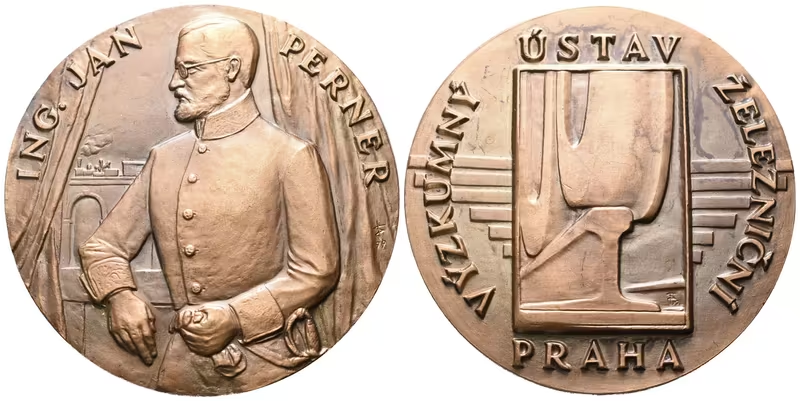
Severa Jindřich - Jan Perner
Severa Jindřich (1909 - 1980) AE Medaile 1979 - ing. Jan Perner/ vydáno pro Výzkumný ústav železniční Praha Bronz s patinou, 70 mm (149,5 g), etue
Skladem 1 ks - Code: SFRA87-D1586
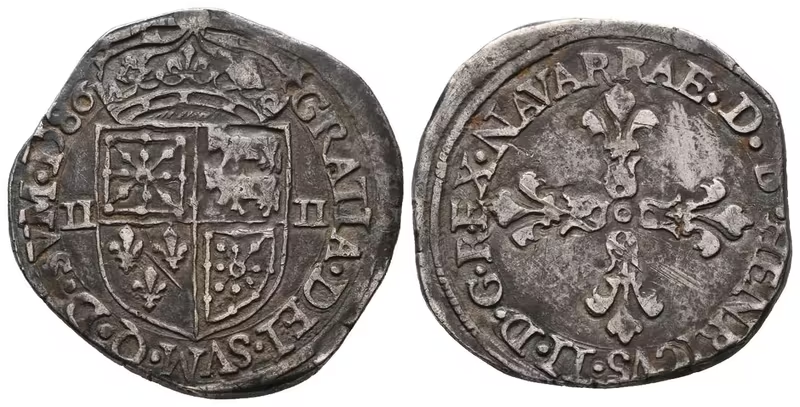
Francie, 1/4 Ecu d’Bearn 1586
Francie - Vikomtství Béarn, Jindřich II. Navarrský (1572 - 1589) 1/4 Ecu d´Bearn 1586, minc. Pau, PA.3501, pěkná zachovalost a patina_R!
Skladem 1 ks - Code: SFRA88-D1603
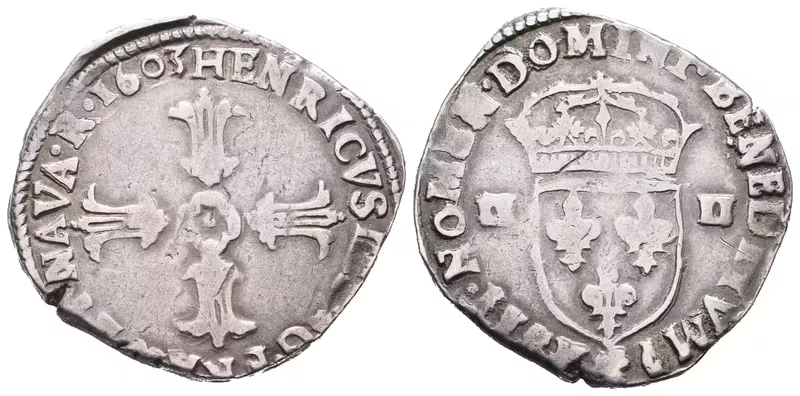
Francie, 1/4 Ecu 1603
Francie, Jindřich IV. (1589 - 1610) 1/4 Ecu 1603 (značka tři kroužky?), minc. Bordeaux nebo Remes, Dupp.1224, patina, excentrický, vady střížku (9,52 g)
Skladem 1 ks - Code: NABAVLA-1393
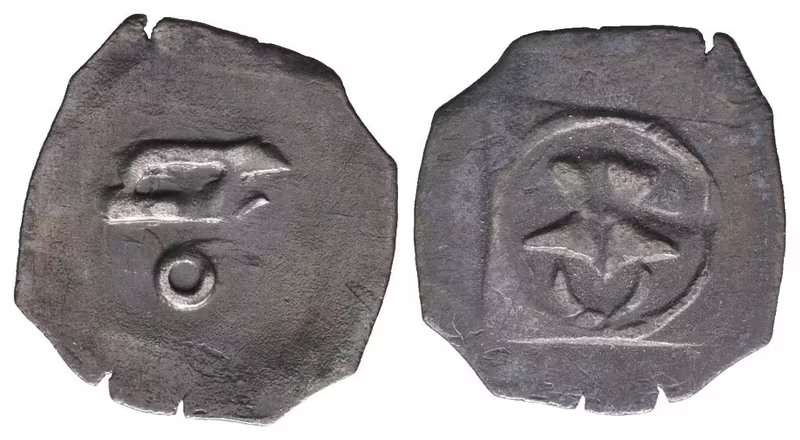
Bavorsko - Landshut, Fenik se čtyřrázem
Bavorsko - Landshut, Jindřich IV. (1393 - 1450) Pfennig se čtyřrázem, minc. Landshut, Rad.48, pěkná zachovalost, patina, ned.
Skladem 1 ks