The imperial cult
The imperial cult represented a system of religious worship of Roman rulers as divine beings or mediators between humans and the gods, which became the backbone of the ideology of the empire and fundamentally influenced the iconography of Roman coins. Depictions of deified emperors, their consecratio (apotheosis), and divine attributes on aurei, denarii,…
The roots of the imperial cult reach back into the Hellenistic period, when the successors of Alexander the Great introduced into their empires a ruler cult on the Egyptian and Persian model. Alexander himself was worshipped as the son of Zeus Ammon already during his lifetime, as is documented by his tetradrachms with the horns of a ram. The Roman Republic long refused divine honours to living persons, although prominent military leaders such as Scipio Africanus or Pompey the Great received quasi-divine titles.
Julius Caesar was the first Roman to accept divine honours during his lifetime — in 44 BC the senate granted him the title Divus Julius and the right to his own priest (flamen). After his assassination, Octavian secured the official deification of Caesar, thereby making himself Divi filius (son of a god). Coins with the comet as a symbol of Caesar's ascent among the gods and the inscription DIVVS IVLIVS set a precedent for the depiction of deified emperors.
Augustus (27 BC – 14 AD) built up a carefully devised system of the imperial cult that combined Roman tradition with Eastern elements. During his lifetime he refused direct worship in Italy, but in the provinces he permitted the cult of Roma et Augustus. His genius (divine spirit) was worshipped at household altars throughout the empire. After his death he was officially deified by the senate, and his coins with the inscription DIVVS AVGVSTVS and a radiate crown became the model for subsequent consecratio strikes.
Under the Julio-Claudian dynasty (14–68) the imperial cult was fully institutionalised. Tiberius struck extensive series of coins DIVVS AVGVSTVS PATER in honour of his divine predecessor. Caligula was the first to press for his own deification already in his lifetime, and on coins appeared with the attributes of various gods. Claudius systematised the consecratio ceremony — the release of an eagle from the funeral pyre, symbolising the ascent of the emperor's soul to the gods, became a standard motif of posthumous strikes.
History
The Flavians and the Antonines (69–192) extended divine honours also to empresses and members of the imperial family. Faustina the Elder and the Younger were deified after death and their consecratio coins with peacocks (a symbol of Juno) or with the crescent moon (a symbol of Diana) are among the most beautiful strikes of the period. Marcus Aurelius rejected exaggerated forms of the cult, but nevertheless had to accept traditional forms of imperial apotheosis. Commodus on the contrary intensified his self-presentation as the living Hercules.
The crisis of the 3rd century led to an inflation of divine titles. Emperors who ruled for only a few months struck coins with divine attributes in order to legitimise their power. Aurelian (270–275) introduced the title Dominus et Deus (Lord and God) and on coins was depicted with the radiate crown of the god Sol Invictus. Diocletian formalised the adoratio purpurae — a compulsory ritual of prostration before the emperor as a god. The Tetrarchy presented the emperors as the earthly representatives of Jupiter and Hercules.
Constantine the Great (306–337) transformed the imperial cult towards Christianity. Although he was not baptised until his deathbed, he gradually replaced pagan symbols with Christian ones. His coins with the Chi-Rho and the inscription IN HOC SIGNO VINCES represent the transition from the imperial cult to the concept of the sovereign by the grace of God, which dominated medieval coinage.
The iconography of the imperial cult on coins used an elaborate system of symbols of divine status. The radiate crown (corona radiata) denoted a living emperor with divine aspects, whereas a simple laurel wreath signified earthly authority. Consecratio coins of deceased emperors depicted an eagle bearing the soul to the heavens, a funeral pyre, a quadriga drawn by elephants, or the emperor ascending to the gods.
Manifestations of the imperial cult on coins
The divine attributes lent to the emperors included Jupiter's thunderbolt and eagle, Mars's helmet and spear, Hercules's club and lion's skin, Apollo's lyre and laurel. Empresses adopted the symbols of goddesses — Juno's peacock and sceptre, Venus's star and dove, Ceres's ears of corn and poppy, Diana's crescent moon and torch. These attributes communicated imperial virtues and roles.
The legends of the coins expressed the degrees of deification. DIVVS or DIVA denoted those officially deified, CONSECRATIO confirmed senatorial apotheosis, AETERNITAS emphasised the eternity of the imperial institution. Inscriptions such as GENIUS AVGVSTI or NUMEN AVGVSTI referred to the divine essence of imperial power without the direct deification of the person.
In our auction and shop
- Code: SPORT90-C2001
Portugalsko, 500 Escudos 2001 - Porto – evropské hlavní město kultury
Portugalsko 500 Escudos 2001 - Porto – evropské hlavní město kultury Ag 0,500, 30 mm (14 g), běžná kvalita
Skladem 1 ks - Code: SAUST-P2006.4
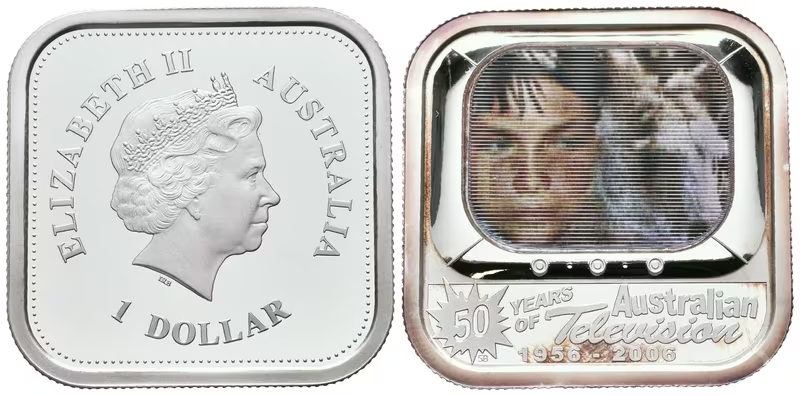
Austrálie, 1 Dollar 2006 - 50. výročí australské televize, lentikulární hologram s retro televizorem a scénami z kultovních australských pořadů
Australské společenství 1 Dollar 2006 - 50. výročí australské televize, lentikulární hologram s retro televizorem a scénami z kultovních australských pořadů Ag (.999), 35 mm (33 g), v kapsli. Stav mince odpovídá fotografii.
Skladem 1 ks - Code: YE-AU2500
Etue na mince - zlaté mince 2500,- dřevo
Dřevěná etue na 10 kusů pamětních zlatých mincí. Na zlaté mince 2500,-/ 10 století architektury, kulturní památky apod. Luxusní etue ze dřeva. V sametu je přesná prohlubeň na každý kus mince. Mosazné panty i zavírání. Povrchová úprava - matný lak. Barva…
Skladem 1 ks - Code: XBHER
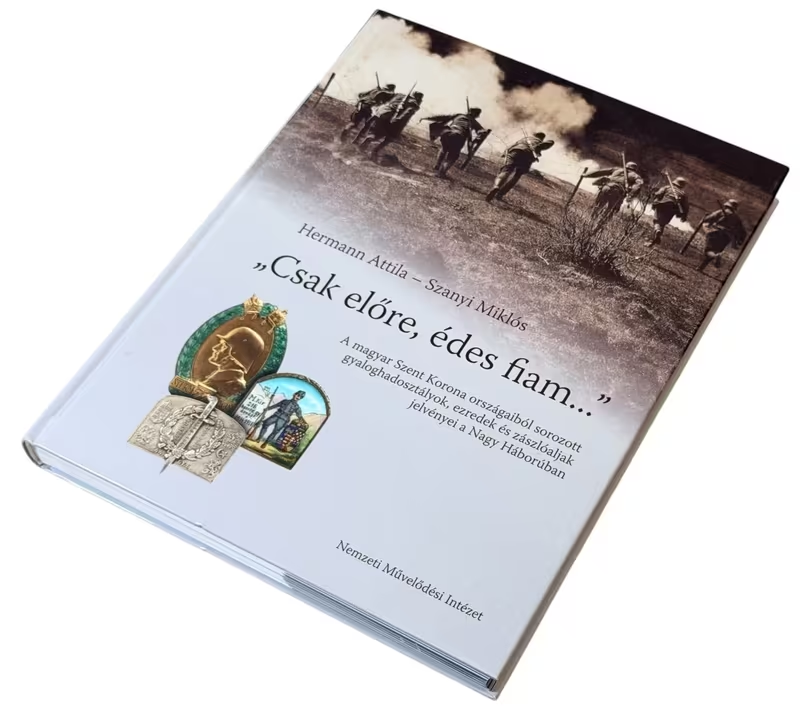
Csak előre, édes fiam…
Autoři: Hermann Attila a Szanyi Miklós „Csak előre, édes fiam…” (v překladu „Jen kupředu, můj drahý synu…“ ) je maďarská historická a faleristická odborná kniha, která slouží jako podrobný katalog čepicových odznaků a vyznamenání pěších divizí, pluků a…
Skladem 1 ks