Steve Jobs
Steve Jobs was an American entrepreneur and visionary who co-founded Apple Computer and revolutionised several industries from personal computers through animated films to digital music and mobile telephones. His perfectionism, charisma and ability to anticipate technological trends created products that changed the way people work, communicate and consum…
Steven Paul Jobs was born on 24 February 1955 in San Francisco as the illegitimate child of the Syrian Muslim postgraduate student Abdulfattah John Jandali and the American Catholic student Joanne Schieble, who put him up for adoption due to religious and social obstacles to their relationship. His biological mother insisted that the adoptive parents be university-educated, but when the chosen lawyer couple refused the boy at the last moment and wanted a girl, the child was given to Paul and Clara Jobs, a machinist and accountant without university education, who had to sign a pledge to provide the boy with a university education.
Jobs grew up in Mountain View at the heart of the emerging Silicon Valley, where the atmosphere of garage start-ups and technological innovation shaped his worldview. His adoptive father Paul, a precise craftsman who restored cars, taught Steve the importance of perfect workmanship even on the parts that no one sees, a philosophy that became the basis of Jobs's approach to design. Mother Clara worked as an accountant so that the family could give Steve the best education, although he was a problematic student who often questioned authority and was bored by the standard curriculum.
His rebellious nature manifested itself already at high school, where he experimented with LSD, marijuana and Eastern philosophy, which he later described as one of the most important experiences of his life, which expanded his consciousness and creativity. His friendship with Steve Wozniak, an electronic engineering genius five years his senior, began at meetings of the Homebrew Computer Club, where enthusiasts shared their projects. Their first joint business was the sale of blue boxes, illegal devices for hacking telephone lines, which showed them that technology could challenge established monopolies.
After a single semester at the expensive Reed College in Oregon, Jobs officially left his studies in 1972, but remained as an auditor attending courses that interested him, especially calligraphy, which later inspired the emphasis on typography in the first Macintosh. His journey to India in 1974 in search of spiritual enlightenment ended in disappointment when he discovered that the guru he was seeking had died, but the experience of poverty and simplicity influenced his minimalist aesthetic. After returning, he worked night shifts at Atari, a gaming company, where his arrogance and poor hygiene irritated colleagues to such an extent that he was given his own working hours.
The breakthrough came in 1976 when Wozniak designed a revolutionary computer board that could be connected to a television and keyboard, creating the first truly personal computer. Jobs immediately recognised the commercial potential and convinced the sceptical Wozniak to leave Hewlett-Packard and found a company. Apple Computer Company was officially founded on 1 April 1976, with Jobs selling his Volkswagen van and Wozniak his HP-65 calculator to obtain an initial capital of $1,350. The third co-founder, Ronald Wayne, sold his 10% stake for $800 after only twelve days, a decision that later cost him hundreds of billions.
History
The Apple I, sold for a symbolic $666.66, was a modest success with 200 units sold, but the Apple II, introduced in 1977, became the first mass-produced personal computer with colour graphics and an elegant plastic case designed by Jobs. His obsession with design led to many conflicts with engineers, but the result was groundbreaking - the Apple II generated annual revenues of over $100 million and made Apple the fastest-growing company in American history. The IPO in December 1980 created more millionaires than any since Ford and made Jobs, at the age of 25, the youngest person on the Fortune 500 list.
A visit to Xerox PARC in 1979, where Jobs saw a demonstration of a graphical user interface with a mouse, was an epiphany that changed the direction of Apple. While Xerox engineers did not see the commercial potential, Jobs immediately understood that this was the future of computers. The resulting Macintosh, launched with the legendary 1984 commercial during the Super Bowl, was a technological triumph but a commercial disappointment due to its high price and limited functionality. Jobs's perfectionism and tyranny led to his conflict with CEO John Sculley, whom he himself had brought from Pepsi, and in 1985 Jobs was fired from his own company.
Instead of a fall, Jobs's most creative period followed - he founded NeXT Computer, which developed advanced workstations used among others by Tim Berners-Lee to create the World Wide Web, and bought for $10 million the computer graphics division from George Lucas, which he transformed into Pixar. Under his leadership, Pixar created the first feature-length computer-animated film Toy Story in 1995, which changed the animated industry forever. When Disney bought Pixar in 2006 for $7.4 billion, Jobs became Disney's largest individual shareholder.
Meanwhile Apple without Jobs was losing market share and heading towards bankruptcy, experimenting with unsuccessful products such as the Newton and licensing the operating system to clones. In a desperate move, Apple bought NeXT in 1997 for $429 million, bringing Jobs back as an adviser who quickly became CEO. His first moves were brutal but necessary - he cancelled dozens of products, dismissed thousands of employees and concluded a partnership with arch-enemy Microsoft, which invested $150 million.
The iMac, introduced in 1998, signalled Jobs's return to innovation - a translucent, colourful all-in-one computer that looked like nothing on the market, saving Apple from bankruptcy. The iPod in 2001 with the slogan 1,000 songs in your pocket transformed the music industry and created a new category of product. The iTunes Store solved the problem of piracy by offering a legal and convenient way to buy music at 99 cents a song, forever changing the economics of the music industry.
Philosophy of design and management
The iPhone, introduced on 9 January 2007, was Jobs's masterpiece - a combination of telephone, iPod and internet communicator in one elegant device with revolutionary touch control. Sceptics doubted the success of a telephone costing $600 without a keyboard, but the iPhone redefined not only the mobile industry but the entire digital economy, creating an App Store ecosystem generating hundreds of billions of dollars. The iPad in 2010 created a new tablet category, although critics described it as a large iPhone.
Jobs's diagnosis of a rare type of pancreatic cancer in 2003 and his decision to postpone surgery by nine months in favour of alternative treatment remains controversial. His health problems led to a liver transplant in 2009 and gradual decline, which became visible during his increasingly gaunt appearances. His last keynote on 6 June 2011, where he introduced iCloud, showed a visionary struggling with time to complete his vision of the post-PC era. Steve Jobs died on 5 October 2011 at the age of 56, the day after the introduction of the iPhone 4S with Siri, surrounded by family at his home in Palo Alto.
Jobs's design philosophy was based on the intersection of technology and the humanities, creating products that are not only functional but emotionally resonant with users. His mantra Simplicity is the ultimate sophistication led to minimalist products in which every element had a purpose and nothing was superfluous. Jobs believed in controlling the entire user experience from hardware through software to retail environment, which led to Apple's closed ecosystem, which critics call a walled garden but which users appreciate for its seamless integration.
His management style was notoriously demanding and even cruel - Jobs divided the world into geniuses and idiots, products into brilliant or rubbish, without a middle ground. His reality distortion field, a term borrowed from Star Trek, described his ability to convince anyone of the impossible through a combination of charisma, will and psychological manipulation. Jobs was a perfectionist who could delay a product by months over a shade of grey or the radius of a corner, but this uncompromising approach created products that defined categories.
His innovation process began with an intuition about what people would want before they knew it themselves - Jobs disdained market research, believing that people don't know what they want until you show it to them. The team dynamic under Jobs was intense - he expected the impossible, shouted at people, but also inspired the greatest performances of their careers. His ability to see the future and connect the dots between seemingly unrelated trends created products that not only succeeded commercially but changed culture.
In our auction and shop
- Code: XDIND
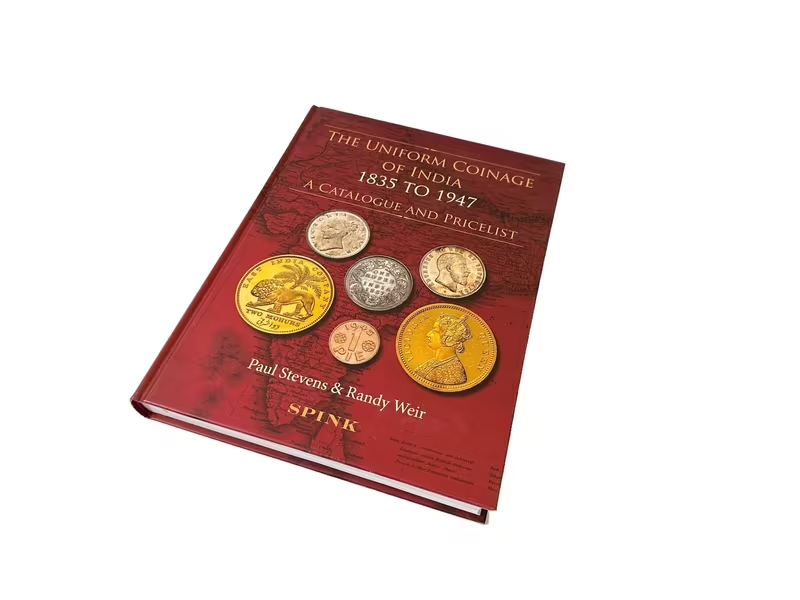
The Uniform Coinage of India 1835 to 1947
Paul Stevens & Randy Weir, Spink ed. Katalog vládních mincí Indie pod Velkou Británií včetně mincí Východoindické společnosti mezi lety 1835 - 1947. Včetně mnoha vyobrazení, variant a subvariant. Vydáno 2012, počet stran 360, vázaný výtisk. Ušpiněný…