
Venetian Ducat
The Venetian ducat was a gold trade coin introduced by the Republic of Venice in 1284. In later terminology it is also called the zecchino.
In the 13th century Venice was one of the key nodes of Mediterranean trade. Large transactions between Europe and the eastern Mediterranean required a coin which merchants would trust across borders. The Venetian ducat fulfilled this role: it was not merely a local means of payment but an international gold brand which the market accepted precisely because of the stability of its parameters.
Historical context
For trade coins, trust is often more important than the political power of their issuer. If a coin maintains its fineness and weight, merchants accept it more readily and with less discount. The Venetian ducat therefore became a model for many later European gold strikes, and its name passed into the wider term "ducat".
Stability and commercial trust
For today's collectors and investors the Venetian ducat is a useful example of how metal value can combine with historical and reputational value. The gold itself forms the basis, but trust in origin, parameters and a long tradition can make a coin much more than just a piece of precious metal.
Sources
Sources: Encyclopaedia Britannica, "Ducat"; AUREA encyclopaedia, entry "Zecchino".
In our auction and shop
- Code: M92022-1818V
František II., Tolar 1818 V, Benátky
František II. (1792 - 1835) Tolar 1818 V, Benátky, Ves. 22
Skladem 1 ks - Code: MA084-1859V
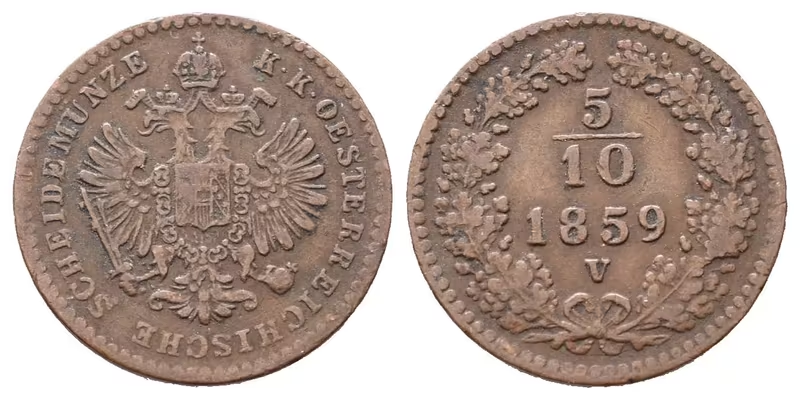
5/10 Krejcar 1859 V
František Josef I. (1848 - 1916) 5/10 Krejcaru 1859 V, Benátky, Ves. 84, patina, rysky
Skladem 1 ks - Code: MA084-1860V.1
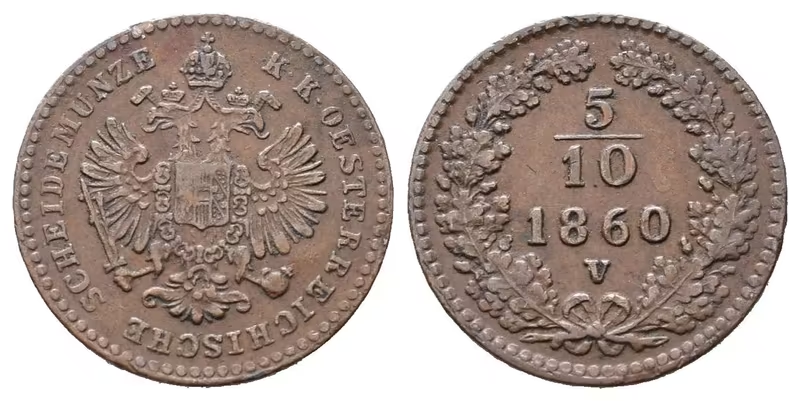
5/10 Krejcar 1860 V
František Josef I. (1848 - 1916) 5/10 Krejcaru 1860 V, Benátky, Ves. 84, patina, drobné rysky
Skladem 1 ks - Code: MA029-1852LOT
3 Centesimi 1852 M, 1852 V
František Josef I. (1848 - 1916) 3 Centesimi 1852 M - Miláno, 1852 V - Benátky, Ves. 29_celkem 2 ks
Skladem 1 ks


Further in the encyclopaedia
More entries in the category Historie zlata. Continue browsing or return to the full encyclopaedia.