Legal-Tender Coin (Berná mince)
A berná mince was a coin officially designated by the sovereign for circulation in a defined territory, which the inhabitants were obliged to accept in payments. Its purpose was to protect domestic monetary circulation from foreign or low-quality coins and to strengthen sovereign control over the monetary system.
The berná mince represents an important instrument of medieval monetary policy whose roots reach back to the period when sovereigns gradually consolidated their power over the economy and monetary circulation. In the Middle Ages the circulation of coins was not a matter of course governed by a single authority: domestic and foreign strikes of varying quality, weight and fineness often circulated simultaneously in one territory. This led to uncertainty in trade, to speculation and to debasement of the currency.
Proclaiming coins as berná meant that the sovereign set out a list of coins that were legal tender in his territory. These coins had to be accepted by the populace regardless of personal trust in their quality. The purpose of this measure was above all to protect the country from being flooded by foreign, often substandard coins, and at the same time to strengthen the sovereign's authority as guarantor of the currency.
Legal-Tender Coin
In the Bohemian lands the concept of berná mince is documented especially in the 15th century. A typical example is the intervention of King George of Poděbrady, who in 1458 banned the circulation of Austrian and Bavarian pfennigs, which were considered undesirable. Conversely, in other cases the sovereign could order the acceptance of even foreign strikes, if the economic situation required it, for example in the case of a shortage of domestic coin.
Foreign coins additionally adapted for domestic circulation also became a specific form of berná mince. A typical example are Prague groschen in German cities, where they became legal tender through countermarking. By this means they acquired official validity in a new monetary space without the need to strike new coins.
History
The berná mince above all performed a regulatory function. By means of it the sovereign delimited which coins were considered legitimate and binding, and thus stabilised monetary circulation. This instrument was important especially in periods of monetary crisis, when the populace refused to accept coins of poor quality or of suspect origin.
Proclaiming a berná mince was also an expression of sovereignty. The right to determine legal tender belonged to the basic prerogatives of the sovereign and was connected with minting law. The inhabitants were obliged to accept berné coins in taxes, fees and ordinary trade, which reinforced their actual validity in everyday life.
The function of the berná mince in monetary circulation
For numismatics, the concept of berná mince is significant for the study of coin circulation, monetary interventions and economic history. It allows us to understand why some coins occur in finds outside the area of their origin and in what way they were incorporated into foreign monetary systems.
In our auction and shop
- Code: RG-2013MABE
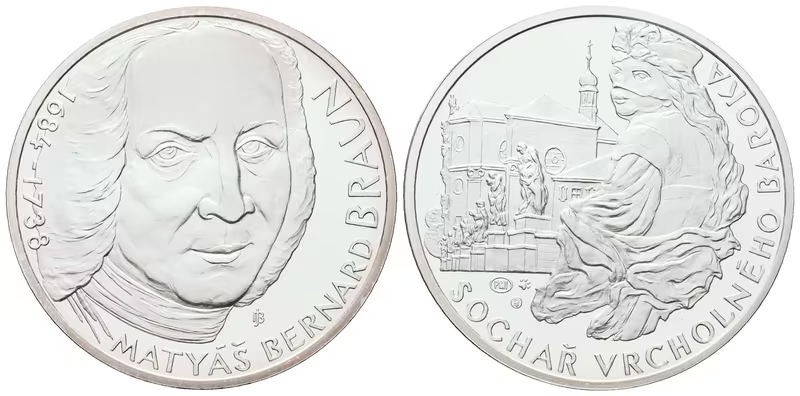
AR Medaile b.l. (2013) - Matyáš Bernard Braun - 275. výročí úmrtí
Česká republika (1993 - ) AR Medaile b.l. (2013, Jaroslav Bejvl, Miroslav Schovanec) - 275. výročí úmrtí Matyáše Bernarda Brauna, sochaře vrcholného baroka (1684-1738) Ag 0,999, 37 mm (31,1 g), 1 Oz, číslo 146 (raženo 616 ks), kapsle, etue, certifikát,…
Skladem 1 ks - Code: SITAAQI-A1402
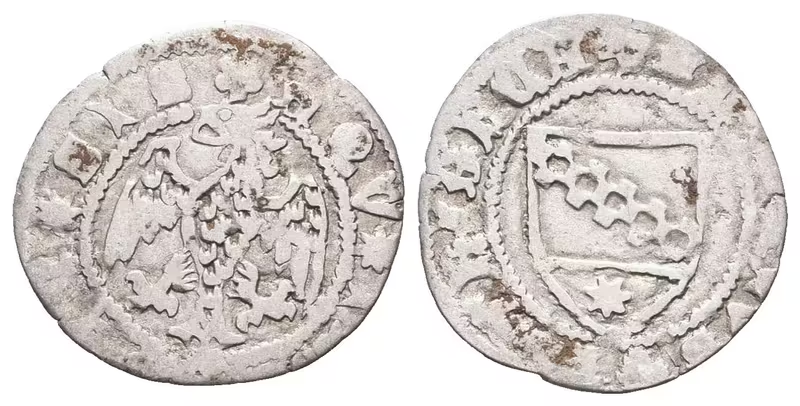
Itálie - Aquilea, Denár b.l.
Itálie - Aquilejský patriarchát, Antonio II. Panciera, 1402 - 1412 Denár b.l., Rodový znak ve štítu, opis / Orel hledící vlevo, opis. Bernard.67 (0,58 g), patina, excentrický
Skladem 1 ks - Code: SITAAQI-A1402.1
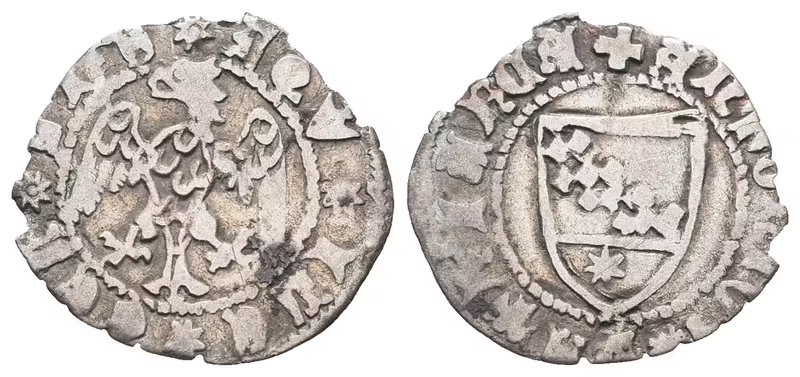
Itálie - Aquilea, Denár b.l.
Itálie - Aquilejský patriarchát, Antonio II. Panciera, 1402 - 1412 Denár b.l., Rodový znak ve štítu, opis / Orel hledící vlevo, opis. Bernard.67 (0,51 g), patina, lehce olámaný
Skladem 1 ks - Code: SITAAQI-A1412
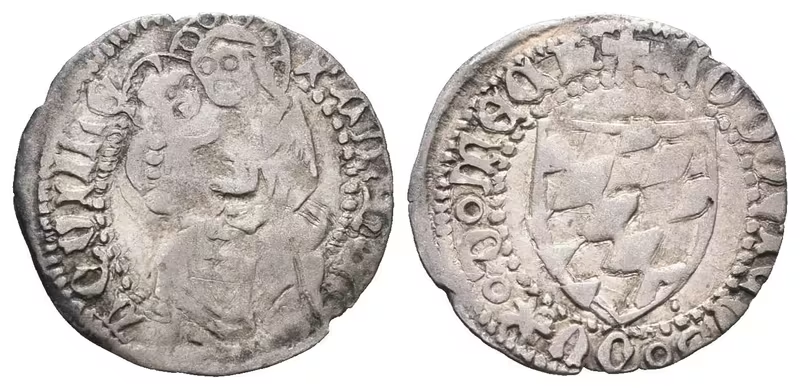
Itálie - Aquilea, Denár b.l.
Itálie - Aquilejský patriarchát, Ludwig von Teck, 1412 - 1420 Denár b.l., Madonna s jezulátkem na trůně, opis / Znak vévodů z Teck, opis. Bernard.69 (0,56 g), patina, nedoražený
Skladem 1 ks