Bernard Arnault
Bernard Arnault is a French entrepreneur and art collector who built the world's largest luxury conglomerate, LVMH, and became a symbol of French elegance and artisanal perfection. His empire, encompassing brands such as Louis Vuitton, Dior, Moët & Chandon and Tiffany & Co., has redefined the global market for luxury goods.
Bernard Jean Étienne Arnault was born on 5 March 1949 in Roubaix in northern France into a family of successful entrepreneurs who instilled in him a respect for artisanal quality and entrepreneurial courage. His father Jean Léon Arnault owned the construction company Ferret-Savinel, which specialised in industrial and residential projects, while his mother Marie-Josèphe Savinel came from a family with a long tradition in the textile industry. Young Bernard grew up in an environment where architecture, design and material quality were discussed, which shaped his later aesthetic sensibility and emphasis on perfection.
After graduating from the prestigious École Polytechnique, France's elite technical university, in 1971, Arnault joined his father's firm, where he quickly displayed a talent for identifying untapped opportunities. His first significant decision was to reorient the family firm from traditional construction towards more lucrative development projects on the French Riviera, where he built residential complexes for affluent clientele. This experience with the luxury market and demanding customers became the foundation of his later strategy.
In 1981, when the socialist government of François Mitterrand was nationalising industry and wealthy French citizens were fleeing the country, Arnault made the controversial decision to emigrate to the United States. In New York he built a successful development business specialising in luxury condominiums in Palm Beach, but his heart remained in France. The American experience provided him with valuable lessons about the global marketing of luxury and the importance of brand, which French family firms often ignored.
The breakthrough moment of his career came in 1984, when he learned that the bankrupt textile conglomerate Boussac, owner of the legendary fashion house Christian Dior, was looking for a buyer. Arnault persuaded investors including Lazard Frères to provide him with 80 million dollars and for 15 million francs took control of the company, which had debts exceeding 2 billion francs. Everyone expected him to save the textile factories and jobs, but Arnault had another plan: within two years he sold off all divisions except Dior and the luxury department store Le Bon Marché.
This "American" brutality shocked the French establishment, accustomed to paternalistic capitalism; the media labelled him a "wolf in cashmere" and unions organised protests. Arnault, however, knew that Dior alone was worth more than the entire loss-making conglomerate. His vision lay in creating a luxury empire built on historic brands with an artisanal tradition, modernised for the global market while preserving their exclusivity and prestige.
History
In 1987 Arnault exploited the stock-market crash and internal disputes within LVMH (Louis Vuitton Moët Hennessy), which had arisen from the merger of the champagne and cognac producer Moët Hennessy with the maker of luxury leather goods Louis Vuitton. Together with Guinness he gradually bought up shares until he gained a controlling stake, using complex financial structures and surprising alliances. The founders Henri Racamier and Alain Chevalier, who had originally invited him as an arbiter in their dispute, realised too late that they had let a predator into the company.
After taking control in 1989, Arnault transformed LVMH from a loose federation of family firms into a disciplined conglomerate with centralised management and an aggressive expansion strategy. He dismissed the old management, appointed young talented designers such as Marc Jacobs at Louis Vuitton and John Galliano at Dior, and introduced strict financial control while preserving creative freedom. His formula combined respect for artisanal tradition with fashion innovation and global marketing.
During the 1990s Arnault systematically acquired icons of European luxury: Céline, Kenzo, Givenchy, Loewe, Fendi and dozens of other brands from champagne through watches to yachts. His acquisitions were often hostile, exploiting the financial difficulties of family firms or generational disputes. The most controversial was the battle for Gucci with François Pinault, which split the European luxury industry into two camps and ended in Arnault's defeat when Gucci issued new shares and diluted his stake.
The new millennium brought expansion into emerging markets, especially China, where Arnault recognised the potential earlier than his competitors. LVMH opened hundreds of boutiques in Chinese cities, and Arnault personally built relationships with Chinese elites. When Western luxury brands hesitated because of counterfeits and uncertain protection of intellectual property, LVMH invested massively in its Chinese presence. This bet paid off: China today represents a third of the group's revenue.
In 2011 Arnault entered the world of high-tech luxury with investments in Netflix and later in companies such as Spotify or Airbnb, recognising the convergence of technology and lifestyle. His son Alexandre led the acquisition of the German maker of luxury suitcases Rimowa, which he transformed through collaborations with streetwear brands such as Supreme or Off-White, thereby drawing millennials to traditional luxury.
Business strategy and philosophy of luxury
The COVID pandemic paradoxically strengthened Arnault's position: while competitors were cutting costs, LVMH continued investing and acquiring, including the takeover of the American jeweller Tiffany & Co. for 15.8 billion dollars, the largest acquisition in the history of the luxury industry. Arnault first exploited the pandemic to lower the price, but ultimately completed the transaction, believing in the long-term value of the brand.
In 2023 Arnault appointed his daughter Delphine chair and CEO of Dior, thereby initiating the generational handover of power. His five children hold key positions in various divisions of LVMH: Antoine manages communication and image, Alexandre leads Tiffany, Frédéric heads the watch brand TAG Heuer and Jean leads the development of Louis Vuitton watches. This dynastic structure secures the continuity of family control over the empire.
Arnault's strategy is based on the paradox of democratising luxury while preserving exclusivity: LVMH products must be accessible to a sufficiently large market to generate billion-dollar revenues, but must at the same time retain an aura of unattainability. He achieves this balance through a price pyramid in which entry products such as perfumes or small leather accessories attract aspirational customers, while haute couture and limited editions maintain the prestige of the brand.
His management style combines French creativity with American financial discipline, giving designers absolute creative freedom within strictly controlled budgets. Arnault personally approves every major collection and marketing campaign, and has a reputation as a perfectionist capable of recognising a single bad stitch or shade. He believes that luxury is a combination of dream and perfect execution, where every detail must reflect exceptional quality.
Arnault's investment in art is not merely a hobby but a strategic part of building the cultural capital of LVMH; his modern art collection, worth billions of dollars, includes works by Picasso, Warhol, Basquiat and Jeff Koons. The Fondation Louis Vuitton, Frank Gehry's futuristic building in Paris, has become a cultural icon linking the brand with high art. Arnault understands that in the era of social media, cultural relevance is as important as product quality.
In our auction and shop
- Code: RG-2013MABE
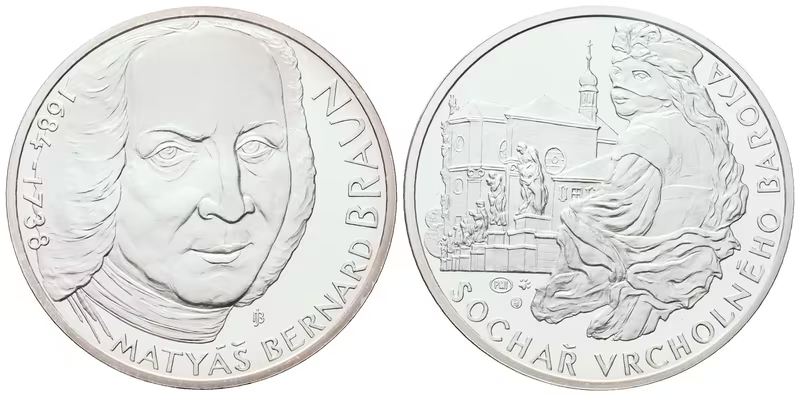
AR Medaile b.l. (2013) - Matyáš Bernard Braun - 275. výročí úmrtí
Česká republika (1993 - ) AR Medaile b.l. (2013, Jaroslav Bejvl, Miroslav Schovanec) - 275. výročí úmrtí Matyáše Bernarda Brauna, sochaře vrcholného baroka (1684-1738) Ag 0,999, 37 mm (31,1 g), 1 Oz, číslo 146 (raženo 616 ks), kapsle, etue, certifikát,…
Skladem 1 ks - Code: SITAAQI-A1402
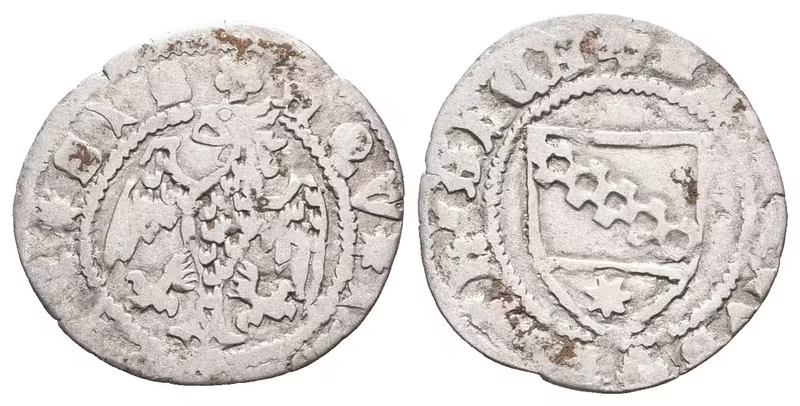
Itálie - Aquilea, Denár b.l.
Itálie - Aquilejský patriarchát, Antonio II. Panciera, 1402 - 1412 Denár b.l., Rodový znak ve štítu, opis / Orel hledící vlevo, opis. Bernard.67 (0,58 g), patina, excentrický
Skladem 1 ks - Code: SITAAQI-A1402.1
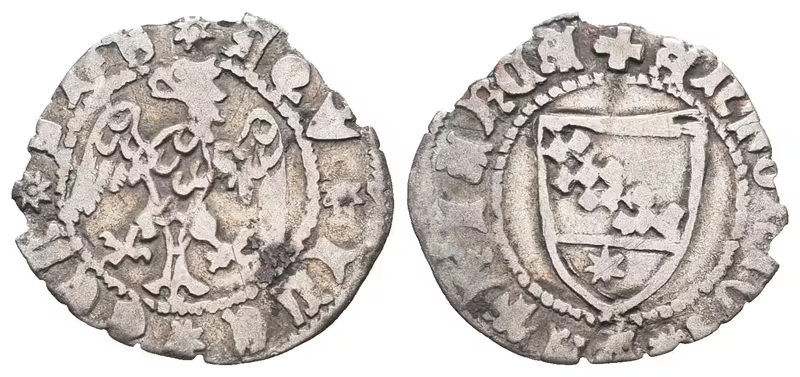
Itálie - Aquilea, Denár b.l.
Itálie - Aquilejský patriarchát, Antonio II. Panciera, 1402 - 1412 Denár b.l., Rodový znak ve štítu, opis / Orel hledící vlevo, opis. Bernard.67 (0,51 g), patina, lehce olámaný
Skladem 1 ks - Code: SITAAQI-A1412
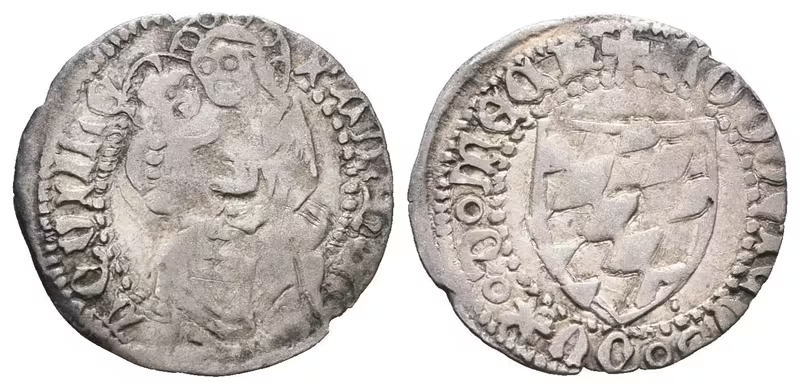
Itálie - Aquilea, Denár b.l.
Itálie - Aquilejský patriarchát, Ludwig von Teck, 1412 - 1420 Denár b.l., Madonna s jezulátkem na trůně, opis / Znak vévodů z Teck, opis. Bernard.69 (0,56 g), patina, nedoražený
Skladem 1 ks