Henry I the Fowler
Henry I the Fowler was King of the East Frankish Realm and Duke of Saxony from 919 to 936, regarded as the founder of the power of the Ottonians. He was renowned for the strengthening of royal authority, the defence against Magyar raids and the creation of the foundations of the later Holy Roman Empire.
Henry I the Fowler (German Heinrich der Vogler) came from the Saxon Liudolfing dynasty, which is commonly designated in historiography as the Ottonian. His epithet is traditionally interpreted as a reference to falconry, that is the noble pastime of hunting with birds of prey, which in the early Middle Ages belonged among the prestigious marks of the elite. By the time of Henry's rise, the Carolingian unity of Western Europe was definitively weakening, and the East Frankish space rested on "tribal" duchies (Saxony, Franconia, Bavaria, Swabia, later also Lotharingia). Royal power was less self-evident than in the time of Charlemagne, and the sovereign had to balance the influence of regional magnates and build authority more by agreements than by permanent centralisation.
Henry was elected king in 919 after the death of Conrad I. His accession is often understood as a pragmatic turn: instead of exhausting internal conflicts, he sought to gain the cooperation of the dukes and stabilise the conditions of the Empire. In practice this meant that he left the individual duchies to a certain extent autonomous, but gradually integrated them into the royal framework by means of obligations, oaths and political compromises. Such "shared rule" with regional elites was not weakness, but a realistic response to the conditions of the age, when the king had at his disposal neither a standing army nor a modern bureaucracy.
A fundamental challenge were the raids of the Magyars (Hungarians), who from the end of the 9th century made rapid mounted incursions into Central Europe. Henry sought to gain time and space for the strengthening of defence. In the chronicler's tradition, the period is recalled in which he managed to achieve a temporary peace and to use this time for the building of fortified places and the organisation of a defensive system. The rise and strengthening of strongholds and fortified centres was not only a military measure: such places became administrative hubs, stores of supplies and points around which power and economy were concentrated. Defence against raids thus also strengthened the inner cohesion of the Empire.
History
Henry's rule is also significant in that it prepared the ground for the later rise of his family. While he himself did not seek the imperial crown in Rome, he created the preconditions for his son Otto I the Great to follow on and move the kingdom towards an imperial model. An important part was also the work with dynastic succession: Henry managed to assert that the successor should be precisely Otto, whereby the continuity of power was strengthened. In an environment where the election of the king and the influence of magnates still played a great role, this was a fundamental step towards a more stable transmission of rule.
Henry I died in 936 and was buried in Quedlinburg, the centre associated with his family. In the memory of the Middle Ages and modern historiography he remains as a sovereign who "assembled" the Empire from regional forces into a functioning whole and strengthened the capacity for common defence. His significance lies less in ostentatious representation and more in the long-term effect: he created the political framework on which the Ottonians could build and from which the Holy Roman Empire later developed.
Henry I the Fowler is important for understanding early medieval statehood: royal power was based on personal ties, the loyalty of the elite and the capacity to coordinate defence and administration. His policy of fortification and the organisation of defence against Magyar raids also had "civil" effects — it strengthened the network of centres in which trade, the collection of dues and administration were concentrated. It is precisely in such hubs that money circulation is typically formed as well, since the need for standardised payments for the market, dues and supply grows.
Sovereign power, defence and connections with coins
In the numismatic sense Henry's era belongs to the period when the East Frankish and neighbouring regions worked above all with small silver coins of the denarius type. The strikes were closely linked with regional centres and with ecclesiastical institutions, which took part in administration and economy. For collectors and historians this period is interesting in that the coins often bear short inscriptions and simple motifs, while real political stability rests rather on the control of territory and on the sovereign's ability to maintain order. Henry's contribution is therefore read not only through specific coin types, but through how his rule strengthened the conditions in which trade and money circulation could function.
In the wider context Henry I tends to be perceived as the "founder of the dynasty": his rule shows how, in the early Middle Ages, a more stable form of rule is born from the combination of military defence, political compromises and the gradual institutionalisation of power. It is precisely this type of rule that is the reason why later symbolic commemorations in historiography, commemorative culture and sometimes also in medallic art often attach themselves to his name.
In our auction and shop
- Code: RASEV-1979
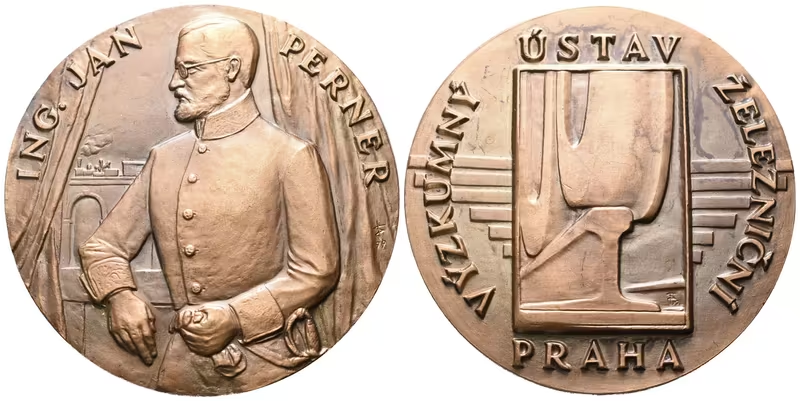
Severa Jindřich - Jan Perner
Severa Jindřich (1909 - 1980) AE Medaile 1979 - ing. Jan Perner/ vydáno pro Výzkumný ústav železniční Praha Bronz s patinou, 70 mm (149,5 g), etue
Skladem 1 ks - Code: SFRA87-D1586
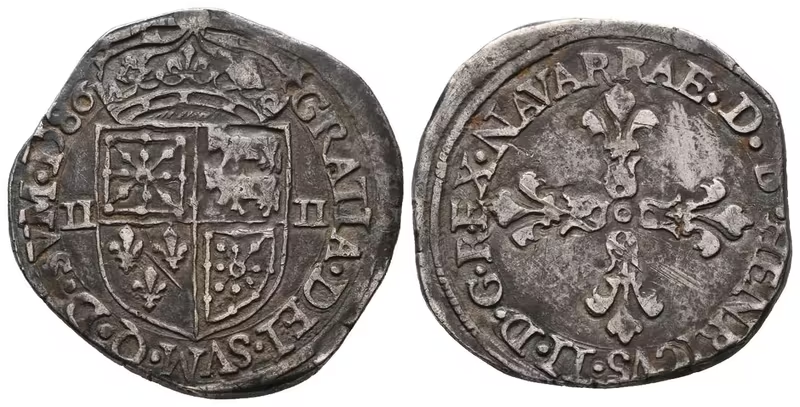
Francie, 1/4 Ecu d’Bearn 1586
Francie - Vikomtství Béarn, Jindřich II. Navarrský (1572 - 1589) 1/4 Ecu d´Bearn 1586, minc. Pau, PA.3501, pěkná zachovalost a patina_R!
Skladem 1 ks - Code: SFRA88-D1603
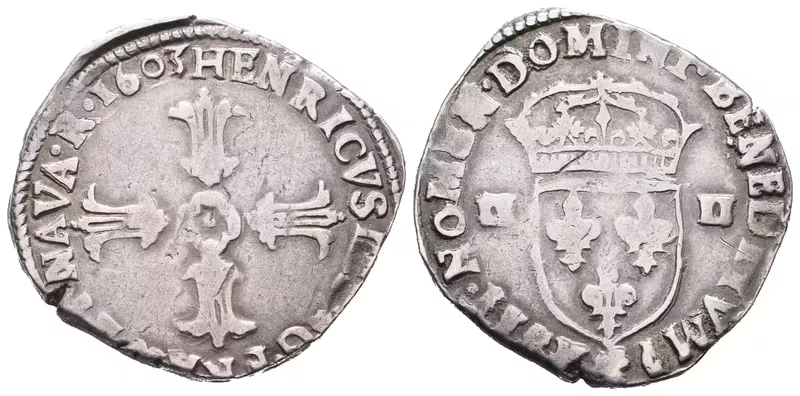
Francie, 1/4 Ecu 1603
Francie, Jindřich IV. (1589 - 1610) 1/4 Ecu 1603 (značka tři kroužky?), minc. Bordeaux nebo Remes, Dupp.1224, patina, excentrický, vady střížku (9,52 g)
Skladem 1 ks - Code: NABAVLA-1393
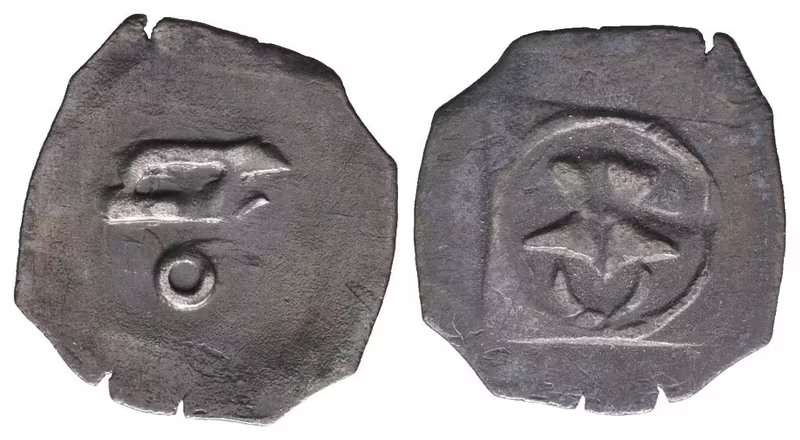
Bavorsko - Landshut, Fenik se čtyřrázem
Bavorsko - Landshut, Jindřich IV. (1393 - 1450) Pfennig se čtyřrázem, minc. Landshut, Rad.48, pěkná zachovalost, patina, ned.
Skladem 1 ks