Catholic League
The Catholic League was a confessional defensive alliance of Catholic princes and ecclesiastical states in the Holy Roman Empire, founded in 1609 in Munich. It arose as a counterweight to the Protestant bloc and in the first phases of the Thirty Years' War played a striking military and political role.
The foundation of the Catholic League was bound up with the long-term tension within the Empire after the Reformation and with the gradual disintegration of the fragile equilibrium that the Augsburg religious peace of 1555 was to preserve. That settlement enabled the legal coexistence of two confessions but left many disputed areas open – from the question of ecclesiastical property, through the position of certain currents of the Reformation, to the question of who and how should decide in conflicts between towns, the nobility and ecclesiastical institutions. At the turn of the 16th and 17th centuries, therefore, in many parts of the empire not only theological positions but also practical interests came into conflict: control over territory, taxes, the judiciary and the representation of power.
The immediate catalyst was the escalation of confessional disputes and the fear that the opponent was gaining the upper hand through imperial institutions or armed interventions. When the Protestant Union was established in 1608, the Catholic side perceived this step as a threat that might grow from political negotiation into a military clash. The main initiative was taken up by Maximilian I of Bavaria, who pushed for firmer coordination of the Catholic estates. The Catholic League was founded on 10 July 1609 in Munich as a confederation which, in case of crisis, was to ensure common action, defence and financing of a possible army.
From the outset it was more than just a formal society: the League aspired to act as a counterweight to the Protestant partners in imperial politics, to unify positions at the diets and in extreme situations to intervene by force. Bavaria stood at its head, but ecclesiastical principalities and other Catholic territories also joined. The key thing was that the League gradually relied on its own military capacities and on experienced commanders. The most prominent figure of the early phase was Johann Tserclaes of Tilly, who became a symbol of the League's military strength in the first years of the Thirty Years' War.
History
After 1618, when the conflict ignited in the Czech lands and quickly grew into an empire-wide crisis, the Catholic League found itself at the centre of events. Its troops fought alongside the emperor and played a fundamental role in the defeat of the Bohemian Estates' Revolt at the Battle of White Mountain (8 November 1620). In subsequent years the League also took part in campaigns against the Protestant opponents in the Empire, especially in the Palatinate area. Its independent importance, however, gradually weakened: Emperor Ferdinand II built up his own army base and also drew on the army of Albrecht von Wallenstein, which changed the balance of power within the Catholic camp.
A turning point came after the Swedish entry into the war and after a series of military shocks at the beginning of the 1630s. Even though the League remained an important player, its autonomy and ability to pursue independent politics were increasingly limited. The formal end was brought by the Peace of Prague of 30 May 1635, which restricted in the Empire the possibility of independent military confederations of the estates and aimed at a greater unification of armies under imperial authority. The Catholic League as an independent body thus disappeared from the political map both de facto and de jure, even though the war itself continued on a broader European scale.
The Catholic League was founded as a contractual confederation: its members committed themselves to a common procedure, to financial contributions and to providing armed assistance if their security or position within the Empire were endangered. In practice this was a combination of diplomacy and military preparedness. The leadership of the League had a political dimension (negotiations with the emperor, coordination at imperial diets, negotiation with allies), but equally important was the ability to mobilise forces quickly and maintain their supply – which was an extraordinarily costly and organisationally complex task in the conditions of the early modern period.
Organisation, army and role in the war
The military side of the League rested on hired and provincial units and on experienced commanders. Alongside Johann Tserclaes of Tilly, other prominent figures appear in the League's service, who took part in campaigns in Bohemia, in south-western Germany and in the Palatinate area. The League was not, however, a "unified army" in the modern sense: individual princes and ecclesiastical states often retained their own interests, and it was therefore necessary continually to balance strategy, financing and political goals. Nonetheless, in the early phase of the Thirty Years' War it was able to act as a significant force that co-shaped the outcomes of key encounters and influenced negotiations between the estates and the imperial court.
In the broader context it is important that the long war placed a strain on the economies of many territories of the Empire. The costs of the army, contributions and disruption of trade led to exceptional fiscal measures and in some regions also to monetary upheavals, which subsequently are reflected in the history of coinage and circulation. The Catholic League is thus an example of how the religious and political disputes of the early modern period were transformed into institutional blocs whose existence had concrete, often very tangible impacts on the lives of inhabitants and on the functioning of states.
In our auction and shop
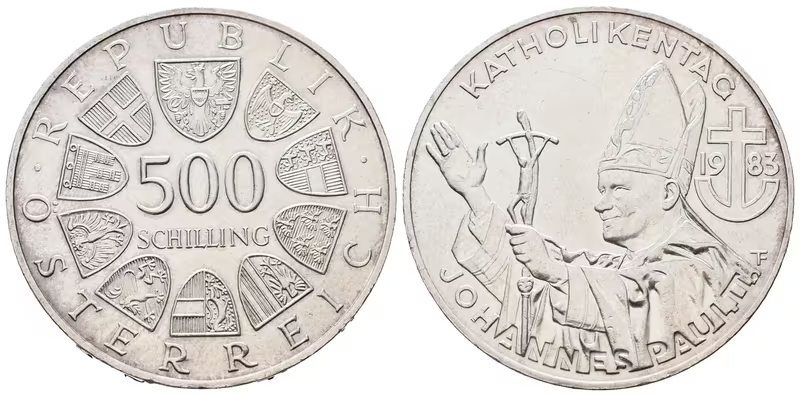
- Code: SRAK2-B1983A
Rakousko, 500 Schilling 1983 - Katolický den
II. republika (1945 - ) 500 Schilling 1983 - Návštěva papeže Jana Pavla II.. Ag 0,640 (24 g), KM.2958, ražební lesk
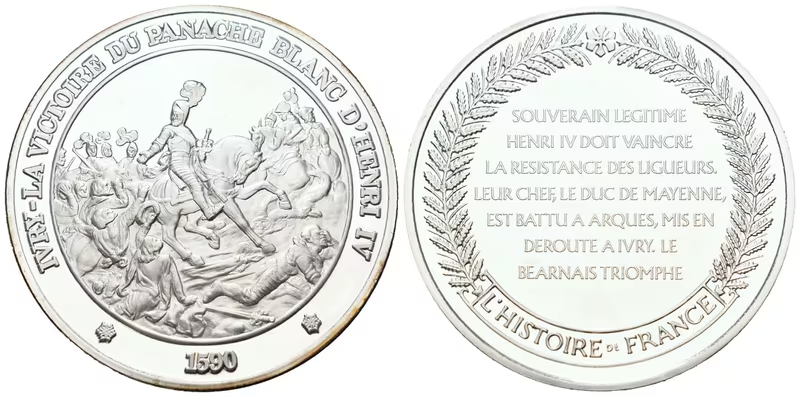
- Code: RX-FRAN022
Francie - AR Medaile b.l. - Ivry
Ivry - 1590 Ag 0,800, 44 mm (cca. 37 g) Na minci se nachází Francouzský punc ryzosti. V originální kapsli. Medaile je ze série 'Historie Francie v medailích' - Na některých mincích jsou viditelné stopy patiny aj. - Viz. obrázek. L'Histoire de France,…
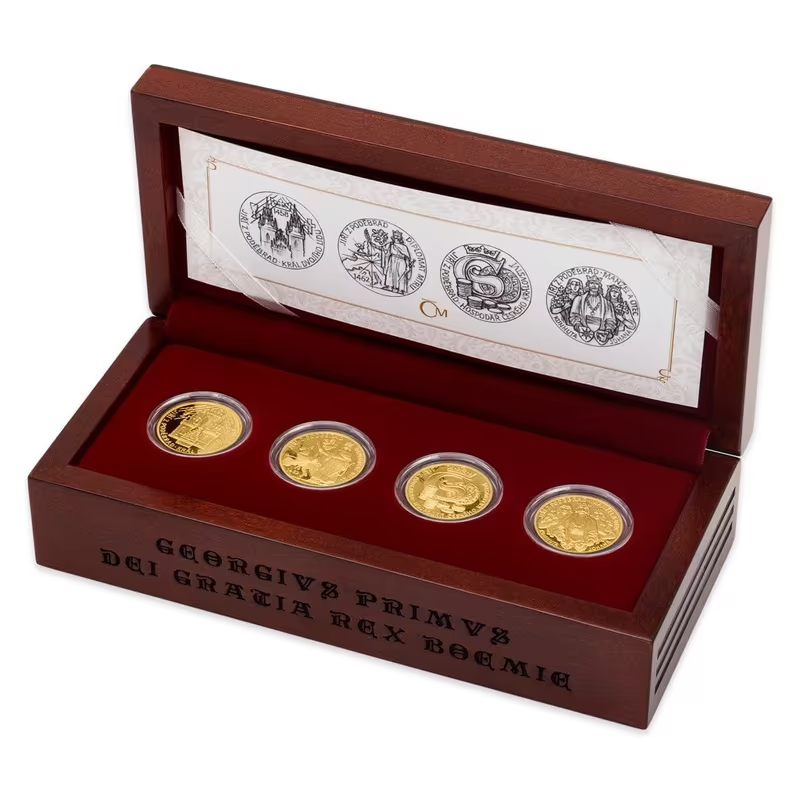
- Code: ZD-2018DOB
Sada mincí 2018 - Doba Jiřího z Poděbrad
Česká republika (1993 - ) Sada čtyř dukátů 20180 (Michal Vitanovský) - Doba Jiřího z Poděbrad 4x Au 0,9999, 16 mm (3,11 g), náklad 400 ks, certifikát, dřevěná etue, papírový přebal, PROOF V roce 2018 uplynulo 560 let od zvolení Jiřího z Poděbrad českým…