Imperial
The imperial is a traditional Russian gold coin used in the Russian Empire as a high-value means of payment for larger transactions and for state finances. It is most often associated with the denomination of 10 roubles and with the related "half-imperial" of 5 roubles and belongs among the sought-after gold strikes of the tsarist era.
The imperial entered Russian coinage in the 18th century as part of an effort towards a stable gold currency that would stand up in domestic and international trade. The Russian state at this time was strengthening its administration, army and court representation and needed coins that could carry high value in a small volume - that is, gold. Gold imperials were therefore used where small silver and copper coins were not enough: in larger commercial transactions, in state payments, in the disbursement of larger sums and also as a means of storing wealth.
The imperial gradually became an established type that appeared in various variations under several rulers. The strikes changed according to contemporary taste and political needs: at one time the emphasis was on dynastic representation by the ruler's portrait, at another on the symbolism of the state. In the Russian milieu the key motif became above all the double-headed eagle as the emblem of the empire, complemented by the legend with the ruler's titulature. Such motifs were not only decoration - it was a public confirmation of the authority of the issuer and a guarantee that the coin conformed to the prescribed standard.
In the 19th century Russian coinage sought balance between traditional names and modernisation of the currency. In practice this meant that alongside the historical term "imperial" the simpler designation by the rouble denomination was also used, because the rouble had become the basic framework for accounting and prices. Nevertheless the expression imperial took root so deeply that it survived in commercial speech and among collectors as a clear shorthand for the "gold ten-rouble". Special significance was also gained by the half-imperial - a gold coin of lower value that allowed working with gold even in "smaller" sums, while retaining the prestige and practicality of a gold strike.
History
At the turn of the 19th and 20th centuries Russian monetary policy underwent further adjustments and gold coins became an important part of the state's stabilisation efforts. Although most everyday payments took place in cheaper denominations, gold coins played the role of "hard" value - they were usable for larger payments, for trade and as a financial reserve. From the viewpoint of numismatics it is important that tsarist gold strikes are often preserved in various states: some pieces actually circulated and bear traces of use, others were stored or kept as property, and so they may be in very fine preservation.
The imperial thus represents a combination of state symbolism, high value and long-term confidence in gold as the "last safety". It is precisely for this reason that it belongs among coins attractive not only to collectors of Russian numismatics, but also to those interested in historical gold strikes in general.
The imperial is a typical gold coin of higher value that was intended rather for "large" money than for everyday purchases. In practice it is encountered mainly in association with the denomination of 10 roubles, while the half-imperial corresponds to 5 roubles. For collectors it is important that with gold rouble strikes not only the gold content plays a role, but also the particular ruler, year-date, mint and preservation, because some issues are more common and others appear only rarely.
Value, appearance and collector significance
The obverse usually carries a portrait of the ruler with titulature, which allows quick classification of the coin to a particular reign. The reverse often bears the state emblem - the double-headed eagle - possibly supplemented by the heraldic elements of the empire. These motifs are characteristic of Russian coins and at the same time serve as a practical "signature" of the issuer. With gold coins, moreover, finer working of the detail is common, because it was expected that this was a prestigious means of payment and at the same time a coin that people would keep.
In numismatic practice imperials are evaluated similarly to other historical gold coins: alongside authenticity and condition the question is also whether it is a standard circulating strike or a less common variant (different legend, type of portrait, small differences in the emblem). With some pieces marginal signs of circulation may also be encountered - fine rubbing on the highest places of the relief is common with gold, because it is softer than common alloys of small change. Precisely the combination of historical story, dynastic symbolism and the value of gold makes the imperial a coin with a stable place in European collecting.
In our auction and shop
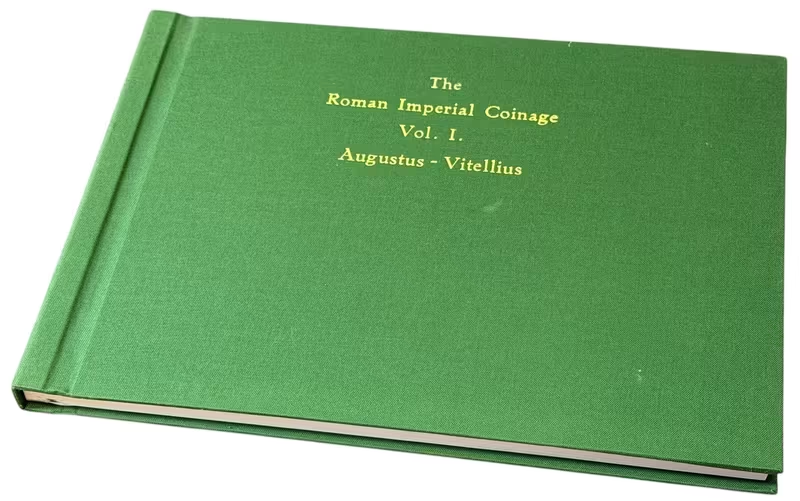
- Code: XA-RIC01
Roman Imperial Coinage Vol. I.
Sutherland, C. H. V. The Roman Imperial Coinage (RIC): Volume I. - Augustus - Vitelius (31 BC - 69 AD) Katalog mincí a medailí římského císařství. Popis jednotlivých mincoven včetně variant. Londýn 1984 (Reprint), 304 stran a 32 tabulek s vyobrazeními,…
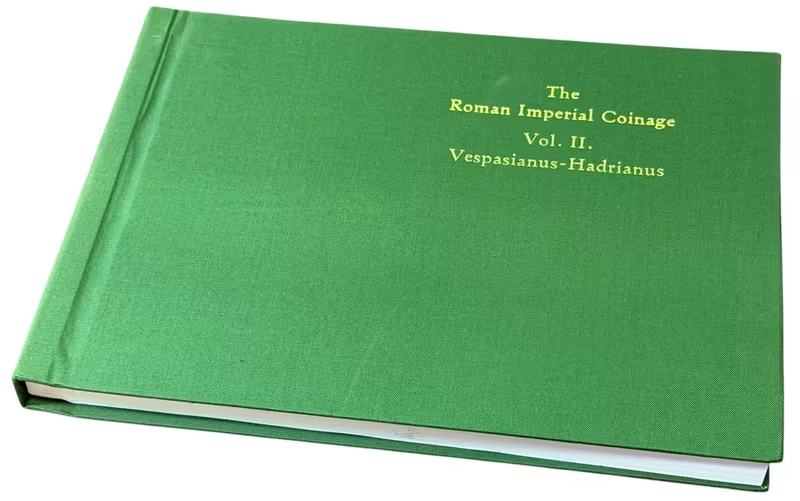
Skladem 1 ks - Code: XA-RIC02
Roman Imperial Coinage Vol. II.
Mattingly, Harold a Sydenham, Edward Allen The Roman Imperial Coinage (RIC): Volume II. - Vespasianus - Hadrianus Katalog mincí a medailí římského císařství. Popis jednotlivých mincoven včetně variant. Londýn 1926 (Reprint), 568 stran a 16 tabulek s…
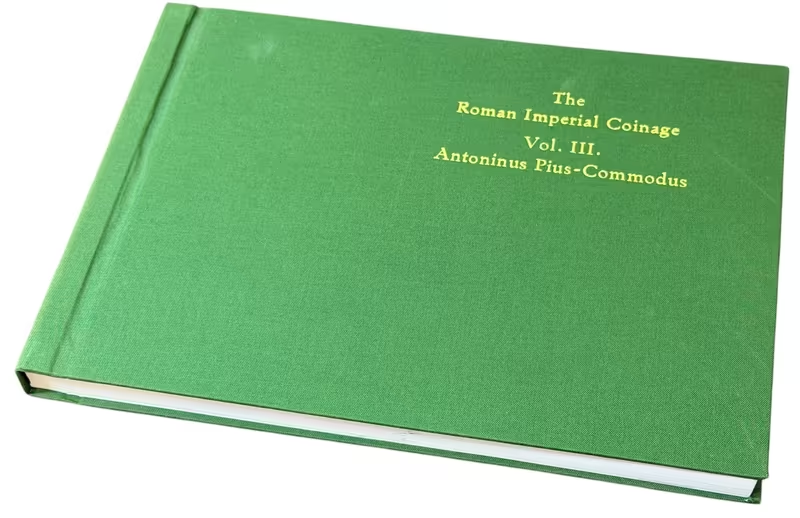
Skladem 1 ks - Code: XA-RIC03
Roman Imperial Coinage Vol. III.
Mattingly, Harold a Sydenham, Edward Allen The Roman Imperial Coinage (RIC): Volume III. - Vespasianus - Antoninus Pius - Commodus (138 - 192 AD) Katalog mincí a medailí římského císařství. Popis jednotlivých mincoven včetně variant. Londýn 1930…
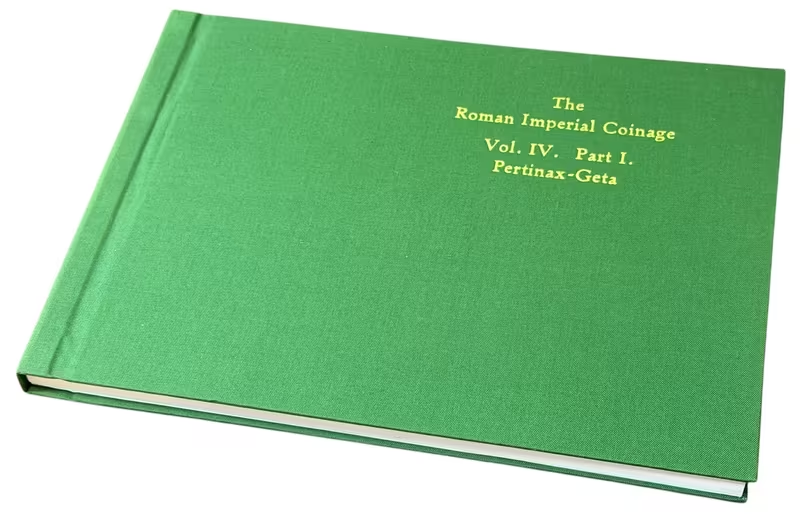
Skladem 1 ks - Code: XA-RIC04A
Roman Imperial Coinage Vol. IV/1
Mattingly, Harold a Sydenham, Edward Allen The Roman Imperial Coinage (RIC): Volume IV. Part I. - Pertinax - Geta (193 - 211 AD) Katalog mincí a medailí římského císařství. Popis jednotlivých mincoven včetně variant. Londýn 1936 (Reprint), 867 stran a 45…
Skladem 1 ks