Nicopolis ad Istrum
Nicopolis ad Istrum was a Roman and early Byzantine urban complex in the territory of present-day northern Bulgaria, founded by Emperor Trajan after the Dacian Wars. The surviving ruins near the village of Nikyup show a regularly planned city with a forum, agora and baths.
Nicopolis ad Istrum (literally "City of Victory on the Ister", i.e. the Danube) was founded at the beginning of the 2nd century AD as part of Roman colonising and administrative policy in the lower Danube provinces. Its foundation is traditionally associated with Emperor Trajan and his campaigns against the Dacians and their allies north of the Danube; the city was to commemorate victory and at the same time strengthen the Roman presence in the region. The site was chosen strategically: in the hinterland of major communication routes and near watercourses (today the area near the rivers Yantra and Rositsa is cited), where supply and movement across the landscape could be controlled. In the Roman world it was not unusual for newly founded cities to bear the "programmatic" name Nicopolis - it was to emphasise the legitimacy of power and the stabilisation of the frontier.
Nicopolis ad Istrum experienced its greatest flourishing in the 2nd and early 3rd century, particularly under the emperors from Hadrian through the Antonines to the Severan dynasty. From this period dates the most striking form of the city's monumental architecture: a central space with agora and forum, colonnades, public buildings intended for administration and commerce, and infrastructure supplying water to the city. From an urban perspective this was a classic example of a Roman planned settlement with a rectangular street grid (orthogonal plan), which delimited individual urban blocks. The emergence of such a city presupposed not only political will but also the presence of craftsmen, merchants and administrative structures capable of sustaining urban life.
Stability was, however, repeatedly disrupted by raids and crises on the Danube frontier. In the 2nd century the area was affected by incursions of tribal groups from the north-east; after one of the heavy disturbances city walls were built and part of the built-up area remained outside the fortified perimeter. The later 3rd century brought a generally turbulent period for the Roman Empire (military usurpations, economic pressures, attacks on the frontiers), which was reflected in the life of the city as well. Nevertheless, Nicopolis ad Istrum remained an important regional centre and retained the administrative and economic functions arising from its position and built infrastructure.
History
A notable episode is the mid-3rd century, when clashes with the Goths took place in the vicinity; Roman sources also mention a "Battle of Nicopolis" associated with Emperor Decius. In the 4th century the city adapted to late Roman conditions: some public spaces changed their function and supply and military structures linked to the Danube frontier were strengthened in the region. In the early Byzantine period Nicopolis ad Istrum also became an ecclesiastical centre (a bishopric), which testifies to the continuation of urban life even after previous crises.
The end of "classical" Nicopolis was brought by the devastating incursions of the Huns in the 5th century, after which there was a significant reduction and rebuilding of the fortified area - a typical phenomenon in many cities along the lower Danube. Later, in the 6th and 7th centuries, the region was affected by further conflicts and population movements associated with the Avars and Slavs. Settlement of a different character appeared on the site in subsequent centuries, but the ancient city was never restored to its original extent. The ruins near the present-day village of Nikyup thus represent a valuable source for understanding Roman urban life in Moesia and at the same time a place where one can clearly see how great cities of late antiquity gradually "contracted" into smaller, more defensible units.
From the archaeological point of view Nicopolis ad Istrum is remarkable above all for its legibility: both on the surface and in excavations the rectangular grid of streets, the central public space and parts of representative buildings can clearly be made out. The features described are the forum and agora with colonnades, administrative and assembly buildings (including spaces for the city council), public baths and other structures connected with commerce and the daily running of the city. Water supply played an important role: aqueducts led to the city and there were wells and water installations within it, attesting to the technical level and to the demands of urban life. In the late phases of settlement Christian buildings also appear within the precinct, documenting the transformation of society and institutions in the early Byzantine period.
The city, archaeology and numismatic context
For numismatics, Nicopolis ad Istrum is known above all for its provincial bronze coins (Roman provincial coinage), which the city issued chiefly in the 2nd and 3rd centuries. These issues often bear Greek legends with the city's ethnic (typically in the sense of "(coin of) the Nicopolitans on the Ister") and a rich repertoire of motifs: deities, personifications, local cult themes and depictions of the city's buildings. This "pictorial chronicle" is also valuable for historians of the city, since it may reflect its self-representation and public buildings at the height of its prosperity. Part of the coinage practice is also the naming of local officials or administrators, which helps to date individual issues more precisely and to understand the functioning of municipal self-government within the Roman Empire.
In our auction and shop
- Code: BE049-0980
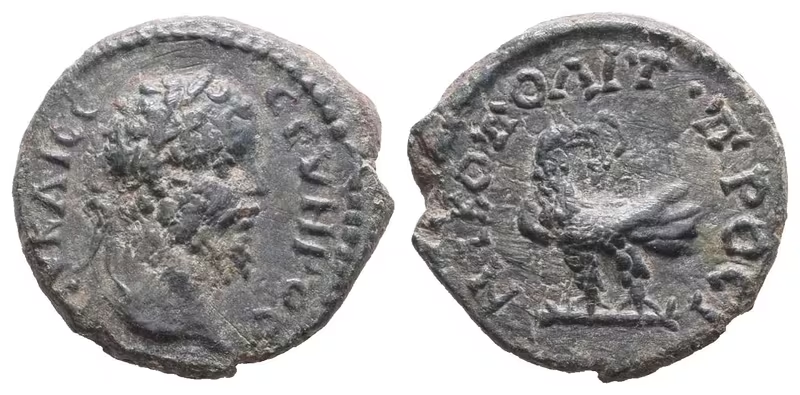
Septimius Severus, provinciální AE, Nikopolis ad Istrum
Septimius Severus (193 - 211) mincovna Nikopolis, Moesia Inferior, orel s věncem v zobáku, Mouchmov 980
Skladem 1 ks - Code: BE049-2824
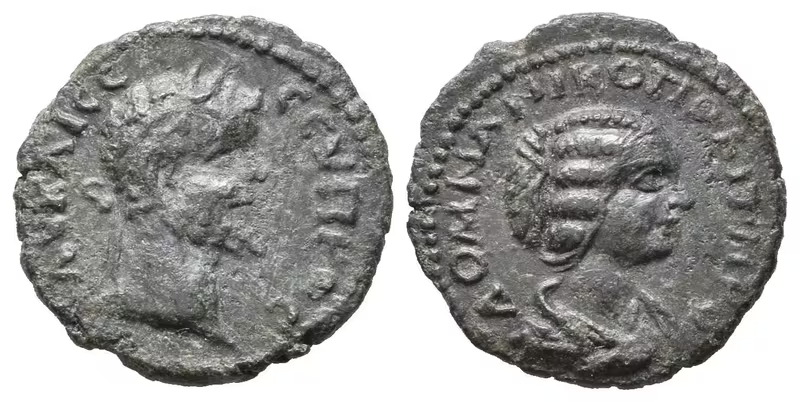
S. Severus, Moesia, Nikopolis, AE
Septimius Severus (193 - 211) Moesia, Nikopolis ad Istrum, společná ražba s manželkou Julií Domnou, AE 17, Portréty císaře na Av. a Julie Domny na Rv., opisy. Varbanov 2824, pěkná zachovalost a patina, rysky
Skladem 1 ks - Code: BE049-2480
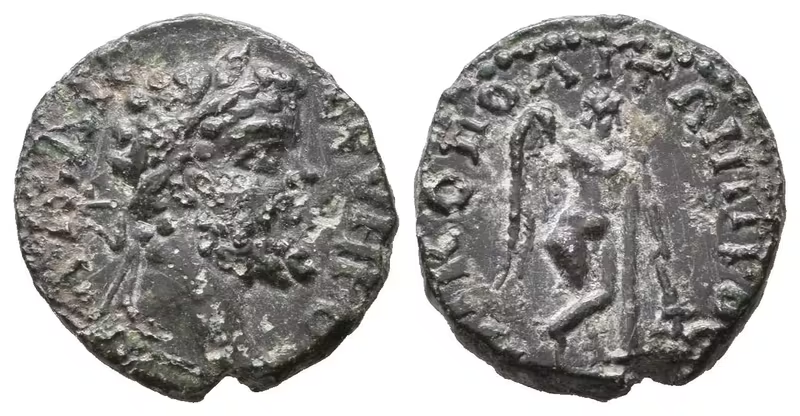
S. Severus, Moesia, Nikopolis, AE
Septimius Severus (193 - 211) Moesia, Nikopolis ad Istrum, AE 18, Rv: Eros-Thanatos se opírá o úzký sloup, má zkřízené nohy. Varbanov 2480, velmi pěkná zachovalost a patina, vady střížku_R!
Skladem 1 ks