Duchy of Austria
The Duchy of Austria was a medieval state within the Holy Roman Empire, formed by the elevation of the Austrian march, and it became the core of later Habsburg power in central Europe. Its centre was the area along the Danube, with its principal seat in Vienna.
The origins of Austrian statehood reach back to the eastern frontier of the early medieval empire, where border marches were established for defence and colonisation. The basis of the later Duchy of Austria was the Austrian March (Ostmark), administered from the end of the 10th century by the House of Babenberg. The margraves originally had primarily a military task: to protect the territory on the borders of the empire and at the same time to support settlement and administrative stability. Over time, however, the march transformed into a more compact entity with growing economic strength, as the Danube area was becoming an important transport artery and Vienna was developing as a commercial and administrative centre.
A key milestone was the year 1156, when the march was elevated to a duchy. This step is associated with a charter known as the Privilegium Minus, which regulated the position of the new duchy within the empire and confirmed hereditary rule for the Babenbergs. The elevation meant more than just a change of title: the duchy had higher prestige, stronger standing among the imperial princes, and also greater scope for independent policy. The Babenbergs in the following decades expanded their dominions and built up administration, towns and ecclesiastical institutions, gradually creating a firmer foundation for a state that was no longer merely a frontier zone.
In the 13th century the Babenbergs reached the height of their power, but at the same time the dynasty fell into a succession crisis. After the extinction of the male line, the Duchy of Austria became the object of disputes between claimants and rival power groups. From these conflicts emerged the strengthening of the House of Habsburg, who established themselves in Austria in the second half of the 13th century. The Habsburg acquisition of Austria had far-reaching consequences: the duchy became their principal power base, from which they gradually extended their influence within the empire and beyond. Vienna at this time became ever more clearly profiled as a political centre, which later played a key role in the history of the entire monarchy.
History
The significance of the Duchy of Austria grew in the 14th century, when the Habsburgs sought to underline their position both legally and symbolically. This was connected with the ambition to elevate Austria to an exceptionally privileged entity within the empire. In the long run, the Austrian lands expanded with further territories and their rulers acquired new titles. The duchy gradually became part of a wider complex of Habsburg dominions, which in the early modern period gave rise to the power bloc known as the Habsburg Monarchy.
In later times the designation "Duchy of Austria" is used mainly for the medieval phase of development, when it was one specific imperial entity with a ducal title. Although titles and the extent of the territory changed later, it was the duchy that represented the cornerstone upon which the Habsburgs built their long-term political and dynastic continuity in central Europe.
The Duchy of Austria was part of the Holy Roman Empire and therefore formally subordinate to the Roman-German king and emperor, but in practice it had considerable scope for its own policy. Ducal power rested on a network of nobility, ecclesiastical institutions and towns, which gradually became important economic and administrative hubs. The location on the Danube was important, supporting trade and enabling more efficient connections between individual parts of the country.
Status, administration and significance
In terms of long-term significance, the Duchy of Austria was above all the "core territory" of later Habsburg power. From here the political weight of the house within the empire and its ability to acquire further dominions developed. In a numismatic context, the Austrian lands are linked with extensive coin production from various periods, since a stable administrative centre and an economically strong space naturally supported the need for quality circulating currency as well as representative strikes. For understanding the history of central Europe, the Duchy of Austria is therefore important not only as a medieval state entity but also as the starting point of the region's later political map.
In our auction and shop
- Code: SRAK76-B210
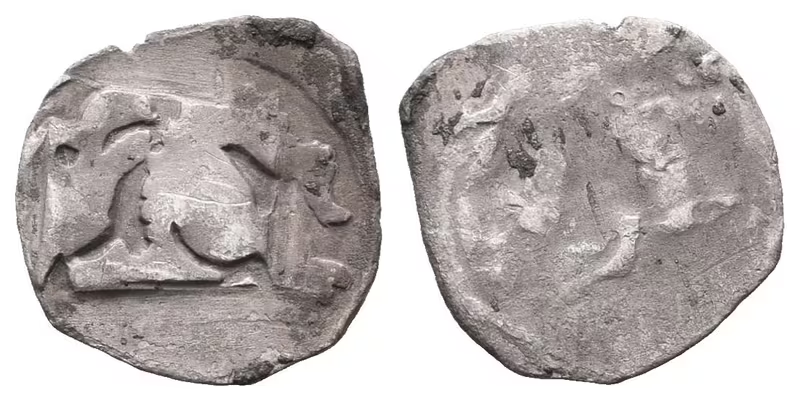
Rakousko, Vídeňský fenik CNA B210
Rakousko, vévodství, Friedrich Sličný, 1314 - 1330 Vídeňský fenik, minc. Vídeň, Av. Ohlížející se drak, Rv. nedoražený CNA I. B210, pěkná zachovalost
Skladem 1 ks - Code: SRAK76-B222
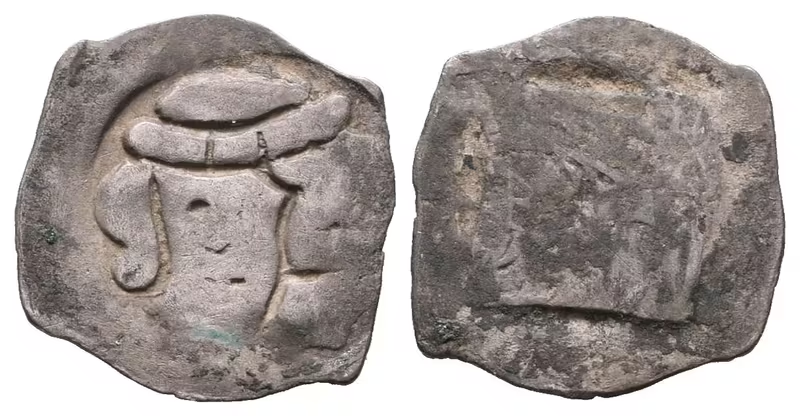
Rakousko, Vídeňský fenik CNA B222
Rakousko, vévodství, Friedrich Sličný, 1314 - 1330 Vídeňský fenik, minc. Vídeň, CNA I. B222 (pod. jako B237), pěkná zachovalost
Skladem 1 ks - Code: SRAK83-FA6
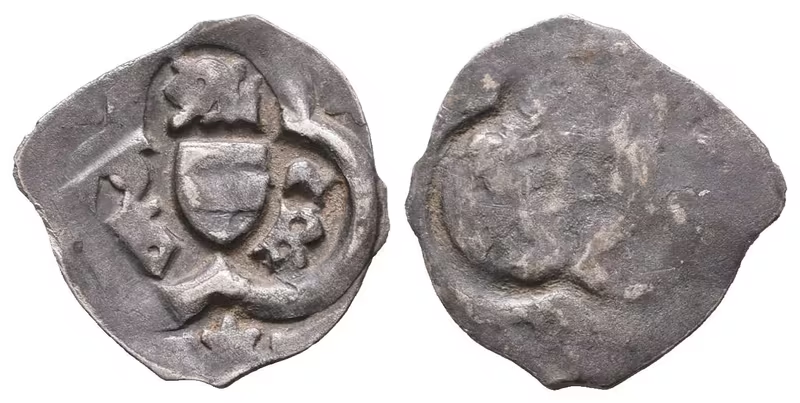
Rakousko, Vídeňský fenik CNA Fa6
Rakousko, vévodství, Albrecht V., 1411 1439 Vídeňský fenik, minc. Vídeň, Rakouský znak v ozdobném trojpásu s literami. CNA I. F a 6 var., patina, pěkná zachovalost
Skladem 1 ks - Code: SRAK83-FA6.2
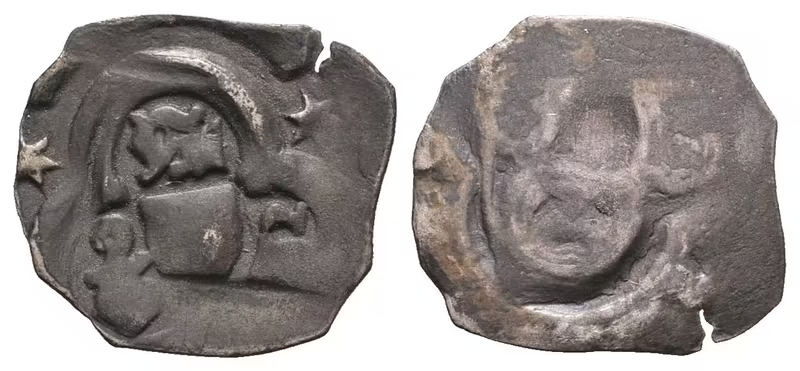
Rakousko, Vídeňský fenik CNA Fa6
Rakousko, vévodství, Albrecht V., 1411 1439 Wiener Pfennig, minc. Vídeň, Rakouský znak v ozdobném trojpásu s literami. CNA I. F a 6 var., patina, pěkná zachovalost, lehce napr.
Skladem 1 ks