Mayor (starosta)
The starosta is the elected or appointed representative of a municipality or town who represents the local government externally and directs its day-to-day operation. In modern public administration, the starosta usually heads the municipal office, coordinates the decisions of the municipal bodies and oversees finances and the fulfilment of duties towards…
The office of starosta builds on a long tradition of local administration, although its powers and means of appointment have changed markedly over time. Even in ancient states there were local officials and town representatives who saw to the collection of taxes, supervision of markets, public order and the maintenance of infrastructure. In medieval Europe, with the development of towns and their rights, town councils appeared and at the head of the towns stood representatives variously named — in the Czech lands one historically encounters, for example, the terms rychtář (reeve) or purkmistr (burgomaster), with the specific content of the office depending on the municipal law, the manorial structure and the degree of autonomy of the community.
In the early modern period local administration was often closely tied to the manorial lord and state power. Municipalities and towns did have their own organs, but their scope for independent decision-making was limited and a number of key areas fell under the supervision of the ruler, of provincial institutions or of the manorial administration. Even so, elements of self-government gradually developed — especially in the management of municipal property, in the care of roads, in the regulation of the market, in the organisation of trades or in the provision of social aid. The function of town representatives thus moved between the role of "administrator" and the role of "representative of the community", with responsibility and oversight — who selects the representative and to whom he answers — being an important theme.
History
The modern conception of the starosta is connected with the transformations of public administration in the 19th century, when local self-government was gradually strengthened and more uniform frameworks for the functioning of municipalities arose. With increasing literacy, the development of civil society and the professionalisation of offices, the role of "honorary representative" increasingly became one of organisation and administration. The starosta came to be seen as a person who not only represents but also coordinates the municipal apparatus, prepares materials for decision-making, oversees the implementation of the budget and communicates with the state administration.
In the 20th century the importance and standing of starostas changed according to the political system. In democratic regimes the starosta is usually derived from the will of the voters through the representative bodies, while in authoritarian or centralised systems local leadership tends to be more subordinate to the state and party structures. After 1989 in the Czech setting municipal self-government was again strengthened, and with it the role of the starosta as a key person who connects political decision-making with the practical running of the municipality. Today's starosta is therefore often perceived as "first among equals" within the self-governing bodies and at the same time as the manager of local projects — from investments in infrastructure to education and social services to crisis management.
Role, powers and practical use
The specific content of the office differs according to the legal framework of the country in question and according to the size of the municipality, but in general the starosta represents the municipality externally, signs selected documents and coordinates the activity of the office. In the setting of municipal self-government he usually relies on the council of representatives and, where it exists, also on the executive board. The starosta often convenes and chairs the meetings of these bodies, oversees the implementation of their resolutions and is responsible for the office proceeding in accordance with the rules of financial management. In larger towns one also encounters the different title of primátor, which denotes a similar function in statutory cities.
In everyday practice the starosta deals simultaneously with several layers of work: representation (negotiations with the state administration, partner municipalities and the public), running the office (organisation of agendas, personnel matters, oversight of contracts) and political coordination (seeking agreement in the council, communication with commissions and committees). Also important is the ability to work with the budget and public procurement, because it is here that responsibility towards the municipality is most apparent. From the point of view of the social role, the starosta is often the "face" of the municipality — people expect from him clear communication, accessibility and the ability to translate decisions into concrete results in the place where they live.
In our auction and shop
- Code: BTREBM11I2
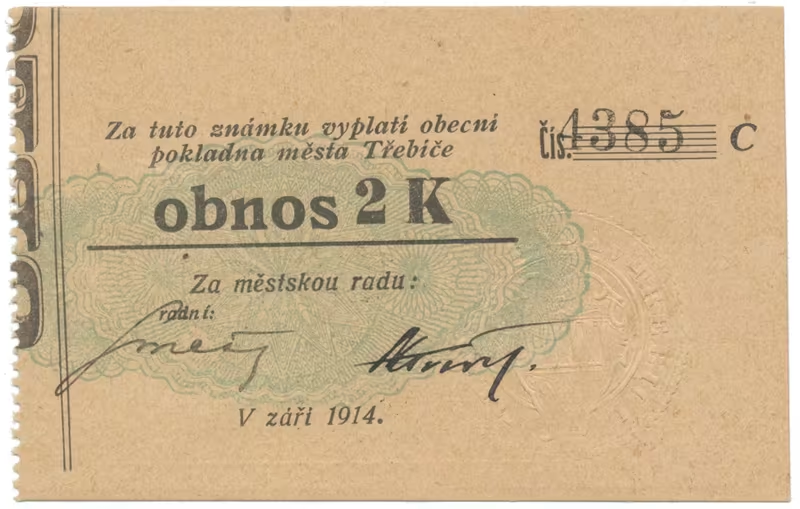
Třebíč - město, 2 K září 1914, slabší K, bez "starosta :", HH.223.5.11i2
Nouzovky na našem území, 1900 - 1950 Třebíč - město, 2 K září 1914, slabší K, bez "starosta :", HH.223.5.11i2 N/UNC
Skladem 2 ks - Code: ZN-HAM1894
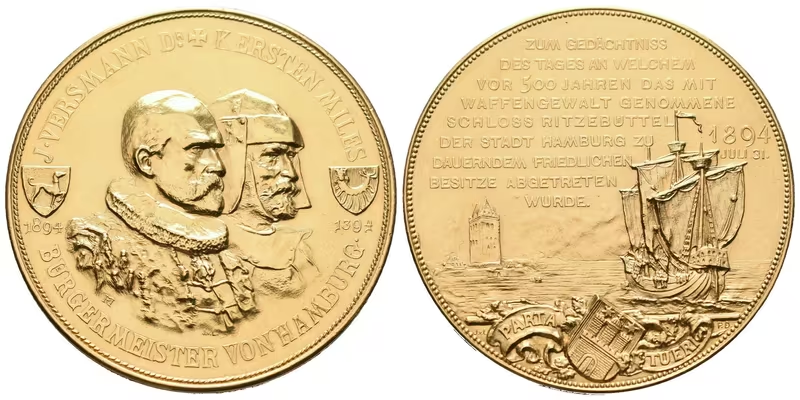
Hamburg, Portugalöser (100 Mark) 1894
Hamburg, svobodné město Portugalöser zu 100 Mark 1894 (J. von Langa, P. F. Düyffcke) - 500. výročí převodu hradu Ritzebüttel městu Hamburk. Busty starostů J. Versmanna a K. Milese vedle sebe, vpravo, s jejich erby po stranách, pod daty 1894–1394 /…
Skladem 1 ks - Code: XE1945
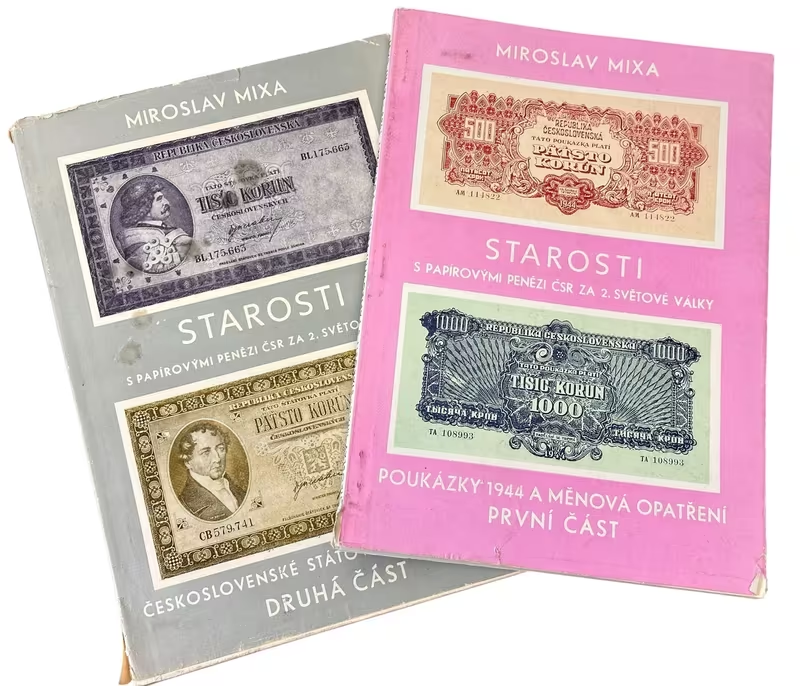
Starosti s papírovými penězi za 2. světové války
Mixa, Miroslav Starosti s papírovými penězi za 2. světové války, Československé státovky a bankovky I. a II. díl Hradec Králove 1983 a 1987, brožované, použité a zašpiněný obal
- Code: SFRA89-Z1655
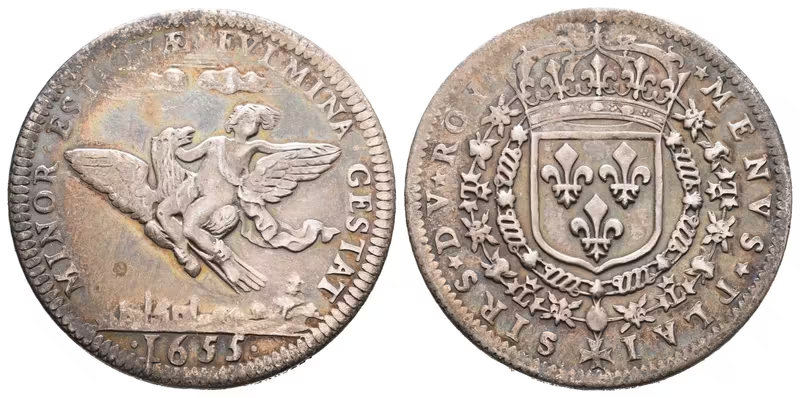
Francie, AR Žeton 1655 - Menus Plaisirs du Roi
Francie, Ludvík XIV. (1643 - 1715) AR Žeton 1655 - Menus-Plaisirs du Roi. Ag 28,5 mm (9,87 g)_R! Tyto žetony byly určeny jako výplata a odměna pro členy a účinkující královy "Malé komory radostí". Tento department měl na starost organizací her, plesů a…