Czechoslovak monetary reform
Czechoslovak monetary reform refers to several fundamental monetary changes in the history of Czechoslovakia, the most well-known and controversial being the reform of 1 June 1953, which drastically devalued the population's savings through an exchange ratio of up to 50:1. For numismatics these reforms represent key milestones at which entire issue series…
The first significant reform took place at the founding of Czechoslovakia in 1919 under the direction of Finance Minister Alois Rašín. The so-called "nostrification" consisted of stamping Austro-Hungarian banknotes and exchanging them for new Czechoslovak korunas at a ratio of 1:1. At the same time 50% of cash was retained as a forced loan to the state. The reform successfully separated the Czechoslovak currency from the inflation-affected successor states of the monarchy.
During the Nazi occupation of 1939–1945 two monetary systems functioned in parallel — the Protectorate koruna and the Slovak koruna. After liberation the National Front government carried out a monetary reform on 1 November 1945. The exchange ratio was 1:1 for sums up to 500 korunas per person; higher sums were subject to progressive taxation. Occupation marks were exchanged at 10:1, Slovak korunas at 1:1.
The most radical was the reform of 1 June 1953, prepared in absolute secrecy under the codename "Operation Peace". President Antonín Zápotocký announced it on the radio on Sunday morning, with immediate effect. Citizens could exchange only 300 old korunas at a ratio of 5:1; deposits and higher cash holdings were exchanged at 50:1. At the same time food ration coupons were abolished and retail prices reduced by 5–10%.
History
The reform caused a social shock and mass protests, the strongest in Plzeň, where on 1 June over 20,000 people demonstrated. The army suppressed the unrest, and dozens of participants were sentenced to long terms of imprisonment. Overall the state confiscated over 80% of the population's monetary savings, worth 52 billion pre-reform korunas. The most affected were tradespeople, farmers and the middle class.
The last reform was linked to federalisation in 1968–1969, which however had primarily a technical character. New banknotes with Czech-Slovak text were issued; the coins remained unchanged. Ota Šik's economic reform envisaged the convertibility of the koruna, but the August invasion of 1968 thwarted these plans.
After the dissolution of Czechoslovakia in 1993 the separation of the currencies proceeded relatively smoothly. Czechoslovak banknotes were marked with stamps over the weekend of 8–9 February — blue in the Czech lands, green in Slovakia. The definitive exchange for the national currencies took place by August 1993 at a ratio of 1:1. Unlike previous reforms, no confiscation of savings took place.
Numismatic consequences of the reforms
Each reform meant a complete exchange of the circulating money. Rašín's reform of 1919 withdrew from circulation over 8 billion korunas in Austro-Hungarian banknotes. The first Czechoslovak coins were created — hellers of bronze and korunas of an alloy of copper and nickel. The design was created by Otakar Španiel, the motifs drawing on national symbolism.
The 1953 reform introduced new coin denominations — 1, 3, 5, 10 and 25 hellers, 1 koruna. Ideological motifs replaced state symbolism — the hammer and sickle, lime leaves, industrial motifs. The quality of striking was low, cheap aluminium alloys were used. The old coins had to be surrendered within 10 days under threat of punishment.
From a numismatic perspective the pre-reform issues are rare, since they were systematically destroyed. For example Protectorate coins with the Bohemian lion without a crown are today rarities. Paradoxically, some Communist strikes from 1953 have high collector value due to the short period of circulation and the low mintages.
In our auction and shop
- Code: GFCSPUL
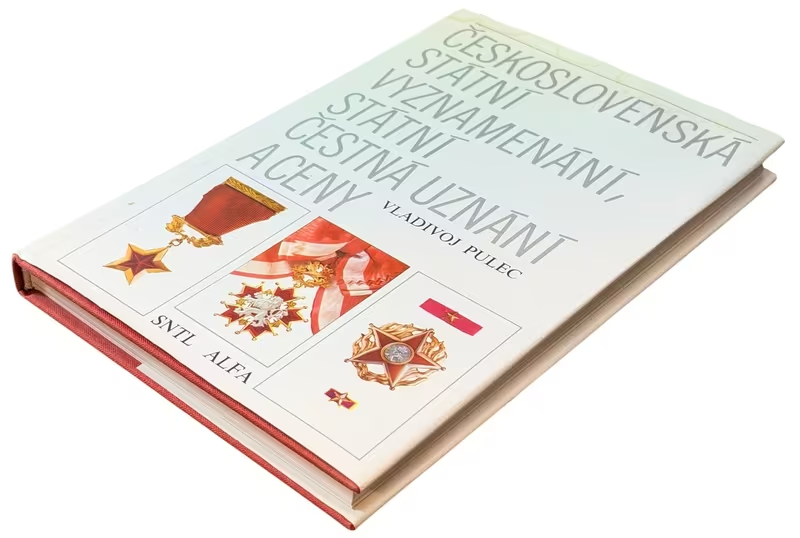
Československá státní vyznamenání, státní čestná uznání a ceny
Pulec, Vladivoj Československá státní vyznamenání, státní čestná uznání a ceny Praha 1984, 184 stran s vyobrazeními, vázané, poškozený papírový přebal jinak pěkná zachovalost Ilustrační fotografie!
Skladem 1 ks - Code: GFCSVM2
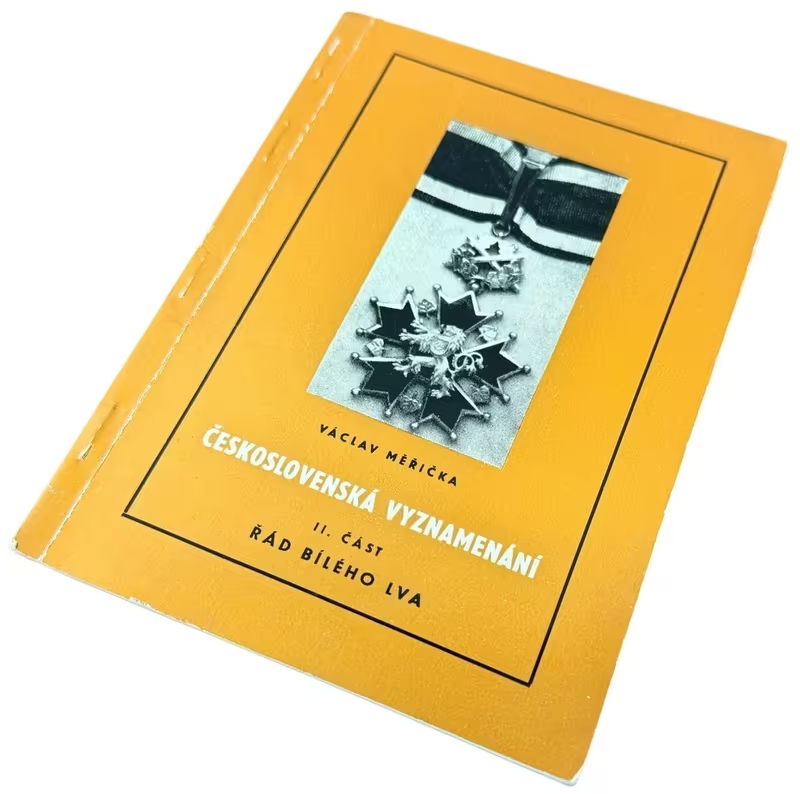
Československá vyznamenání, Řád bílého lva
Měřička, Václav Československá vyznamenání, Řád bílého lva, II. díl část Hradec Králové 1973, 48 stran a vyobrazení, brožované
Skladem 1 ks - Code: GFCSVM5
Československá vyznamenání 1914 - 1918
Měřička, Václav Československé vyznamenání 1914 - 1918, I. národní odboj, V. díl Hradec Králové 1979, 175 stran a vyobrazení, brožované, lehce opotřebovaný přebal
Skladem 1 ks - Code: GFCSVM6B
Československá vyznamenání II. odboje
Měřička, Václav Československá vyznamenání II. národní odboj 1939 - 1945, VI. díl část B Hradec Králové 1984, 108 stran a vyobrazení, brožované, lehce opotřebovaný přebal
Skladem 1 ks