Lepton
The lepton was a small bronze or copper coin representing the lowest denomination in the monetary system of ancient Greece and the Hellenistic states, later used in the Roman province of Judaea. With a weight of just 0.5 to 1.5 grams, this coin is known above all from the New Testament story of the widow who donated two leptons to the temple treasury, her…
The lepton first appeared in Greek coinage during the 4th century BC as the designation for the smallest bronze coins. The name comes from the Greek word λεπτός (leptos), meaning thin, small or fine, which exactly captured the character of this tiny coin. In various Greek city-states the lepton had different forms and values, but always represented the minimum monetary unit used in everyday trade.
During the Hellenistic period after the conquests of Alexander the Great, the lepton spread throughout the eastern Mediterranean. Ptolemaic Egypt struck leptons bearing the image of an eagle or a cornucopia; the Seleucid Empire used leptons with portraits of rulers or with local deities. The coins were so small and light that they were often carried in purses by the hundred. Their low value made them ideal for small purchases at markets: bread, vegetables or cheap wine.
The lepton acquired its most significant role in Judaea during the period of the Second Temple (516 BC – AD 70). The Hasmonean rulers began to mint their own Jewish leptons around 135 BC, during the reign of John Hyrcanus I. These coins bore Hebrew inscriptions and Jewish symbols such as a palm branch, an anchor or a rosette, deliberately omitting the representation of human figures in accordance with the Jewish prohibition of imagery.
Under the reign of Herod the Great (37–4 BC) the minting of Jewish leptons with characteristic motifs continued. Herod struck leptons with an anchor and a double cornucopia; his son Herod Archelaus used motifs of a helmet and a bunch of grapes. These coins represented a compromise between Roman rule and Jewish religious tradition: they bore neither rulers' portraits nor pagan deities, which respected Jewish religious sensibility.
History
In the New Testament period the lepton was the smallest coin in circulation in Palestine. The Gospels of Mark (12:42) and Luke (21:2) record the story of the poor widow who threw two leptons into the temple treasury (in Greek "δύο λεπτά"). For his Roman readers, Mark explains that two leptons equal one quadrans, the smallest Roman coin. This story made the lepton a symbol of the self-sacrifice and generosity of the poor.
During the First Jewish War (AD 66–70) the rebels struck their own leptons as a symbol of independence. These coins bore Hebrew inscriptions such as "For the Freedom of Zion" or "Year Two" (of liberation) and Jewish symbols such as the lulav (palm branch) or the etrog (citron). After the defeat of the revolt and the destruction of the Second Temple by the Romans in AD 70, the era of independent Jewish minting of leptons came to an end.
In the Byzantine period the name lepton survived as the designation for the smallest copper coins, although their form and value differed considerably from their ancient predecessors. In modern Greece the name was revived in the 19th century, when the lepton (plural lepta) represented one hundredth of a drachma. This tradition continued until the introduction of the euro in 2001, when lepta finally disappeared from circulation.
The lepton was struck exclusively from bronze or copper, which corresponded to its low value. The diameter of the coins ranged from 10 to 20 millimetres; the weight usually did not exceed 1.5 grams. The small dimensions and the soft metal caused rapid wear, which is why many surviving specimens are in poor condition. Well-preserved leptons are rare and prized collectors' items.
Characteristics and numismatic value
The iconography of leptons varied according to the period and the issuer. Greek leptons often bore simple geometric patterns or the initials of the city. Jewish leptons from the period of the Second Temple depicted only permitted symbols: plant motifs (palm branch, pomegranate, bunch of grapes), ritual objects (horn, anchor) or architectural elements. Inscriptions were in Hebrew, Aramaic or Greek.
In terms of value the lepton represented the absolute minimum. In 1st-century AD Judaea the relationship of currencies was given as follows: 2 leptons = 1 quadrans (Roman), 2 quadrans = 1 as, 16 asses = 1 denarius. The denarius represented the usual daily wage of a labourer, so the lepton had a value of about 1/128 of a day's wages. For a lepton one could buy the cheapest foodstuffs or small items of daily use.
In our auction and shop
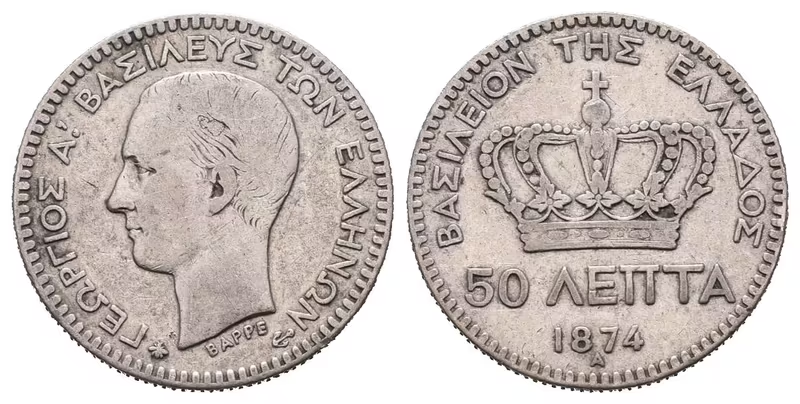
- Code: SREC85-D1874
Řecko, 50 Lepton 1874
Řecké království, Jiří I. 1863 - 1913 50 Lepta 1874 A - Paříž, KM.37, oběhový stav
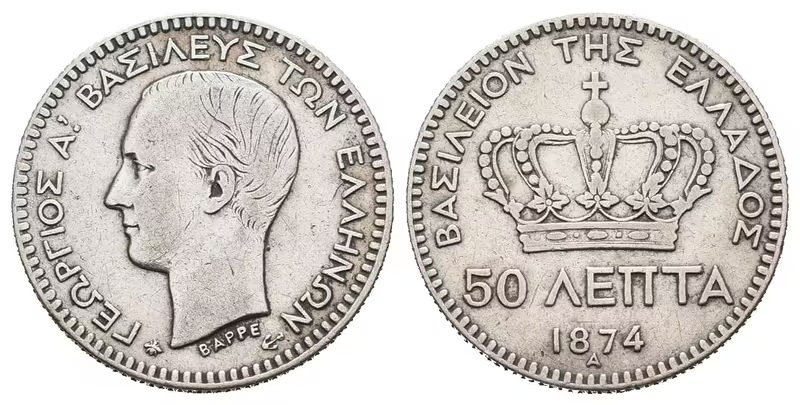
Skladem 1 ks - Code: SREC85-D1874.1
Řecko, 50 Lepton 1874
Řecké království, Jiří I. 1863 - 1913 50 Lepta 1874 A - Paříž, KM.37, pěkná zachovalost, rysky, zbytky lesku
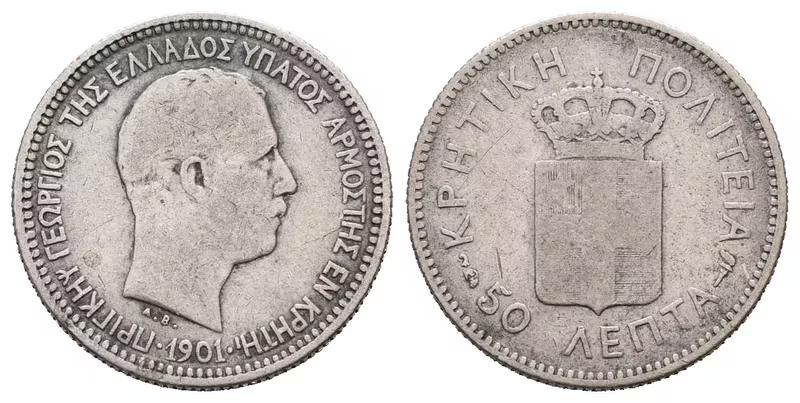
Skladem 1 ks - Code: SREC85-D1901
Řecko, 50 Lepton 1901
Řecké království, Jiří I. 1863 - 1913 50 Lepta 1901, Paříž, KM.6, oběhový stav, vzácnější
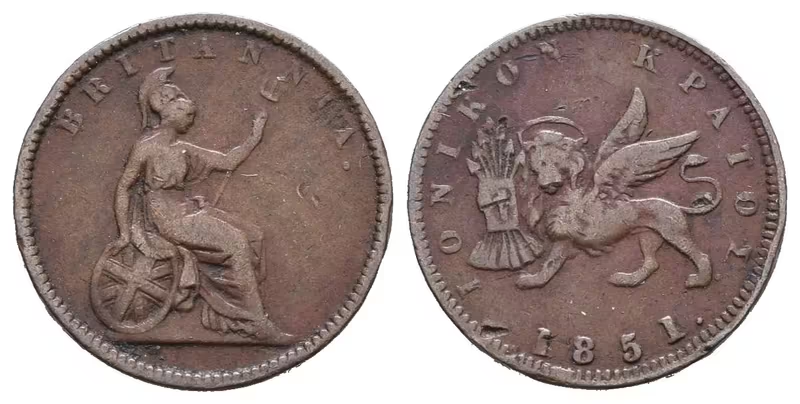
Skladem 1 ks - Code: SION50-B1851
Ionia, Lepton 1851
Jónské ostrovy pod Britskou správou, 1815 - 1864 1 Lepta 1851, KM.34, patina_R!
Skladem 1 ks