Maximinus Thrax
Gaius Julius Verus Maximinus, called Thrax ("the Thracian"; c. 173–238), was Roman emperor ruling from 235 to 238. He became the first emperor to rise from the ranks of common soldiers without senatorial or aristocratic origin.
Maximinus came from Thrace (today's Bulgaria), which earned him the epithet Thrax. According to the unreliable Historia Augusta, he was the son of a Gothic father and an Alanic mother; this information, however, is questioned, since the Goths only later appeared in the Danubian area. Maximinus was apparently a shepherd and possibly also a leader of a band of robbers before he entered the Roman army under the reign of Septimius Severus.
His legendary physical strength and military abilities ensured his swift advancement in the army ranks. He served under the emperors Caracalla and Severus Alexander, under whom he commanded the legions on the Rhine frontier. In March 235, when soldiers enraged by Severus's negotiation policy with the Germanic tribes murdered the emperor and his mother, the Pannonian legions proclaimed Maximinus emperor.
History
Maximinus's reign was marked by constant military campaigns against the Alamanni, the Dacians and the Sarmatians. To finance the wars he doubled the soldiers' pay, which required a drastic increase in taxes. In 238 a rebellion broke out in Africa, and the Senate proclaimed Gordian I and his son emperors. Maximinus marched on Rome, but was halted at Aquileia. His starving soldiers mutinied and in May or June 238 murdered him along with his son Maximus.
The coins of Maximinus Thrax reflect the military character of his reign. The obverse shows the laureate portrait of the emperor with a distinctive face, massive forehead and short beard — features that correspond to descriptions of his unusual physical constitution. Some researchers consider that Maximinus suffered from acromegaly (excessive production of growth hormone), which would explain his legendary stature.
Maximinus Thrax and coinage
The main denominations were silver denarii and bronze sestertii struck at the Roman mint. On the reverses appear traditional motifs — the goddess Victoria with wreath and palm, Salus feeding a serpent, Fides with military standards. After his victory over the Alamanni in 235, Maximinus assumed the title Germanicus Maximus, which appears on later mintages.
Maximinus's coins are relatively accessible on the numismatic market, especially bronze asses and sestertii. Rarer are well-preserved denarii with sharply cut portraits. The coins document the brief but intensive period of the rule of the "barracks emperor" who never entered Rome.
In our auction and shop
- Code: XA-RIC06
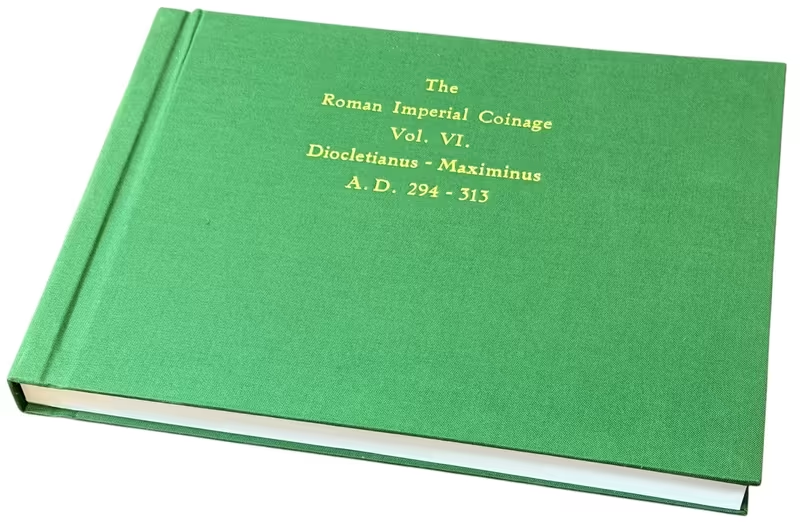
Roman Imperial Coinage Vol. VI
Mattingly, Harold, Sydenham, Edward Allen The Roman Imperial Coinage (RIC): Volume VI. - Diocletianus - Maximinus (294 - 313 AD) Katalog mincí a medailí římského císařství. Popis jednotlivých mincoven včetně variant. Londýn 1967 (Reprint), 727 stran a 16…
Skladem 1 ks - Code: BE120-AA46
Maximianus Herculius, antoninian
Maximianus Herculius (286 - 310), antoninian - mincovna Alexandria, Maximinus přebírá glóbus od Jupitera RIC VI 46
- Code: BE120-0103B
Maximianus Herculius, Follis, RIC.103b
Maximianus Herculius (286 - 310) Follis, Roma, 302 - 303, Rv: SACRA MON VRB AVGG ET CAESS NN, stojící Moneta zleva drží váhy a roh hojnosti, RIC.103b, nep. exc., pův. postříbření