Peter II Karađorđević
Peter II Karađorđević (1923-1970) was the last king of Yugoslavia of the Karađorđević dynasty. He ascended the throne in 1934 as a minor after the death of his father, and during the Second World War went into exile.
Peter II Karađorđević was born on 6 September 1923 in Belgrade as the son of the Yugoslav king Alexander I Karađorđević and Queen Maria of Romania. He spent his childhood in the environment of a state that united several nations and historical lands and was internally strained by differing political traditions. Already then it was becoming clear that maintaining the stability of the kingdom would be difficult, because centralising efforts clashed with demands for greater autonomy of the individual parts of the country.
After the assassination of King Alexander in 1934, Peter became king, but because he was a minor a regency council was established. It was led by Prince Paul Karađorđević. The period of regency falls in a time of rapidly worsening international situation in Europe. Yugoslavia found itself under pressure from the great powers and at the same time had to deal with internal political disputes, which weakened its ability to respond to the crisis.
History
In March 1941 a coup took place in Yugoslavia, after which Peter II was declared of age. Shortly afterwards, however, an attack by Germany and its allies followed, and the kingdom collapsed. The king and the government went into exile, from where they sought to maintain at least formally and diplomatically the continuity of state power. In the course of the war, however, the situation grew more complicated, because several resistance currents were active in the territory of Yugoslavia, and gradually the Communist movement led by Josip Broz Tito gained the upper hand.
After the end of the war, there was a fundamental change of regime. In 1945 the monarchy was abolished and Peter II remained abroad. He lived mostly in exile (especially in Great Britain and later in the USA) and his position was transformed into the symbolic role of a representative of a vanished political order. He died on 3 November 1970. His life thus closes the history of the Yugoslav monarchy, which after the Second World War was not restored.
Monarch in exile and numismatic connections
In practical politics, Peter II was limited first by his minority and the regency, and later by forced exile. Nevertheless, his name and titulature are an important "time mark" for the last period of royal Yugoslavia. In numismatics, one most often encounters his person on circulating coins and banknotes of the Kingdom of Yugoslavia from the period before the abolition of the monarchy, where traditional royal and state symbolism applies (portrait tradition, state coat of arms, official titulature).
For comparison, the post-war change of iconography is also interesting: after 1945 dynastic emblems disappear and the motifs of the new regime take their place. On money in particular, the transformation of state identity can often be seen very quickly, because coins and banknotes are the "everyday" carriers of symbols of power. Strikes and currency connected with Peter II thus represent a numismatic image of the end of an era in the history of the Balkans.
In our auction and shop
- Code: ZSCER-90A1973
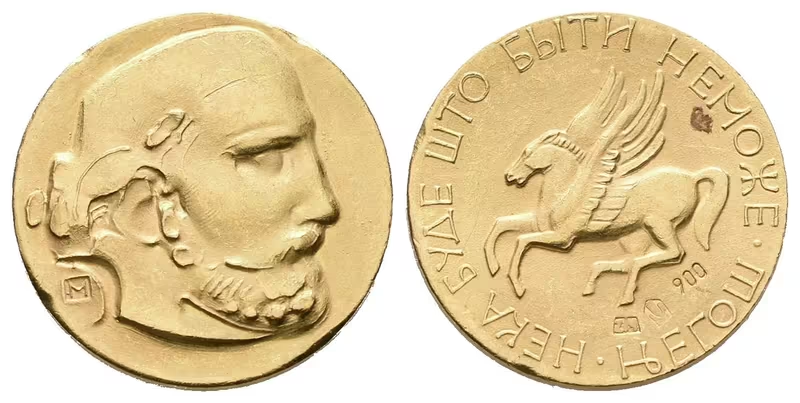
Černá Hora, AV Medaile 1973 - Arcibiskup Petr II. Petrovič Njegoš
Černá Hora Zlatá medaile 1973 - Na památku arcibiskupa Petra II. Petroviče Njegoše (1813 - 1851) Au 0,900, 18 mm (5 g)
- Code: RASOU-2000
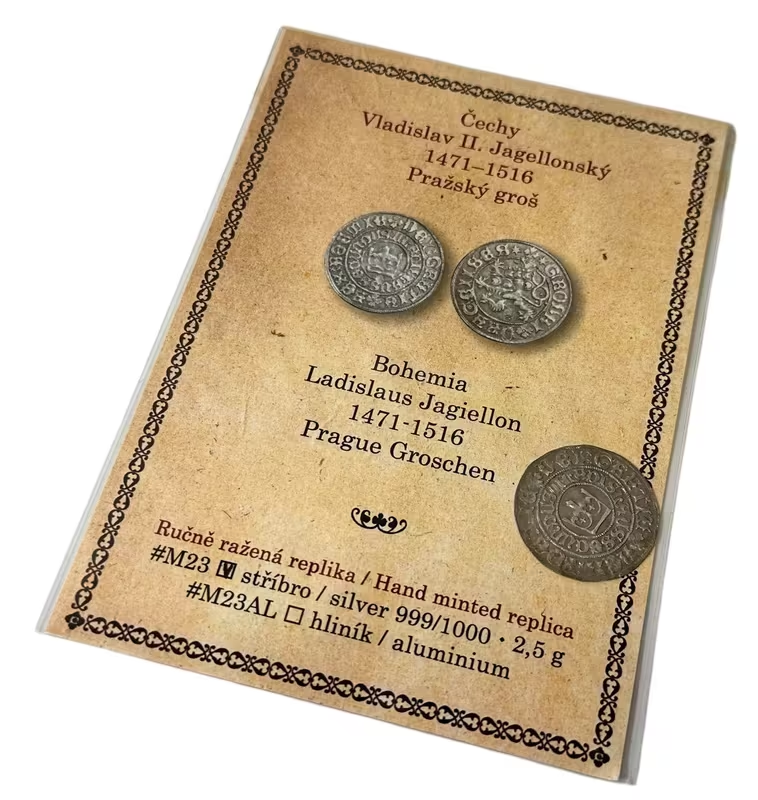
Soušek Petr - Pražský groš Vladislava II.
Soušek Petr (1972 - ) AR Replika Pražského groše Vladislava II. Ag 0,999 (2,5 g)
- Code: SBRAZI89-C1851
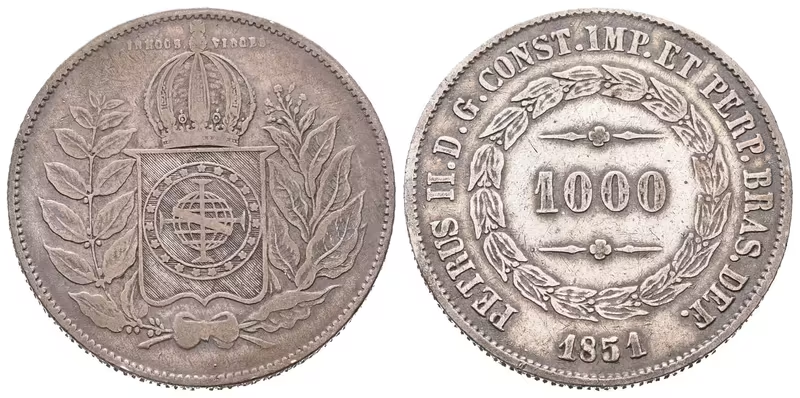
Brazílie, 1000 Reis 1851
Brazílie, Petr. II. (1831 - 1889) 1000 Réis 1851, KM.459, patina, rysky, oběhový stav
- Code: SBRAZI89-F1885
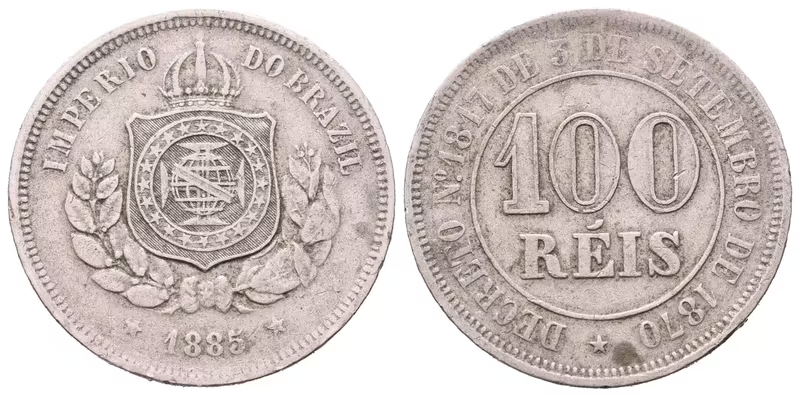
Brazílie, 100 Reis 1885
Brazílie, Petr. II. (1831 - 1889) 100 Réis 1885, KM.477, patina, rysky, oběhový stav