
Svetovid (Svantovít)
The god of war and abundance worshipped on the island of Rügen by the Polabian Slavic tribe of the Rani. His cliff-top sanctuary at Arkona fell in 1168 as the last formal bastion of West Slavic polytheism.
Thanks to Danish chronicles, Svetovid (Czech: Svantovít or Svatovít) is the most thoroughly described deity of the Baltic Slavs. The centre of his cult was the fortified town of Arkona on the chalk headland in northern Rügen, ruled by the Rani. The primary source is the Gesta Danorum (c. 1200) of the Danish historian Saxo Grammaticus, who took part in the expedition of King Valdemar I that captured and destroyed the sanctuary in 1168.
Arkona and Saxo Grammaticus
Saxo recorded an all-wooden temple adorned with relief carvings. Inside stood a colossal statue with four heads and four necks facing the four cardinal directions, a symbol of divine omniscience. In one hand the figure held a metal horn which the high priest filled each year after the harvest with mead; from the level remaining the following year he divined abundance or famine. The martial aspect of the cult centred on the keeping of a sacred white horse: led across crossed spears, a step first with the right hoof foretold victory, whereas the left caused a campaign to be abandoned.
Four heads, the horn and the white horse
Its monumentality, dramatic fall and four-headed idol make Svetovid a compelling subject for modern commemorative striking; the Czech Mint dedicated an issue to him in its Slavic Deities series.
Fall in 1168 and legacy
In our auction and shop
- Code: RANEBE-2023
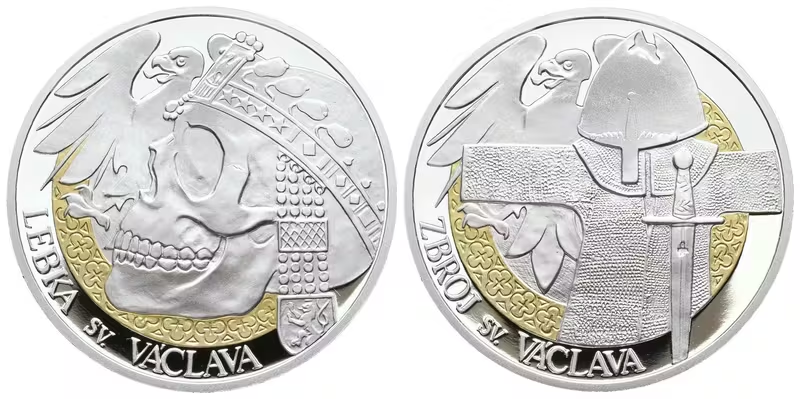
Nebeská Lenka - Svatovítský poklad. Relikvie sv. Václava
Nebeská Lenka (1984 - ) AR Medaile 2023 - Svatovítský poklad. Relikvie sv. Václava. Ag 0,999, 37 mm (2 x 31,1 g), etue, krabička, přebal, náklad 500 ks
Skladem 1 ks - Code: ZD-2017ARN
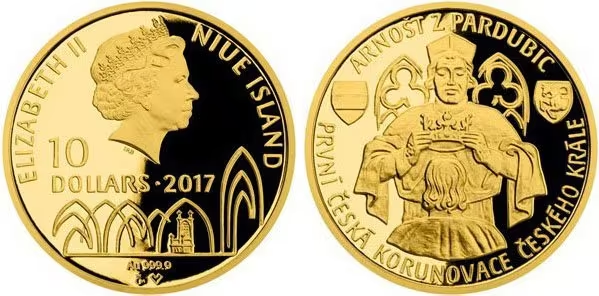
Zlatá mince 2017 - Arnošt z Pardubic
Česká republika (1993 - ) Zlatá čtvrtuncová investiční mince 2017 (Michal Vitanovský) - Arnošt z Pardubic Au 0,9999, 22 mm (7,78 g), náklad 200 ks, certifikát, etue, papírový přebal, PROOF Karel IV. je takřka bezvýhradně považován za největšího Čecha…
- Code: ZD-2018ZLA
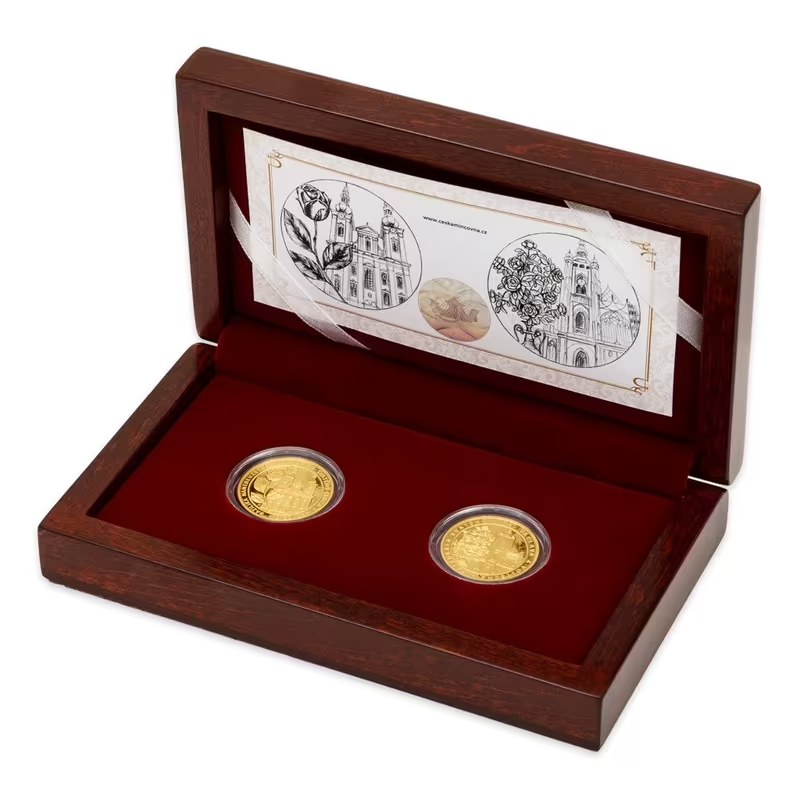
Sada mincí 2018 - Zlatá růže od papeže
Česká republika (1993 - ) Sada dvou mincí 2018 (Mária Filová) - Zlatá růže pro papeže - Velehradská bazilika, Katedrála sv. Víta 2x Au 0,9999, 22 mm (7,78 g), náklad 300 ks, certifikát, etue, papírový přebal, PROOF Když chce papež vyjádřit svou úctu a…
Further in the encyclopaedia
More entries in the category historie. Continue browsing or return to the full encyclopaedia.