2 Kreuzer
The 2 kreuzer (two-kreuzer piece) is a small coin denomination which in the Czech lands asserted itself significantly particularly in the 16th century as a silver coin from the period of the gulden currency. At a later time the name appeared once more – in 1851 a two-kreuzer piece was struck in Prague from copper.
The 2 kreuzer belongs to coins on which it is well visible how flexibly the composition of circulating coinage changed in the early modern period according to the needs of the state and according to monetary systems. In the Czech lands the two-kreuzer piece was introduced under the reign of Ferdinand I in connection with the transition to the gulden currency. This step is associated in the sources with the date 1 June 1561, when the ratios of striking were adjusted and circulation also needed smaller silver denominations which would be suitable for everyday payments. The two-kreuzer piece thus fulfilled the role of 'small silver': low in value but practical, because it made it possible to break down sums more finely without the need to use larger coins.
For the oldest stage a weight of approximately 1.5 g is given, which corresponds to the fact that this was a coin intended for frequent handling and rapid circulation. Striking was spread among several mints, which is typical of a time when the state sought to ensure a sufficiency of circulating coinage and at the same time to make use of existing mint capacities. Under Ferdinand I two-kreuzer pieces were struck in the mints of Prague (years 1561–1564), Jáchymov (1562–1564) and Wrocław (1561–1563). The list alone shows that the denomination was not a marginal matter of a single workshop, but part of a broader coinage programme.
Within the continuation of the gulden currency the striking of the two-kreuzer piece was maintained also under the reign of Maximilian II of Habsburg. In Prague the years 1563, further 1565–1566 and 1570–1572 are given, while Jáchymov has the years 1565–1573 documented. To the network of mints also České Budějovice was added, where two-kreuzer pieces were struck in the years 1569–1573, and in Wrocław the year 1573 is recalled. From a numismatic point of view it is precisely this diversification that is important: the same denomination may be tied to different mints, years and organisational phases, which creates room for typology and collector variants.
History
The year 1573 represents a fundamental dividing line for the two-kreuzer piece. With the return to the thaler currency on 28 January 1573 the striking of two-kreuzer pieces was discontinued, because the new monetary setting preferred a different composition of denominations and the two-kreuzer piece in its original role ceased to fit into the system. In practice this meant that the two-kreuzer piece of the 16th century belongs to coins with a relatively clearly delimited period of life – it arises from the need for smaller silver within the gulden currency and disappears the moment the centre of gravity of circulation and accounting conditions shifts elsewhere.
All the more interesting is the fact that the name 2 kreuzer appeared in the Czech lands once more in the 19th century, however under completely different conditions. In Prague the two-kreuzer piece was struck under Francis Joseph I on the basis of a decree of 7 April 1851 – this time as a copper coin with a weight of 10.94 g, known only in the single year 1851. This late episode shows how some names of denominations may 'return', but no longer bear the same material or the same function: whereas the Renaissance two-kreuzer piece is small silver, the late two-kreuzer piece is a markedly heavier copper coin which belongs to an entirely different monetary reality.
The 2 kreuzer of the 16th century is a typical small silver circulating coinage from the period of the gulden currency. Its practical value lay in that it enabled ordinary payments and small expenditures without the need to resort to higher denominations, and at the same time it was small enough to be struck in large quantities. For collectors it is important that two-kreuzer pieces exist in several mint locations (Prague, Jáchymov, Wrocław, České Budějovice), and therefore they are often collected precisely 'by mints' or in year series within individual centres.
Properties, distinguishing features and collector use
When determining it is worth concentrating on the combination of the year, the legibility of the legends and any marks which distinguish mints or issuance phases. With small coins, moreover, wear is quickly apparent – weaker legibility of inscriptions and worn-off details are common, because such denominations circulated intensively for a long time. Therefore well-preserved pieces tend to have a markedly higher collector value than ordinary circulation specimens.
Entirely separately one must understand the copper 2 kreuzer of 1851. This is a different material, different parameters and a different period, so for collectors it functions rather as a complement to the later kreuzer circulation. It is precisely the contrast 'silver small Renaissance two-kreuzer' versus 'heavier copper two-kreuzer of 1851' that is attractive in this denomination: the same number, but two completely different chapters of monetary history.
In our auction and shop
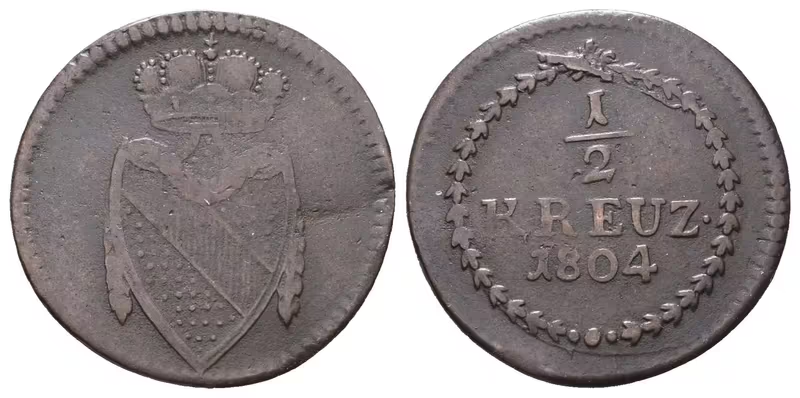
- Code: NABAD-J1804
Baden, 1/2 Krejcar 1804
Baden, Karl Friedrich (1806 - 1811) 1/2 Kreuzer 1804, AKS.7, KM.133, patina, rysky_R!
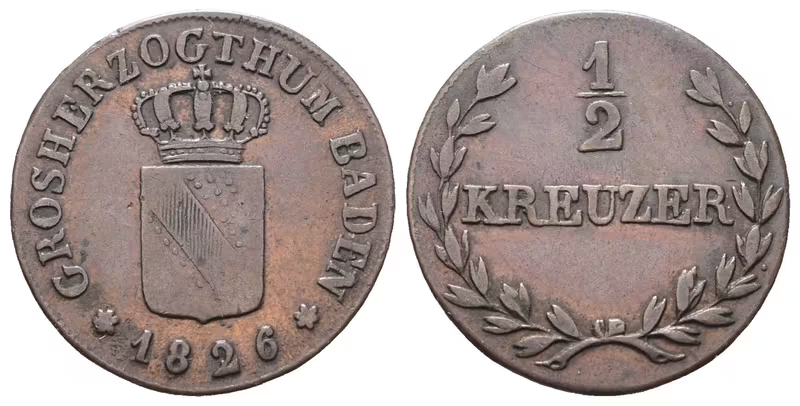
Skladem 1 ks - Code: NABAD-J1826
Baden, 1/2 Krejcar 1826
Baden, Ludwig (1818 - 1830) 1/2 Kreuzer 1826, AKS.68, J.26, patina_R!
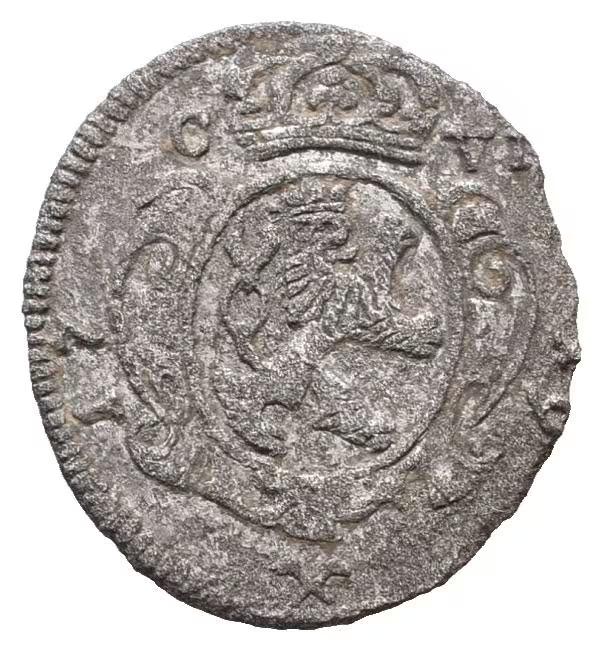
Skladem 1 ks - Code: M78B-BZ1719
Karel VI., 1/2 Krejcar 1719
Karel VI. (1711 - 1740) 1/2 Krejcar 1719, Kutná Hora-Weyer, oxidace, lehce olámaný_R!
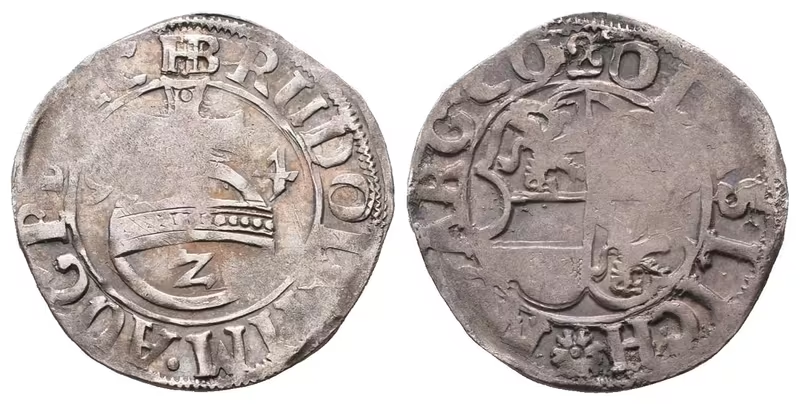
Skladem 1 ks - Code: NASOLM-1594
Solms - Lichtenberg, 1/2 Batzen 1594
Solms - Lichtenberg, Ernst, 1590 - 1619 1/2 Batzen 1594 (2 Krejcar), Jos.51, pěkná zachovalost
Skladem 1 ks