Brussels
Brussels is the capital of Belgium and at the same time a key political centre of Europe, since the important institutions of the European Union and NATO have their seats here. The city lies in historic Brabant and has long belonged among the most important commercial, craft and administrative centres of the Low Countries.
The beginnings of Brussels are usually placed in the early Middle Ages, when a fortified settlement was formed at a strategic place on the river Senne. The favourable position between the prosperous cities of Flanders and Brabant supported the growth of the market and of crafts, and gradually the settlement became an important city with burgher self-government. In the High Middle Ages, Brussels became one of the main cities of the Duchy of Brabant, which fundamentally strengthened its administrative and representative role. The development was reflected both in buildings and in institutions: guilds, town councils and also the famous marketplace, today's Grand-Place, arose, which became a symbol of urban prosperity.
In the late Middle Ages and the early modern period, Brussels was an important centre of the Burgundian and later the Habsburg Netherlands. As a residential and administrative city it attracted nobility, officials, artists and merchants. The presence of the court and the higher administration supported the rise of representative buildings and strengthened the position of the city against the other centres of the region. At the same time, however, Brussels lived in a space in which the interests of great powers clashed: the Netherlands were wealthy, strategic and often became a battlefield. In the 16th and 17th centuries the city was affected by religious conflicts, uprisings and wars, which transformed the political map of the Low Countries.
History
A significant turning point was the end of the 17th century, when Brussels was heavily damaged in warlike events and part of the city had to be rebuilt. Even so, it managed to follow on with its role of administrative centre, and in the 18th century it functioned as one of the pillars of Habsburg administration in the region. The Napoleonic period and the subsequent change of political conditions brought further reshuffling of power: Brussels found itself within the United Kingdom of the Netherlands, but after the revolution of 1830 it became the metropolis of the newly emerging Belgium. With this it acquired a clearly defined role as a national capital, with which the rapid growth, modernisation and building of institutions of the 19th century are connected.
In the 20th century, Brussels transformed into a city of international reach. After the Second World War it became one of the chief symbols of European integration: institutions of the European Communities, and later of the European Union, gradually settled here. In parallel, NATO too established itself here, which moved Brussels among the most important political cities in the world. This role fundamentally influenced both the demography and the urban planning: the city became a cosmopolitan centre with a marked international community, but at the same time it grappled with the problems of modern metropolises, such as transport, pressure on housing and the complex linguistic and administrative structure of Belgium.
A city of institutions, architecture and cultural identity
Brussels is known for its distinctive historic core with the Grand-Place and the guild houses, which recall the era of burgher wealth. Alongside this it stands out for a mixture of architectural layers: from Gothic and Baroque through the 19th century to modern administrative quarters linked with the European institutions. A distinctive part of its identity is also Brussels Art Nouveau, which left a mark on the city's landscape with a number of exceptional buildings.
In the present day, Brussels is above all a city in which local Belgian reality meets international politics. The city is at the same time a cultural centre with rich museums, theatres and festivals, and it has a marked gastronomic and craft tradition. For Europe, Brussels has a special symbolism: alongside the traditional national capitals, it represents the "capital of institutions", where decisions are made on the rules that affect the everyday life of many states. It is precisely this combination of an old city and a modern administrative metropolis that explains why Brussels is one of the most prominent cities of today's Europe.
In our auction and shop
- Code: SNIZSPA-F1612
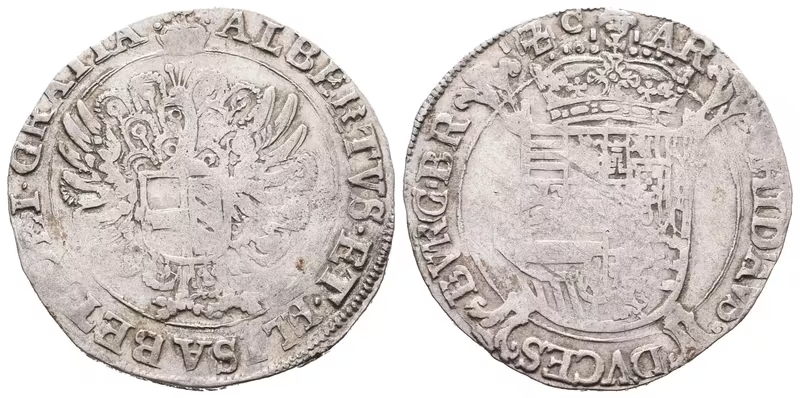
Španělské Nizozemí, Escalin b.l. (1612 - 1621)
Španělské Nizozemí - Brabantsko, Albrecht V. a Isabella Španělská, 1598 - 1621 Escalin/Schelling b.l. (ražen 1612-1621), minc. Brusel, KM.47, Van.623 var., pěkná zachovalost a patina, dobově ořezaný
Skladem 1 ks - Code: SRUS90-A1896LOT
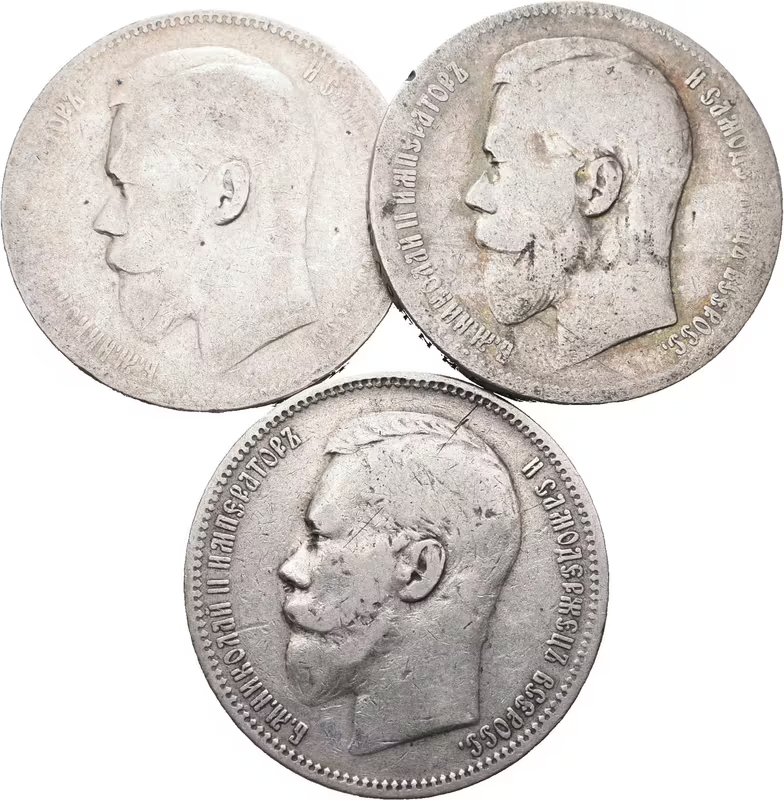
Rusko, Rubl 1896, 1897, 1898
Rusko, Mikuláš II., 1894 - 1917 Soubor mincí Rubl 1896 AG, 1897 Brusel, 1898 AG, St. Peterburg, Bitkin2.39, Uzd.2066_ celkem 3 ks
Skladem 1 ks - Code: SJUG98-E1925B
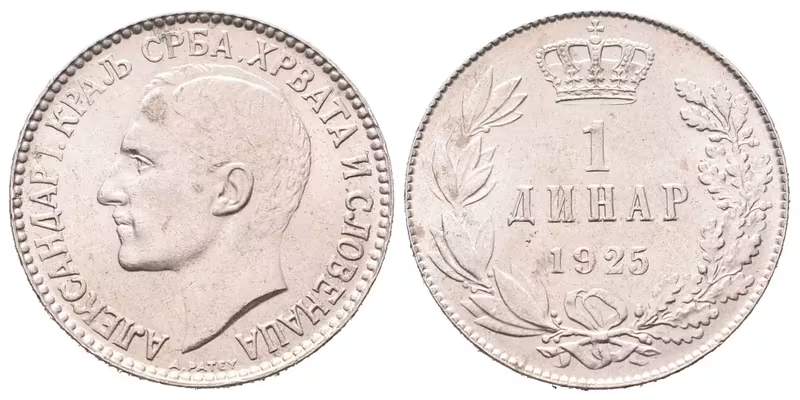
Jugoslávie, 1 Dinar 1925
Království Jugoslávie, Alexander I. (1921 - 1934) 1 Dinar 1925, KM.5, minc. Brusel, krásná zachovalost, lesk, patina, drobné rysky
Skladem 1 ks - Code: SJUG98-F1925
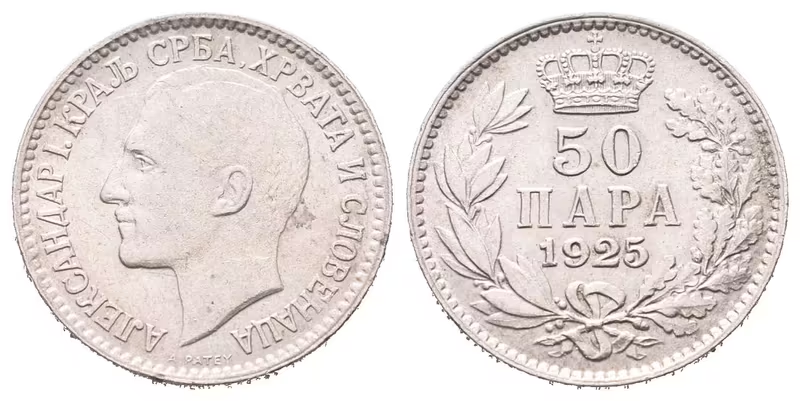
Jugoslávie, 50 Para 1925
Království Jugoslávie, Alexander I. (1921 - 1934) 50 Para 1925, minc. Brusel, KM.4, krásná zachovalost, lesk, patina
Skladem 1 ks