Edward VII
Edward VII was a British king and Emperor of India who reigned from 1901 to 1910, during whose rule the British pound reached its peak as the world's reserve currency and whose portrait adorned the coins of the largest empire in history. His brief reign represented a golden age of Edwardian prosperity and the final period of the classical gold standard.
Edward VII was born on 9 November 1841 as Albert Edward, the eldest son of Queen Victoria and Prince Albert. As Prince of Wales he waited for the throne for a record 59 years, during which his mother systematically excluded him from affairs of state. Edward compensated for his political frustration with an intense social life — he became an arbiter of fashion, a patron of the arts and a passionate gambler who lost hundreds of thousands of pounds in Monte Carlo and Biarritz. His long wait for the throne paradoxically prepared him for the role of a modern constitutional monarch — he understood diplomatic protocol, spoke French and German, and had extensive contacts in the European aristocracy.
The coronation on 9 August 1902 was postponed by six weeks due to the king's appendicitis, causing economic losses of 10 million pounds. The Royal Mint struck a coronation set bearing the original date, which became a numismatic rarity. Edward introduced a new coin design — his portrait by George William de Saulles faced right, restoring the tradition of alternating direction after Victoria. The gold sovereign with Edward's portrait and Saint George by Benedetto Pistrucci was struck at seven mints of the British Empire — London, Melbourne, Sydney, Perth, Ottawa, Bombay and Pretoria — with a total annual production of 30 million pieces.
Edward's foreign policy, known as "royal diplomacy", drew on his personal relations with European sovereigns. He was uncle to the German Kaiser Wilhelm II and the Russian Tsar Nicholas II, brother-in-law to the King of Greece and father-in-law to the King of Norway. His state visit to Paris in 1903 transformed Anglo-French relations from historic enmity into the Entente Cordiale. The agreement resolved colonial disputes — Britain recognised French influence in Morocco in exchange for recognition of British control of Egypt. Edward similarly brokered the Anglo-Russian Entente of 1907 dividing spheres of influence in Persia and Afghanistan. These alliances created the Triple Entente against the Triple Alliance, thereby preparing the ground for the First World War.
History
Economically the Edwardian era represented the peak of British prosperity and the final period of a stable gold standard. The British pound was the uncontested world currency — 40% of international reserves and 60% of world trade were denominated in pounds. The Bank of England held gold reserves of 160 million pounds, the largest in the world. The City of London controlled 50% of world investments — 4 billion pounds overseas generated an annual income of 200 million. Edwardian Britain minted annually 500 million coins for an empire encompassing a quarter of the world's population. The king's signature on Bank of England notes (a tradition continuing from 1901) symbolised the stability of the currency.
The domestic politics of Edward's reign were marked by a constitutional crisis. The Liberal government of Herbert Asquith pursued social reforms — the old-age pensions of 1908 (5 shillings a week for those over 70) and national insurance in 1911. Financing required David Lloyd George's "People's Budget" of 1909, with tax increases for the wealthy. The Conservative House of Lords vetoed the budget, leading to a constitutional crisis. Edward reluctantly agreed to the creation of 500 new Liberal peers should the upper house not give way. The Parliament Act 1911 curtailed the powers of the Lords — they could no longer veto financial bills.
Edward VII died on 6 May 1910 at Buckingham Palace at the age of 68. His death ended the "long Edwardian summer" — a period of optimism, prosperity and British hegemony. His funeral on 20 May was the largest gathering of European monarchs in history — nine kings, including the German and Austrian emperors, walked behind the coffin. Ironically most of them lost their thrones during the First World War, which Edward's alliances had helped to bring about. His son George V inherited a stable constitutional monarchy but also the tensions that exploded four years later into a global conflict. The Edwardian era entered history as the final period of the "gold standard" in both the literal and figurative sense.
Edward VII and British imperial coinage
Edwardian coins represented the pinnacle of British imperial coinage. The system comprised gold coins (sovereign = 1 pound, half-sovereign = 10 shillings), silver (crown = 5 shillings, half-crown, florin, shilling, sixpence, threepence) and bronze (penny, halfpenny, farthing). Total mintage during Edward's reign reached 2.5 billion coins. India struck special rupees with the king's title EDWARD VII KING & EMPEROR. Canada introduced in 1908 its own dollars with Edward's portrait. Australia produced in 1910 its first national coins replacing British pounds.
The Edwardian pound was the most stable currency in the world, with purchasing power 100 times higher than today's. The gold sovereign contained 7.32 grams of gold of 916.66/1000 fineness. Exchange rates were fixed — 1 pound = 4.86 dollars = 25.22 francs = 20.43 marks. The London gold fixing set the world price of gold. The Royal Mint exported its technology — it helped establish mints in Ottawa, Perth and Bombay. British white five-pound notes printed on handmade paper were unforgeable. Edward's system of coins and banknotes functioned without change until the First World War, when the gold standard collapsed. Paradoxically, coins bearing Edward's portrait circulated in some colonies as late as the 1960s.
In our auction and shop
- Code: XB1518
České početní groše, žetony, kovové známky
Eduard Polívka České početní groše, žetony, kovové známky Praha 2003, Eduard Polívka, 133 vázaných stran, poškozený papírový přebal
Skladem 1 ks - Code: SFIJI90-D1995
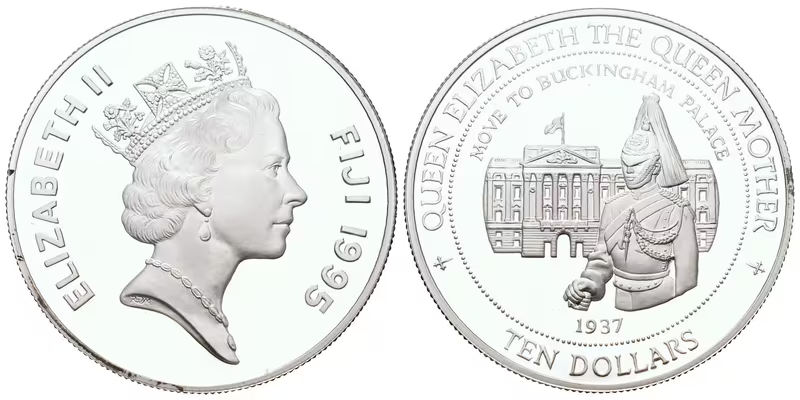
Fiji, 10 Dollars 1995 - Buckingham Palace 1937
Fiji, Elizabeth II. (1952 - 2022) 10 Dollars 1995 - Buckingham Palace 1937, KM# 86 Ag (.925), 38,7 mm (31,35 g), proof, v kapsli. Emise: 20 000 ks. Pamětní stříbrná mince - Královna Alžběta, královna matka; k přestěhování se do Buckinghamského paláce po…
Skladem 1 ks - Code: XB-1000
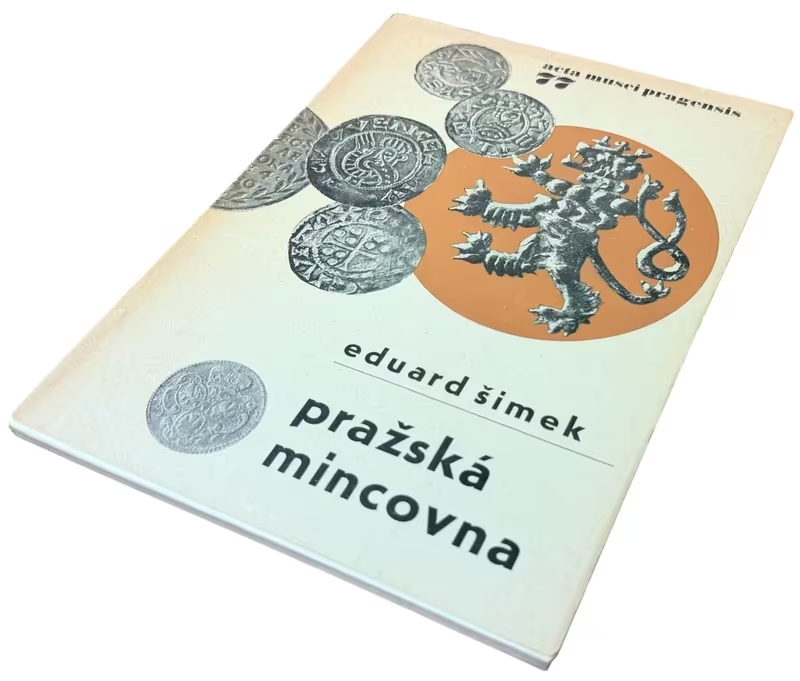
Pražská mincovna
Šimek, Eduard Pražská mincovna devět století české mince - katalog výstavy Praha 1977, 38 stran a 48 stran vyobrazení, brožované, pěkná zachovalost
Skladem 1 ks - Code: XB-POLDEN
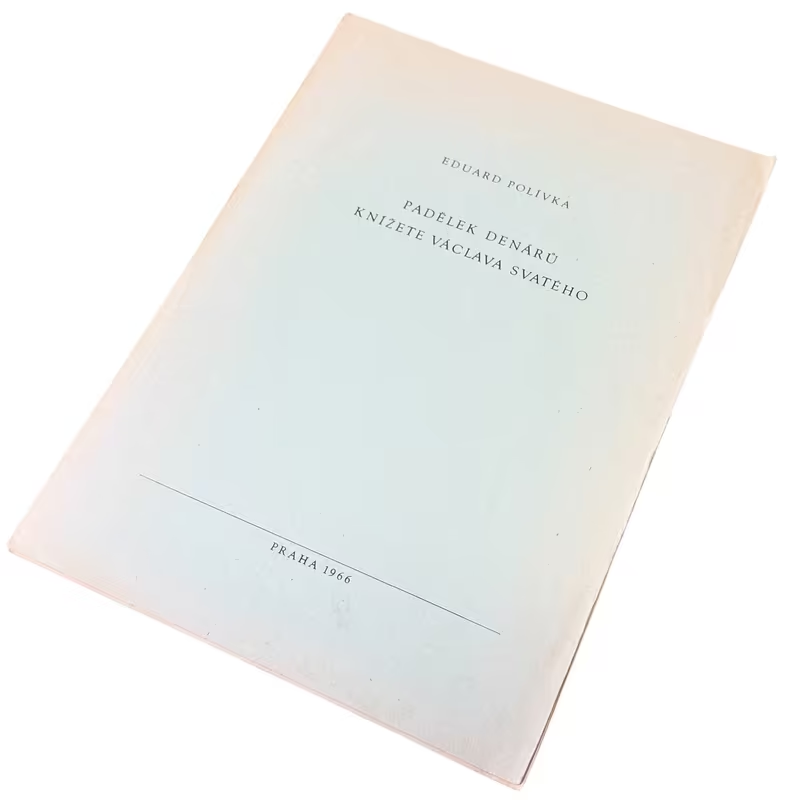
Padělek denárů knížete Václava Svatého
Polívka, Eduard Padělek denárů knížete Václava Svatého Praha 1966, 6 stran a vyobrazení, brožované
Skladem 1 ks