
Gold Standard Act
The Gold Standard Act was an American law signed on 14 March 1900 by President William McKinley. It formally confirmed gold as the basis of the monetary system of the United States and ended the long political disputes over whether the American currency should rest exclusively on gold, or also on silver.
From the 19th century onward the United States had a complicated relationship among gold, silver, and paper money. In practice various forms of metallic backing were used, and the political debate over "hard money" was exceptionally fierce. The Gold Standard Act unified the rules and defined the dollar in relation to gold so that the currency would appear more stable for domestic and foreign trade.
Historical context
The act is important because the gold standard did not represent merely a technical monetary definition. It was a pledge of credibility: the state was to hold sufficient reserves and maintain the convertibility of the currency under a fixed rule. This strengthened the confidence of creditors and merchants, but at the same time limited the flexibility of monetary policy in times of crisis.
What the act changed
For investment gold the Gold Standard Act is a good illustration of the role of gold as a monetary anchor. The modern investor no longer commonly holds money convertible into metal, but historical experience explains why gold to this day functions as a symbol of reserve, discipline, and protection of value. The 1900 law belongs among the key moments of modern American monetary history.
Sources
Sources: Encyclopaedia Britannica, "Gold Standard Act"; World Gold Council, text of the act "Gold Standard Act, 1900".
In our auction and shop
- Code: ZN-SAS1486
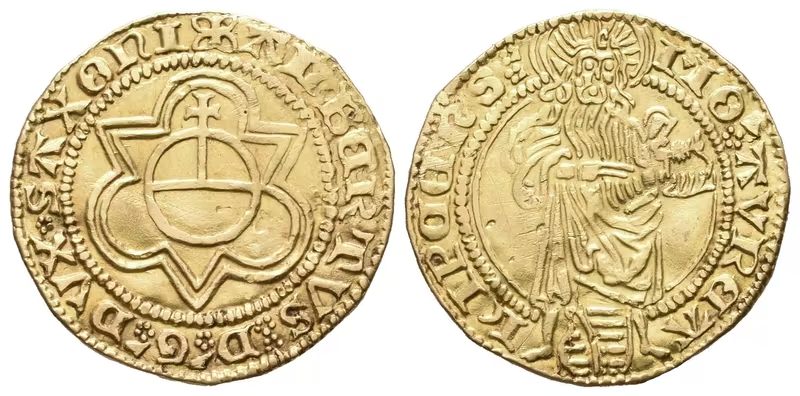
Sasko - vévodství, Goldgulden b.l.
Sasko, Albrecht jako vévoda (1486 - 1500) Goldgulden b.l., Leipzig, Fb. 2609; Slg. Merseb. 344; Keilitz 2 (3,46 g), zcela nep. zvlněn, pěkná zachovalost Albrecht Statečný byl zakladatelem albertinské linie, která vznikla lipským dělením v roce 1485,…
Skladem 1 ks - Code: ZN-KOLN
Köln - arcibiskupství, Goldgulden b.l.
Köln - arcibiskupství, Hermann von Hessen 1480-1508 Goldgulden, Bonn (1480/81), Noss 467, Friedberg 802, Felke 1487 (3,30 g)
Skladem 1 ks - Code: ZSSOL-2019.A
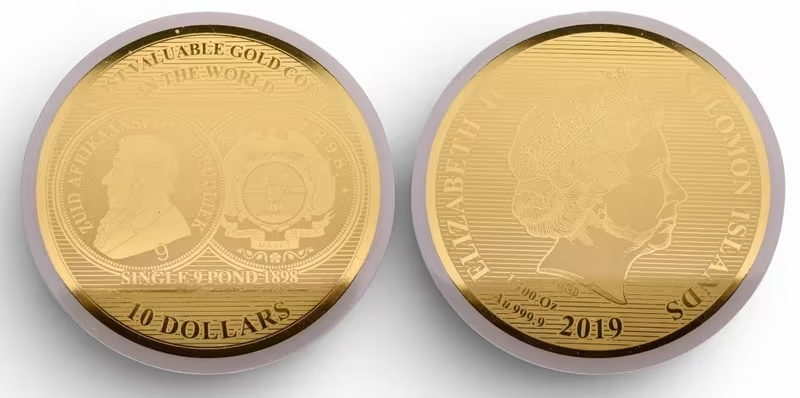
Solomon Islands, 10 Dollars 2019
Šalamounovy ostrovy 10 Dollars 2019 - Nejdražší mince světa na replikách z ryzího zlata v úctyhodném průměru 45 mm Most Valuable Gold Coins in the World - Single 9 Ponds 1898 Au 0,9999, 45 mm (0,311 g), 1/100 Oz
Skladem 1 ks - Code: FUSA-ZSW
USA, Stříbrný Odznak pro ponorkové důstojníky
United States of America / Spojené státy americké The Submarine Warfare Insignia (Odznak ponorkového loďstva pro důstojníky), značeno GEMS CO N.Y., STERLING a 1/20 Karat Gold Filling Stříbro 925/1000 a Zlato 417/1000 (13,35 g)
Skladem 1 ks


Further in the encyclopaedia
More entries in the category Historie zlata. Continue browsing or return to the full encyclopaedia.