Charles III Joseph of Lorraine
Charles III Joseph of Lorraine (1680–1715) was a member of the House of Lorraine who became Bishop of Olomouc while still a young man, and later also Archbishop and Elector of Trier. In the Czech lands he is well known thanks to coins from the Moravian mints, on which his name and titulature appear.
Charles III Joseph of Lorraine was born in Vienna as the son of Charles V of Lorraine and Eleonora of Habsburg, in an environment where dynastic politics was interwoven with an ecclesiastical career. For the younger sons of important families the church was, in the early modern period, a common path to power and prestige: high offices brought revenues, standing in imperial politics and the opportunity to influence extensive territories. The Lorraines, moreover, stood close to the Habsburg court, so that Charles Joseph was from his youth destined for rapid advancement in the ecclesiastical hierarchy.
His most prominent link to the Czech lands is connected with Olomouc. As Bishop of Olomouc (in practice from the end of the 1690s) he held an office that ranked among the most influential in the lands of the Bohemian Crown. The Diocese of Olomouc was extensive, and its bishop had not only spiritual authority but also considerable economic backing. The administration of the diocese meant managing property, patronages, schools and ecclesiastical justice, while at the same time moving in the world of provincial and court politics, in which the church was still one of the pillars of power.
Charles Joseph at the same time made his mark beyond Moravia. In the imperial environment he gradually became Bishop of Osnabrück and was finally elected Archbishop and Elector of Trier. This function carried extraordinary weight: the Archbishop of Trier ranked among the imperial electors, that is the electors of the emperor, and his position was therefore not only ecclesiastical but also highly political. From a career perspective, this was confirmation that he was not merely a regional prelate but a figure with a place in the highest echelons of the Holy Roman Empire.
History
His activity in Moravia took place at a time when the Habsburg Monarchy was trying to stabilise administration and finances after long wars, and when courtly representation was being strengthened. In great bishoprics this manifested itself in buildings, support for learning and facilities for ecclesiastical institutions, but also in emphasis on administration. It is important in the case of Charles Joseph that he was appointed very young, so that part of practical administration was carried out by experienced officials and chapters. This was common in the church of that time: the office gave family prestige and supported the state, while everyday running was sustained by official structures.
Charles III Joseph died in 1715 in Vienna, at a relatively young age. His life thus appears as a typical "fast" career of a high nobleman in the church: early entry into office, accumulation of titles and functions and a marked link to Habsburg politics. In the Czech setting he remains remembered mainly as Bishop of Olomouc, one of the most visible representatives of ecclesiastical power at the turn of the 17th and 18th centuries.
Charles III Joseph of Lorraine has a firm place in numismatics thanks to the fact that the Bishopric of Olomouc was among the institutions that took part in the striking of coins. In the early modern period a coin was not merely a means of exchange but also a bearer of authority: on the obverse or reverse it carried the name and title of the issuer, and sometimes also heraldic symbolism, which was fundamental in the "readable" world of signs in circulation. Episcopal strikings thus represent a combination of spiritual power with economic practice: the ecclesiastical institution administered estates, collected dues and needed currency for its operations and for markets on its manorial estates.
Bishop of Olomouc and the coins from Moravia
Among the strikings associated with the Bishopric of Olomouc, one mostly encounters smaller denominations, which were practical for everyday payments. From the point of view of collecting, the titulature and name of the bishop are particularly attractive: they enable the coin to be quickly assigned to a specific period and at the same time show how the church dignitary presented himself. With some pieces the mint mark and the style of engraving are also important, because the Moravian strikings of this period may have fine variants according to the specific workshop and the dies used.
In contrast to the coins of rulers, which often had a "nationwide" ambition, episcopal strikings act more regionally. So much the better, however, do they speak about the local economy: about how payments were made in Moravia, what the everyday currency looked like and how large a role institutions outside the direct framework of the sovereign played. For collectors, the coins of Charles III Joseph are attractive in their combination of Moravian context, distinctive titulature and the story of a high nobleman who linked the Olomouc office with one of the most important electoral sees of the Empire.
In our auction and shop
- Code: SSVAH-G2024
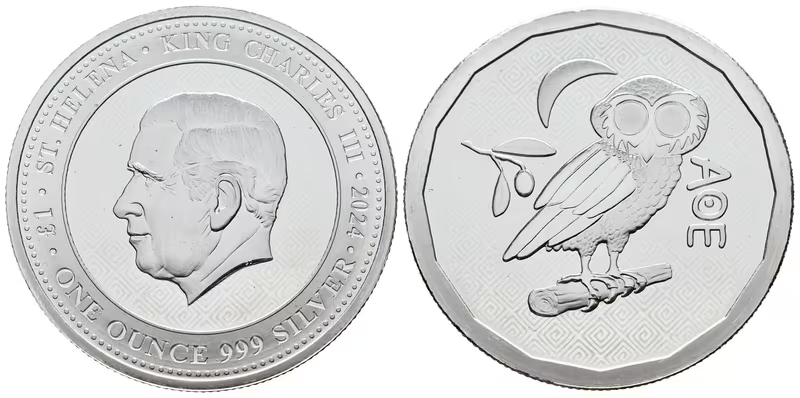
Svatá Helena, 1 Pound 2024 - 1 Oz (Athénská sova)
Svatá Helena, Karel III. (2022 -) 1 Pound 2024 - 1 Oz (Athénská sova), KM# 236 Ag (.999), 39 mm (31,1 g), v kapsli. Emise: 10 000 ks. Mincovna: Silver Towne Mint - USA. Stříbrná uncová investiční mince - 1 Oz. Lit.: KM# 236.
Skladem 1 ks - Code: RG-ZTOL14
Replika - Historický tolar - Karel III. 1733
Replika - Historický tolar - Karel III. 1733 Ag 999/1000 20 g Replika Tolar
- Code: RG-ZREP18
Replika - Historický 1/2 tolar - Karel III. 1724
Replika - Historický 1/2 tolar - Karel III. 1724 Ag - 333/1000, 10,37 g, vč. certfifikátu a kapsle
- Code: SAUST-P2023.1
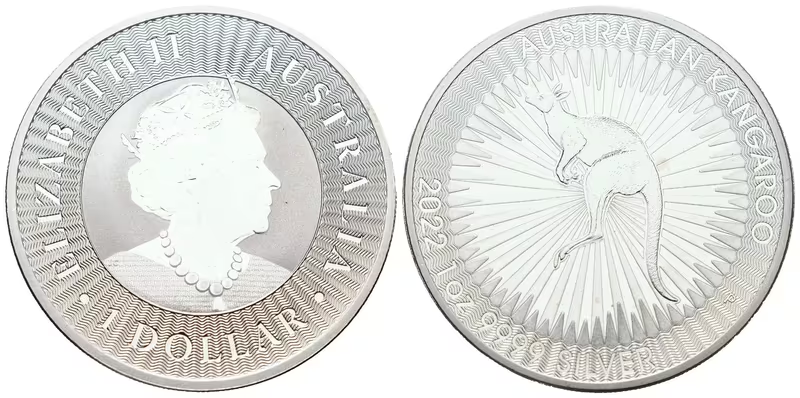
Austrálie, 1 Dollar 2023 - 1 Oz (Klokan)
Australské společenství, Karel III. (2022 -) 1 Dollar 2023 - 1 Oz (Klokan) Ag (.9999), 40,6 mm (31,1 g), BU (brilliant uncirculated). Mincovna: Perth Mint, Austrálie. Stříbrná uncová investiční mince - 1 Oz; série "Australian Kangaroo" (Australský…