Episcopal Strikes
Episcopal strikes are coins and medals issued by bishops or archbishops on the basis of granted minting rights. They are most often associated with the environment of the Holy Roman Empire, where some bishops were at the same time territorial rulers and could strike coinage for their territory.
Episcopal strikes grew out of the European medieval model, in which the right to strike coins belonged to the most important prerogatives of the sovereign or holder of territorial power. In the environment of the Holy Roman Empire, some bishops became imperial princes, and their prerogatives were not limited to spiritual administration. They governed territory, collected dues, held judicial competences and in some cases also minting rights. This meant that they could issue circulating coins intended for the local market and for payments associated with the administration of the territory.
Why were coins struck precisely in episcopal lands? The reason was practical: a territory needed small coinage for the market, for taxes and fees, and the local ruler could secure smooth circulation by mintage. At the same time it was a symbol of power. The coin bore the marks of the issuer (name, title or coat of arms) and confirmed who had the right to determine "official" money for the given territory. In episcopal strikes one therefore often encounters ecclesiastical motifs (crosses, patron saints, episcopal insignia) combined with state emblems and titulature.
History
In the Bohemian lands the situation is more specific. The bishops of Prague (later archbishops) do not appear in the domestic minting tradition as stable issuers of coinage, whereas in Moravia the specialist literature gives examples of strikes associated with the bishops of Olomouc and with the Moravian environment. The most prominent chapter is represented by the early modern period, when episcopal coinage is linked to Olomouc and its circle. Within this framework, the granting of minting rights and the start of more regular mintage at the beginning of the 17th century are mentioned, when episcopal coinage complemented the wider monetary system of the Habsburg Monarchy.
Episcopal strikes changed over time according to political and economic conditions. If the state sought centralisation of currency, local minting rights were restricted or abolished. This is one of the reasons why episcopal coinage in many countries gradually disappeared: a more uniform state currency and stronger control of mints reduced the scope for territorial issuers. Even so, episcopal strikes are an important source: they show that the coin was not only an economic instrument but also an expression of jurisdiction, prestige and the identity of the issuer.
Image, titulature and technical features of episcopal strikes
Episcopal strikes are usually recognised by a combination of ecclesiastical and territorial motifs. On coins, episcopal insignia (mitre, crosier), the coat of arms of the diocese or the personal coat of arms of the bishop may appear, often supplemented by an inscription with name and title. With circulating coinage the iconography tends to be more restrained and adapted to the small format, while medals and commemorative strikes allow richer composition and longer texts.
For an expert description it is essential to give the denomination, metal, weight and diameter, since episcopal coins were struck in various systems and often in connection with surrounding monetary standards. The mint and marking are also important: if the mint is given in the legend or by a mark, this greatly aids identification. Striking was traditionally by hammer, so with older pieces shifted centring, an irregular edge and an incomplete legend commonly occur. In practice, therefore, all legible parts of the legend, the position of marks in the field and the typical form of the coat of arms or insignia are recorded. These parameters allow an episcopal strike to be distinguished from coins of secular princes, which may have a similar denomination but different titulature and emblematic scheme.
In our auction and shop
- Code: RALUK-MINC1
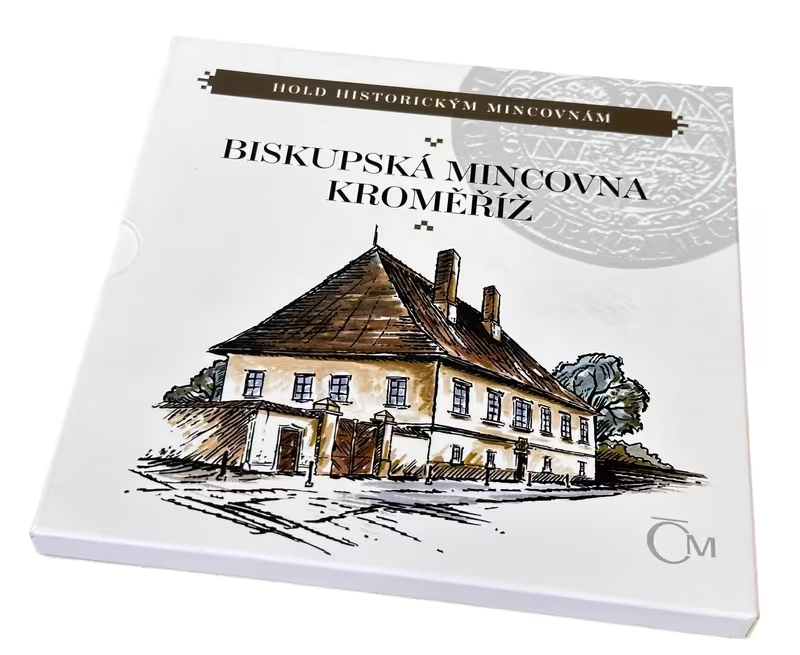
Lukáš Jan - Biskupská mincovna Kroměříž
Lukáš Jan (1944 - ) AR Medaile b.l. (2012) - replika kroměřížského tolaru z roku 1863 z cyklu Hold historickým mincovnám/ Biskupská mincovna Kroměříž Ag 0,999, 37 mm (31,1 g), provedení BK, kapsle, papírový přebal komisní prodej - obaly mohou být…
- Code: RALUK-MINC5
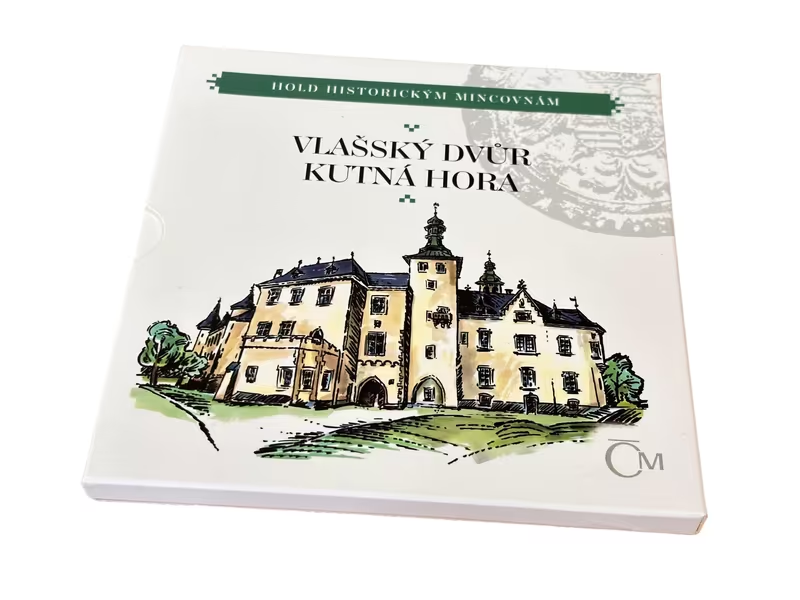
Lukáš Jan - Vlašský dvůr Kutná Hora
Lukáš Jan (1944 - ) AR Medaile b.l. (2012) - replika kutnohorského tolaru Maxmiliána II. z cyklu Hold historickým mincovnám/ Biskupská mincovna Kroměříž Ag 0,999, 37 mm (31,1 g), provedení BK, kapsle, papírový přebal komisní prodej - obaly mohou být…
- Code: XB1300-0602
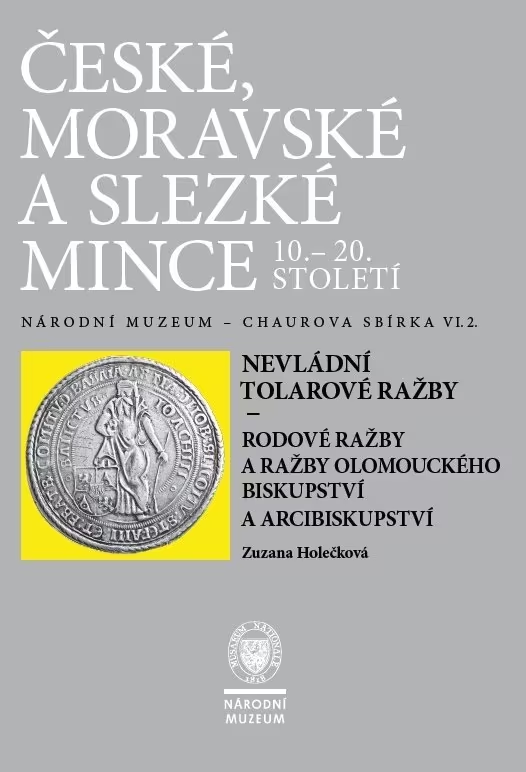
Chaurova sbírka - Rodové ražby a ražby Olomouckého biskupství a arcibiskupství
Zuzana Holečková - České, moravské a slezské mince 10. - 20. století Nevládní tolarové ražby - Rodové ražby a ražby Olomouckého biskupství a arcibiskupství Všichni zájemci o numismatiku mají nyní možnost nahlédnout i do druhého svazku nevládních ražeb z…