Circulation coin
A circulation coin is legal tender made predominantly from metals or their alloys, intended for regular use in everyday economic transactions. Unlike collector, commemorative or bullion coins, the main purpose of circulation coins is to facilitate commercial exchange within an established economy.
The first circulation coins arose in Lydia around 650 BC, when King Croesus introduced a standardised system of gold and silver strikes to facilitate trade. These staters rapidly spread throughout the Mediterranean and became the model for the Greek city-states. The Athenian tetradrachms with the motif of the owl became the first internationally recognised circulation coin, accepted from Egypt to the Black Sea.
The Roman Republic created an elaborate system of circulation coins with a clear denominational structure. The bronze as, the silver denarius and the gold aureus formed the basis of a monetary system that functioned throughout the empire. The denarius became the model for medieval European coinage - its name persisted in the form of the denarius, dinar or English penny. The mass production of circulation coins in dozens of mints ensured a uniform payment system across three continents.
In medieval Europe a fragmentation of monetary systems occurred. Every larger town or region struck its own circulation coins, which complicated trade. Charlemagne attempted unification by introducing the silver denarius as the only circulation coin of his empire around 794. His reform established that 240 denarii would be struck from one pound of silver, which created the basis for the later pound system.
In the Czech lands the first circulation coins - denarii - began to be struck under Boleslav I around 960. These small silver coins with a diameter of 15-20 millimetres were the only currency until the 13th century. Under Wenceslas II the Prague groschen was created in 1300, which became the dominant circulation coin of central Europe. Its stable silver content (3.7 grams) ensured wide acceptance in international trade.
History
The discovery of American silver in the 16th century caused a revolution in European coinage. The mass influx of precious metal enabled the striking of large silver thalers, which became the main circulation coin for wholesale. At the same time the problem of a shortage of small coins for everyday payments arose. The solution was the striking of copper and later nickel coins of small denominations, which supplemented the silver and gold circulating coinage.
The Industrial Revolution of the 19th century brought mechanisation to the production of circulation coins. Steam presses enabled the mass production of standardised strikes with protection against counterfeiting. Most states adopted the decimal monetary system on the French model. In Austria-Hungary the koruna, divided into 100 hellers, was introduced in 1892, replacing the complicated system of guldens and kreuzers.
Czechoslovakia began the striking of its own circulation coins in 1922. The first issues contained denominations from 2 hellers to 5 koruna in various alloys. After the monetary reform of 1953, a new system of circulation coins arose, which with modifications persisted until the division of the federation. The Czech Republic has been striking circulation coins from 1993 in the denominations of 1, 2, 5, 10, 20 and 50 koruna, with heller coins having been withdrawn in 2008.
Modern circulation coins must meet several technical requirements. Above all there is resistance to wear during frequent use, recognisability for the visually impaired, resistance to counterfeiting and economic efficiency of production. The material must be cheaper than the nominal value but sufficiently durable for long-term circulation.
Properties and production of circulation coins
Current Czech circulation coins use various materials depending on the nominal value. The koruna coins are made of steel plated with nickel; the two-koruna piece has nickel-plated steel with a brass annulus. Higher denominations use a bimetallic composition - a steel core with a brass or cupro-nickel ring. This solution combines economy with protection against counterfeiting.
The lifespan of a circulation coin depends on the intensity of use. Small denominations remain in circulation on average for 15-20 years, larger coins up to 30 years. The Czech National Bank regularly withdraws worn pieces and replaces them with new strikes. Annually approximately 100 million circulation coins are produced in the Czech Republic.
In our auction and shop
- Code: SNIZ95-E1970.5
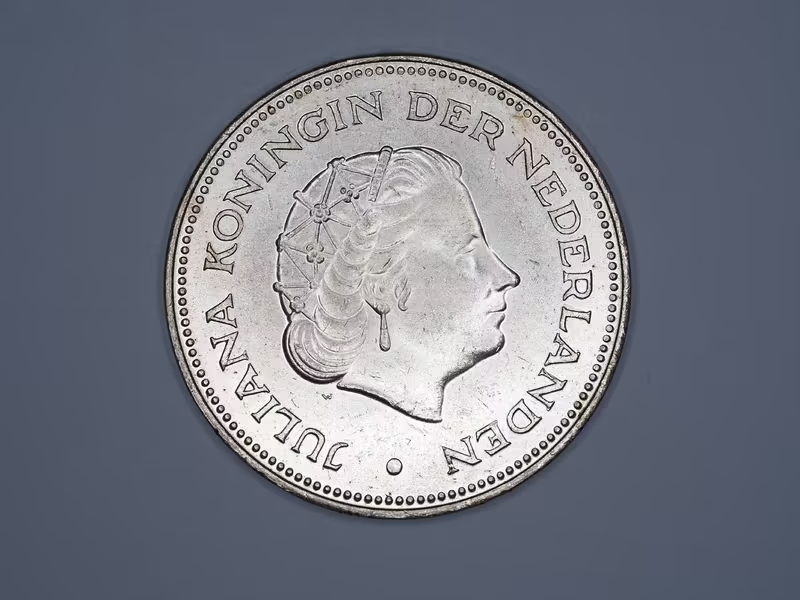
Nizozemí, 10 Gulden 1970 - Osvobození
Nizozemsko, Juliana (1948-1980) 10 Gulden 1970 - Osvobození, KM# 195 Ag (.720), 38 mm (25 g). Mincovna: Královská holandská mincovna - Utrecht. Hrana s nápisem "★ GOD ★ ZIJ ★ MET ★ ONS". Stříbrná pamětní oběžná mince - k 25. výročí osvobození Nizozemska…
Skladem 1 ks - Code: SNIZ95-E1970.6
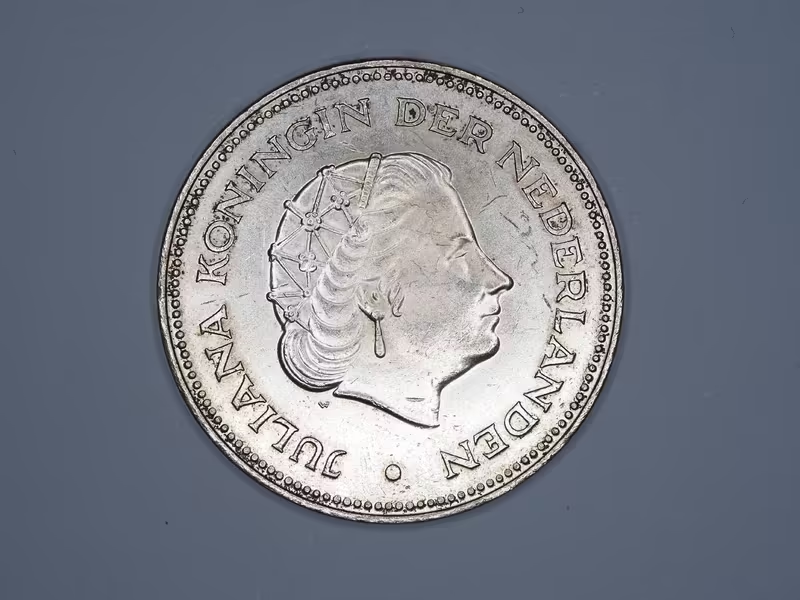
Nizozemí, 10 Gulden 1970 - Osvobození
Nizozemsko, Juliana (1948-1980) 10 Gulden 1970 - Osvobození, KM# 195 Ag (.720), 38 mm (25 g). Mincovna: Královská holandská mincovna - Utrecht. Hrana s nápisem "★ GOD ★ ZIJ ★ MET ★ ONS". Stříbrná pamětní oběžná mince - k 25. výročí osvobození Nizozemska…
Skladem 1 ks - Code: SMEX90-D1968.3
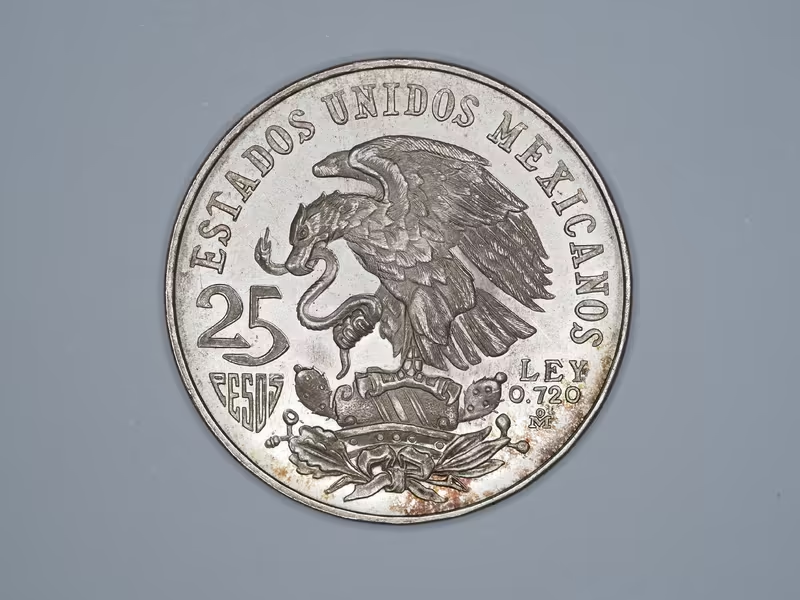
Mexiko, 25 Pesos 1968 - Letní olympijské hry
Spojené státy mexické (1863-1992) 25 Pesos 1968 - Letní olympijské hry, KM# 479.1 Ag (.720), 38 mm (22,5 g). Mincovna: Casa de Moneda de México - Mexiko. Autor: Ricardo Luna Y Vasco (AV), Lorenzo Rafael (REV). Hrana s nápisem "INDEPENDENCIA Y LIBERTAD".…
Skladem 1 ks - Code: SMEX90-G1953
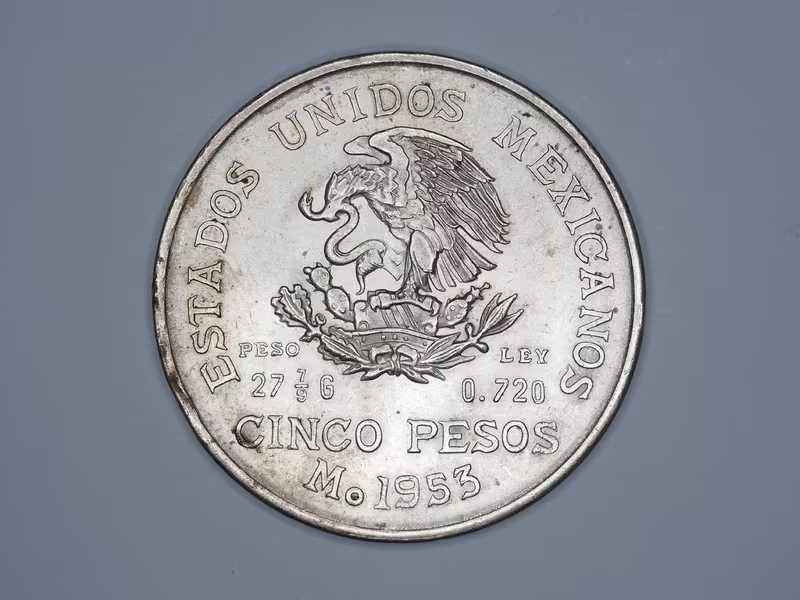
Mexiko, 5 Pesos 1953 - Hidalgo
Spojené státy mexické (1863-1992) 5 Pesos 1953 - 200. výročí narození Hidalga, KM# 468 Ag (.720), 40 mm (27,85 g). Mincovna: Casa de Moneda de México - Mexiko. Autor: Lorenzo Rafael. Hrana s nápisem "AGRICULTURA INDUSTRIA COMERCIO". Stříbrná pamětní…
Skladem 1 ks