Mayer Amschel Rothschild
Mayer Amschel Rothschild (1744–1812) was a German banker from Frankfurt am Main and founder of the Rothschild banking dynasty. From a small family trade in coins and antiquities he built a financial house that, thanks to contacts with European courts and the commercial network of his sons, became one of the most influential of the 19th century.
Mayer Amschel Rothschild was born in 1744 in Frankfurt am Main, in the environment of the Jewish quarter known as the Judengasse. Frankfurt was at that time a significant commercial and financial centre where currencies and coins of many countries met, exchange offices operated and trade in precious metals and valuables flourished. Such an environment offered skilful and reliable merchants the chance to work their way up from small trade to financial services — especially if they could combine knowledge of money, exchange rates and trust with contacts among influential customers.
Rothschild began essentially at the border between numismatics and finance: trade in coins, medals and valuable objects was not only a collector's hobby but also a way of working with value at a time when metal and coins represented the key "language" of trade. This type of activity naturally led to exchange and later banking practice. Gradually Mayer Amschel focused on loans, the brokering of payments and the management of finances for significant clients, especially for noble and princely courts in the German space.
A decisive element of his success was the combination of trustworthiness, discretion and the ability to swiftly transfer value between various places and currencies. In the 18th century, financial business was not only about "money" but also about logistics: how to send a payment safely, how to settle it in the right currency, how to secure metal and how to avoid the risks associated with wars and political upheavals. Rothschild's house gradually acquired the reputation of a partner who could secure such operations.
History
Decisive for the future significance of the family was that Mayer Amschel built the business as a family network. His sons later founded branches in key European centres, thereby creating an exceptionally effective system of rapid communication and transfers. During the Napoleonic Wars and the changing monetary conditions, such a network was an enormous competitive advantage: it made it possible to finance trade and state commissions, to ensure the exchange of precious metals and to carry out payments across borders in a period when this was demanding and risky.
Mayer Amschel Rothschild died in 1812, that is, still before the greatest flourishing of the Rothschild banking houses in the 19th century. Nevertheless he is perceived as the founder of the "model" that became decisive for the family: to rely on reputation, precision and family coordination, and through this to master financial operations on a large scale. His story thus well illustrates the transition from a world in which value in metal and coins dominated, to a more modern financial system based on credit, transfers and international infrastructure.
The significance of Mayer Amschel Rothschild can be understood on two levels. On the first he is the founder of a banking house that worked with credit, exchange and the financing of large clients. On the second level he is a person whose beginnings were closely linked to coins and with how value was assessed in early modern Europe: knowledge of fineness, weight, exchange rates and trust in specific mintages was a practical capital that could be transformed into financial services.
Finance, trade and connection to coins
For this very reason his name also appears in a wider numismatic context. He was not a sovereign or a mintmaster, but a personality standing on the boundary between trade in valuables and the emerging modern banking. He shows how, from the environment of coins and precious metals, financial houses were born that already worked with great transfers, state loans and international payment flows. For understanding the history of money this is important: coins are not merely a collector's object here, but a part of a wider system of trust and exchange on which a banking enterprise could be built.
In our auction and shop
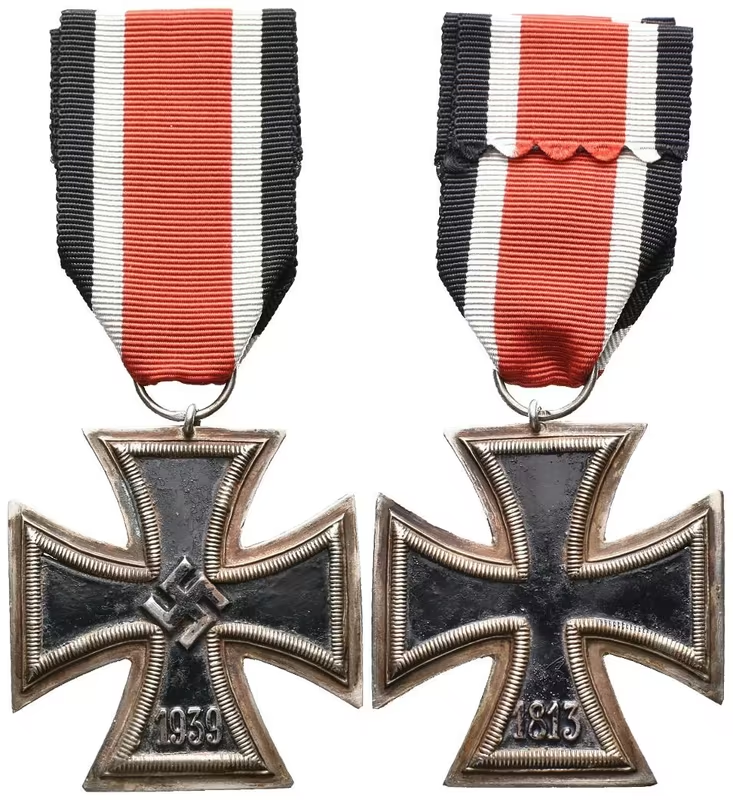
- Code: FNEZA-3824
III. Říše, Železný kříž II. třídy
Německo - III. Říše Železný kříž II. třídy ( Eisernes Kreuz 1939 2. Klasse ) , železo lakované a stříbřené, značeno "M" - B.H. Mayer Pforzheim, OEK 3824/4 Pěkná zachovalost, patina, lak lehce setřený, stuha
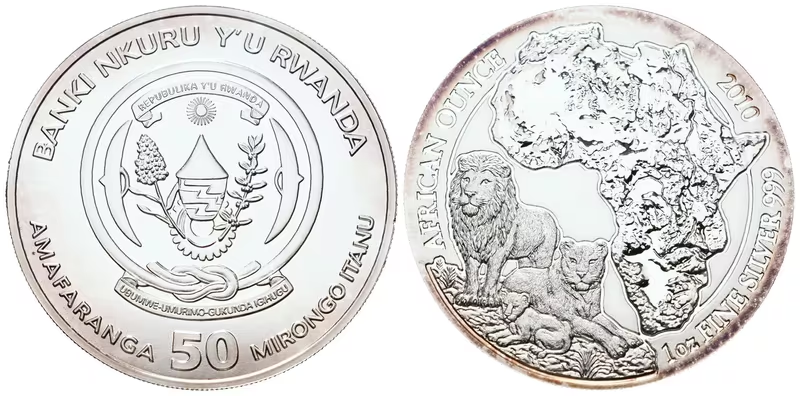
- Code: SRWAN90-C2010
Rwanda, 50 Francs 2010 - 1 Oz (Lev)
Rwandská republika (1964 -) 50 Francs 2010 - 1 Oz (Lev), KM# 70 Ag (.999), 40 mm (31,13 g), UNC. V kapsli. Emise: 5 000 ks. Mincovna: B. H. Mayer Kunstprageanstalt - Německo. Mince ze série "African Ounce". Lit.: KM# 70.
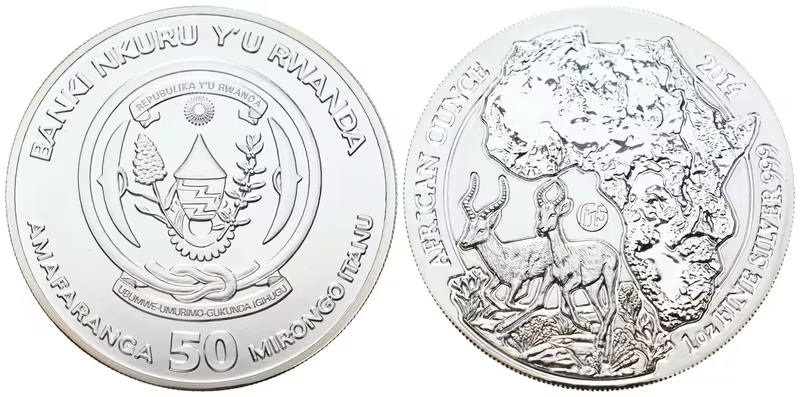
- Code: SRWAN90-C2014
Rwanda, 50 Francs 2014 - 1 Oz (Antilopa)
Rwandská republika (1964 -) 50 Francs 2014 - 1 Oz (Antilopa), KM# 43 Ag (.999), 40 mm (31,1 g), UNC. V kapsli. Emise: 10 000 ks. Mincovna: B. H. Mayer Kunstprageanstalt - Německo. Mince ze série "African Ounce". Lit.: KM# 43.
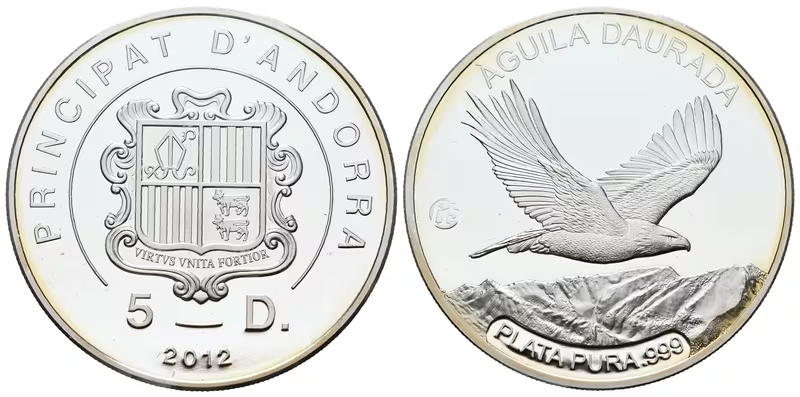
- Code: SAND-I2012
Andorra, 5 Diners 2012 - Orel skalní
Andorrské knížectví (1977-2014) 5 Diners 2012 - Orel skalní, KM# 351 Ag (.999), 38,6 mm (20 g), proof, v kapsli. Emise: 10 000 ks. Mincovna: B. H. Mayer Kunstprageanstalt, Karlsfeld - Německo. Lit.: KM# 351.