
Prisoner-of-war money
Prisoner-of-war money is a specific form of emergency means of payment, which was issued and used exclusively in prisoner-of-war camps. These means of payment, often in the form of vouchers or tokens, had no value outside the camp and served as internal currency for purchases at the camp canteen or as a reward for work.
History and purpose
The systematic use of prisoner-of-war money became widespread above all during the First and Second World Wars, although examples exist from earlier conflicts as well. Camp administrations introduced them for several reasons. The primary aim was to prevent official currency from reaching the prisoners, who could use it to bribe guards or finance escape. By creating a closed monetary system, the camp command retained full control over all financial transactions.
Prisoners received this means of payment as a reward for work performed, or could exchange for it money sent by family or received from humanitarian organisations such as the Red Cross. With the camp money they could then buy supplementary goods at the canteen, for example tobacco, soap or better food. Issuers were the military administrations of various countries, including Germany, Austria-Hungary, Great Britain, France or the USA, and that in camps around the world.
Material, appearance and collecting
Prisoner-of-war money had varied forms. Most often it was simple paper vouchers, sometimes printed on low-quality paper or cardboard. There are, however, also specimens made of metal, porcelain or other emergency materials. The design was usually plain: it contained the name of the camp, the nominal value and possibly the signature of the camp commander or a stamp. Some issues were graphically more elaborate, in order to make their forgery within the camp more difficult.
From a numismatic and notaphilic point of view, prisoner-of-war money falls into the area of exonumia, which deals with items resembling money. They are a valued collector item, since they represent tangible evidence of life in captivity and of military history. Their value depends on rarity, the state of preservation and the specific camp from which they come. Some camps existed only briefly or had small numbers of prisoners, and the means of payment from them are therefore extremely rare.
In our auction and shop
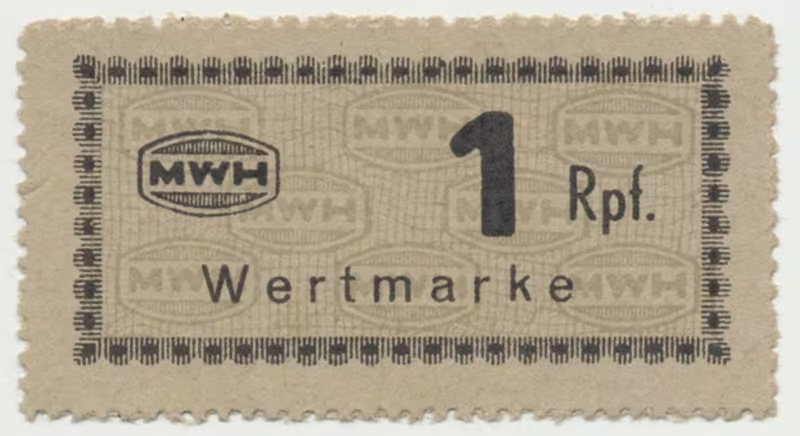
- Code: BNEMEKHO01
Holleischen (Holýšov) - MWH, 1 Reichspfennig b.d., Grab.Ho1
Německo - zajatecké a koncentrační tábory / Germany - POW and concentration camps Holleischen (Holýšov) - MWH, 1 Reichspfennig b.d., Grab.Ho1 N/UNC
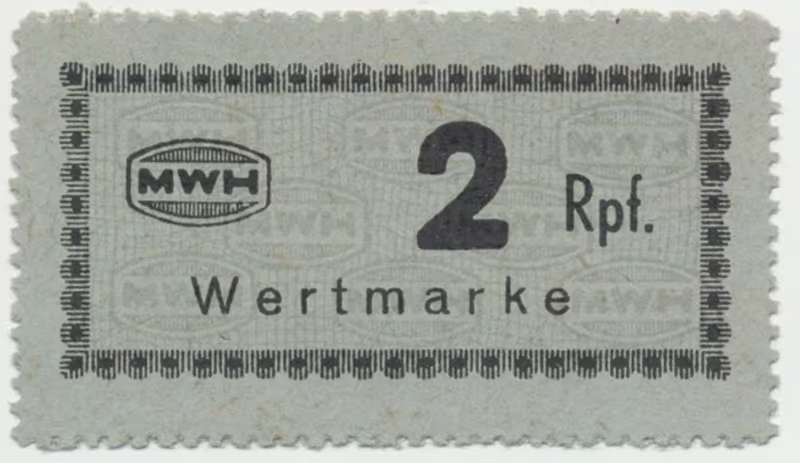
Skladem 1 ks - Code: BNEMEKHO02
Holleischen (Holýšov) - MWH, 2 Reichspfennige b.d., Grab.Ho2
Německo - zajatecké a koncentrační tábory / Germany - POW and concentration camps Holleischen (Holýšov) - MWH, 2 Reichspfennige b.d., Grab.Ho2 N/UNC
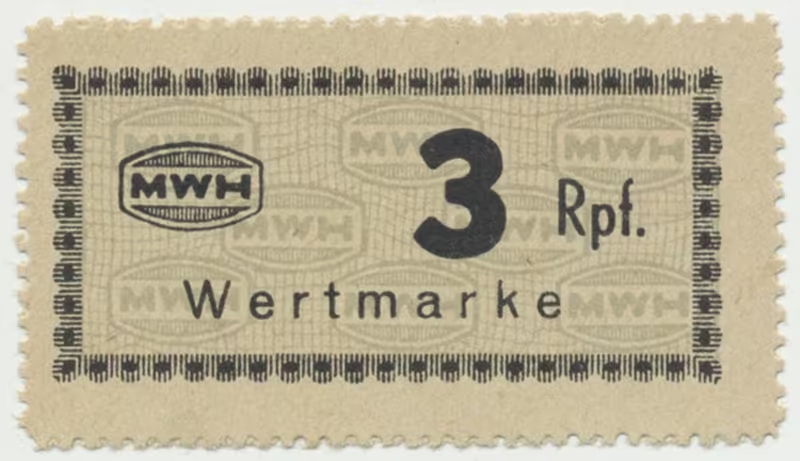
Skladem 3 ks - Code: BNEMEKHO03
Holleischen (Holýšov) - MWH, 3 Reichspfennige b.d., Grab.Ho3
Německo - zajatecké a koncentrační tábory / Germany - POW and concentration camps Holleischen (Holýšov) - MWH, 3 Reichspfennige b.d., Grab.Ho3 N/UNC
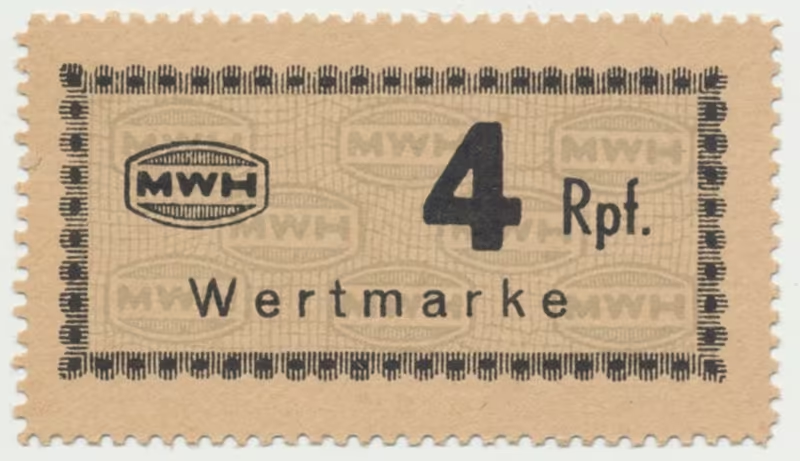
Skladem 2 ks - Code: BNEMEKHO04
Holleischen (Holýšov) - MWH, 4 Reichspfennige b.d., Grab.Ho4
Německo - zajatecké a koncentrační tábory / Germany - POW and concentration camps Holleischen (Holýšov) - MWH, 4 Reichspfennige b.d., Grab.Ho4 N/UNC
Skladem 3 ks
Further in the encyclopaedia
More entries in the category zetony. Continue browsing or return to the full encyclopaedia.