Protective Holder
A protective holder is a protective container designed for the safe storage of coins, medals or banknotes, in order to limit surface damage, abrasion and the effects of humidity or contaminants. In numismatics it includes capsules, foils, sleeves and rigid cases for long-term archival storage.
The need to protect coins and banknotes arose at the moment when money began to be treated not only as a means of payment but also as an object in which the preservation of detail, surface and legibility matters. Already in the era of metal circulation it was clear that touch, friction and humidity alter appearance. With precious metals the surface can be scratched; with copper and alloys corrosion appears; with paper, fibre breakage and soiling. For this reason, ways gradually developed to separate objects from their surroundings and to prevent both mechanical and chemical action.
In modern numismatics protective holders have been standardised. Plastic capsules for individual coins, so-called "flips" (double pockets) and archival album pages have spread. For banknotes, transparent archival pockets and holders of materials that do not cause yellowing or sticking are used. Alongside common holders, rigid cases with a closure and later sealed plastic cases (slabs) have also become established, used in some markets as a combination of protection and identification.
History
The development of holders is also linked with knowledge of materials. Some plastics can release plasticisers (typically PVC), which in time react with the metal surface or with paper and create undesirable coatings. For archival storage, therefore, materials of the polyester (Mylar), polypropylene or polyethylene type are preferred, since they are more stable. For metal objects, the microclimate is also addressed: the holder protects against dust, but if humidity remains inside, it can accelerate corrosion. For this reason, protective holders are often combined with dry and stable storage environments.
A protective holder is therefore not just a "container" but part of a protection system. Its purpose is to keep the surface untouched, to limit fluctuations of humidity and to prevent direct contact with unsuitable materials. In the numismatic environment it is therefore important to distinguish short-term holders (for handling and transport) and long-term holders (archival), since each situation places different demands on strength, material and tightness.
Types of holders, materials and dimensions
For coins, capsules with a precise inner diameter that hold the coin without play are used, along with sleeves or foils for temporary storage. The parameters of a capsule are inner diameter (in millimetres), thickness and type of closure. For archival pages, the size of the windows and compatibility with the album are essential. For banknotes, the dimensions of the pocket, the strength of the seals and the transparency of the material are key, so that the banknote can be examined without being removed.
In terms of materials, PVC-free holders are preferred: polyester (Mylar) for banknotes and documents, polypropylene or polyethylene for many plastic cases and pockets. For coins it is important that the holder does not contain plasticisers and that the surface of the coin does not touch a rough structure that could create micro-scratches. A practical parameter is also tightness: very tight holders reduce air exchange but require dry storage so that humidity does not remain inside. For transport, more robust boxes, tubes and padded cases are used, where resistance to impact and fixation of objects in space are key. In a description of a protective holder it therefore makes sense to give: intended use (coin/banknote), material, dimensions, type of closure and intended use (short-term vs. long-term).
In our auction and shop
- Code: MCZ150-PROOF bzc
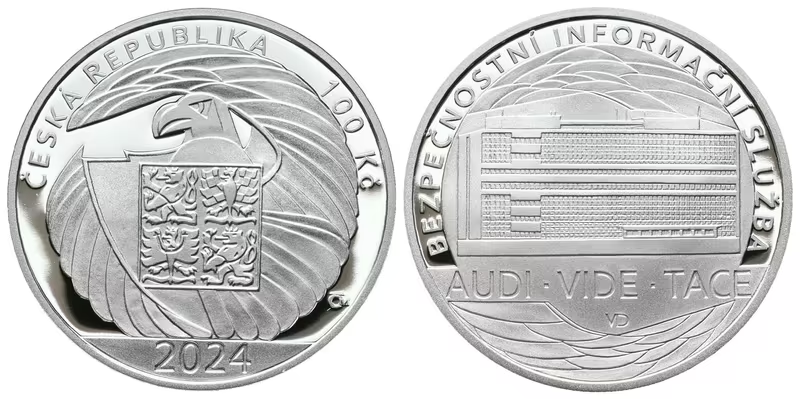
100 Kč 2024 - Bezpečnostní informační služba, PROOF - bez certifikátu
Česká republika (1993 - ) Instituce České republiky 100 Koruna 2024 - Bezpečnostní informační služba, autor Zbyněk Fojtů, Aurea C250, kapsle, bez certifikátu, PROOF Ag 0,925, 29 mm (9 g), raženo 18300 ks (proof)
Skladem 4 ks - Code: MCZ150-PROOF
100 Kč 2024 - Bezpečnostní informační služba, PROOF
Česká republika (1993 - ) Instituce České republiky 100 Koruna 2024 - Bezpečnostní informační služba, autor Zbyněk Fojtů, Aurea C250, kapsle, certifikát, PROOF Ag 0,925, 29 mm (9 g), raženo 18300 ks (proof)
Skladem (>5 ks) - Code: SVEL91-F2023.A
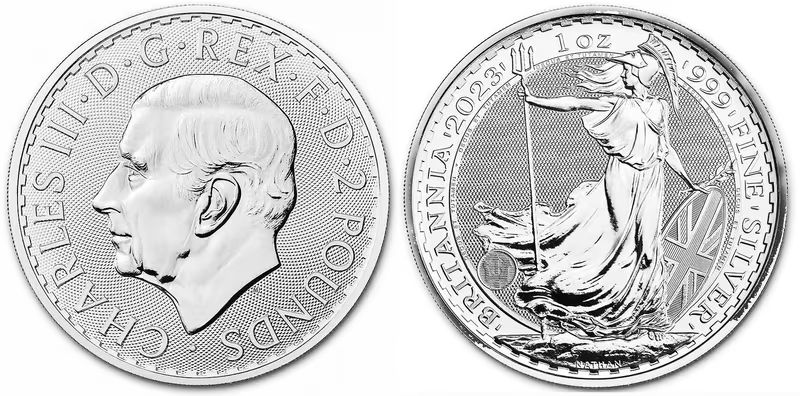
Velká Británie, 2 Pounds 2023 - Britannia
Velká Británie, Charles III. (2022 - ) 2 Libra 2023 - Britannia Ag 0,999, 38,61 mm (31,1 g), 1 Oz, běžná kvalita Stříbrná Britannia ročníku 2023 navazuje na tradici vydávání populárních mincí Britské královské mincovny (The Royal Mint). Ta trvá již od…
- Code: SVEL91-F2024
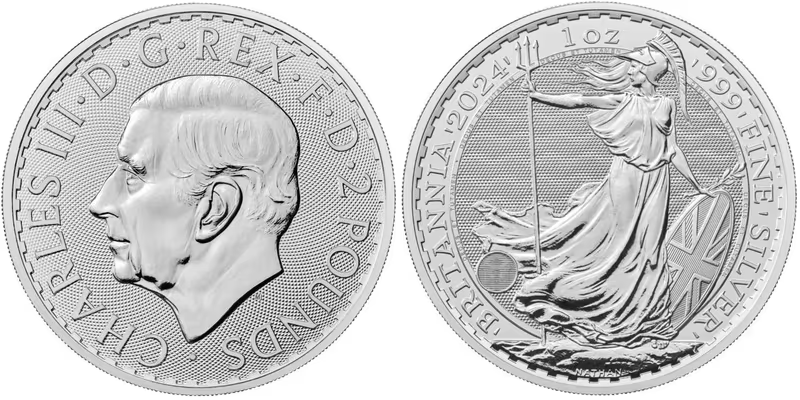
Velká Británie, 2 Pounds 2024 - Britannia
Velká Británie, Charles III. (2022 - ) 2 Libra 2024 - Britannia Ag 0,999, 38,61 mm (31,1 g), 1 Oz, běžná kvalita Stříbrná Britannia ročníku 2023 navazuje na tradici vydávání populárních mincí Britské královské mincovny (The Royal Mint). Ta trvá již od…