Centavo
The centavo is the designation of the one-hundredth part of the basic monetary unit, that is, "one hundredth" of a peso, real or other currency. It is used in a number of countries, especially in Latin America and in former Spanish or Portuguese colonies, and often appears on small-denomination coins.
Centavo derives from the Latin root for "hundred" and its meaning is purely practical: to allow the currency to be divided into small, easily countable parts. Such a decimal division began to take hold mainly in the modern period, when states were seeking a clearer system than the older complex ratios between denominations. In countries influenced by the Spanish and Portuguese tradition, the centavo became a common name for the smallest division of the currency, similar to the "cent" in the Anglo-American environment.
The spread of the name relates to the way monetary systems were transformed in the 19th and 20th centuries in the Americas, Africa and Asia. Many new states took over administrative and economic patterns from the colonial era, but adapted them to their own policy. For the population it was important that small denominations functioned in everyday trade — for paying for food, transport or services. The centavo is therefore not just a "word" but part of the practical infrastructure of the economy: without small units, the market is harder to round and certain prices are difficult to express.
History
In many countries, however, the significance of the centavo has changed over time. Inflation and price rises often led to the smallest denominations losing purchasing power, ceasing to be struck or remaining only in accounting conversions. Elsewhere, by contrast, they were retained for a long time thanks to a more stable currency and customs. From a historical perspective it is therefore interesting to follow when centavos disappear from circulation: this often says something about long-term inflation, changes in the price level and the state's decision to simplify cash circulation.
Numismatically, the centavo is most often associated with small coins of copper, bronze, brass or cheaper alloys. In some countries there are rich series of year-marks and types which reflect political changes, new state emblems, anniversaries and artistic trends. Small centavo coins tend to be common in everyday collections, but some year-marks or mints may be surprisingly rare, especially if they were struck for a short time or in a small mintage.
Coins, marking and practical use
A centavo is usually recognisable on coins directly by the inscription "CENTAVO/CENTAVOS" and the face value. For the collector it is also important to track the currency to which it relates (peso, real and others), since the same name of the unit is used by several states. The value of a specific coin is then determined chiefly by the state of preservation, the rarity of the year and possibly the motif variant, not by the mere fact that it is a "hundredth" unit.
In modern practice, the centavo can hold its ground even when the small coin is less used — for example because of price rounding or the predominance of cashless payments. In catalogues and descriptions it is therefore worth distinguishing whether it was a regular circulation coin, a commemorative strike or a later substitute issue made of a different material for reasons of economy.
In our auction and shop
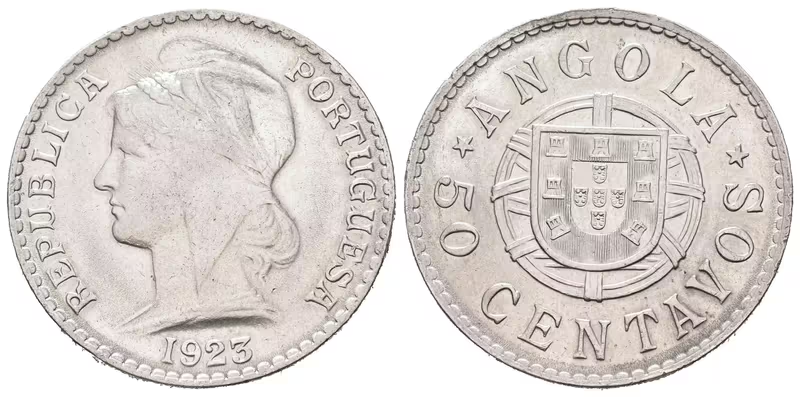
- Code: SPORTAN-F1923
Portugalská Angola, 50 Centavo 1923
Portugalská Angola, republika (1951 - 1975) 50 Centavos 1923, KM.65, velmi pěkná zachovalost, zbytky lesku, rysky a hranky
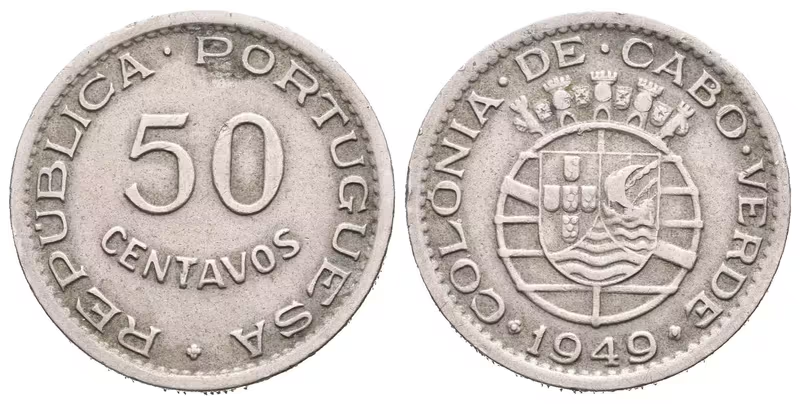
Skladem 1 ks - Code: SPORTKA-F1949
Kapverdské ostrovy, 50 Centavo 1949
Portugalské Kapverdské ostrovy, republika (1910 - 1975) 50 Centavos 1949, KM.6, patina, drobné rysky
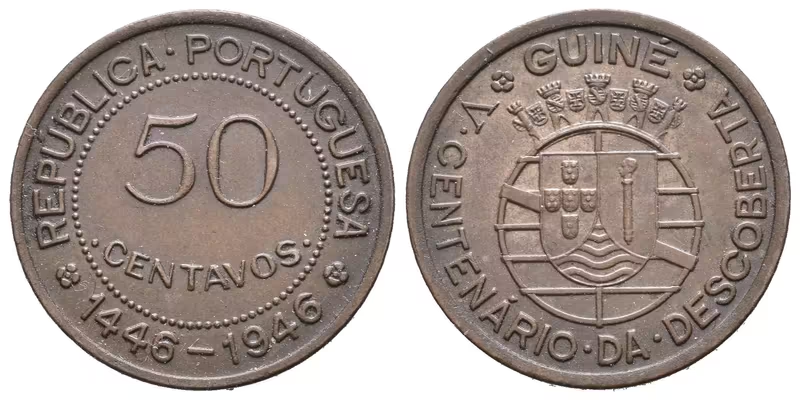
Skladem 2 ks - Code: SPORTGU-F1946
Portugalská Guinea, 50 Centavo 1946
Portugalská Guinea (Guinea-Bissau), republika (1910 - 1975) 50 Centavos 1946 - K 500. výročí objevení, KM.6, krásná zachovalost, patina
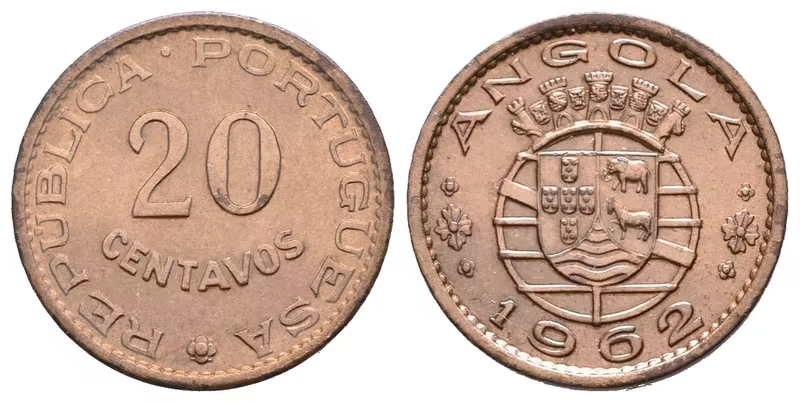
Skladem 1 ks - Code: SPORTAN-G1962
Portugalská Angola, 20 Centavo 1962
Portugalská Angola, republika (1951 - 1975) 20 Centavos 1962, KM.78, krásná zachovalost, lakováno
Skladem 1 ks