Square-frame Strike (Čtyřráz)
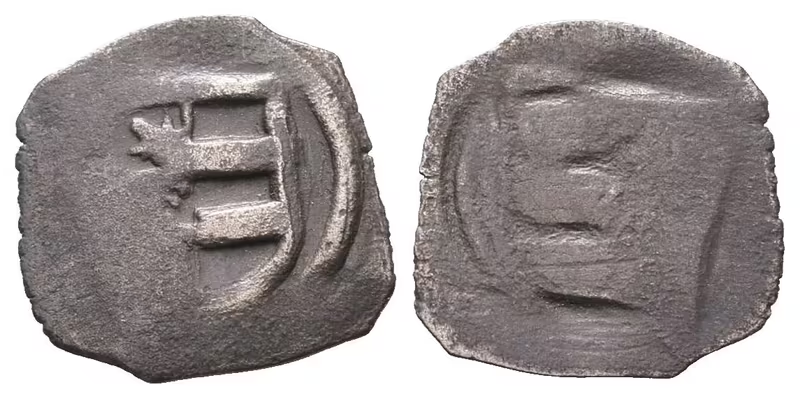
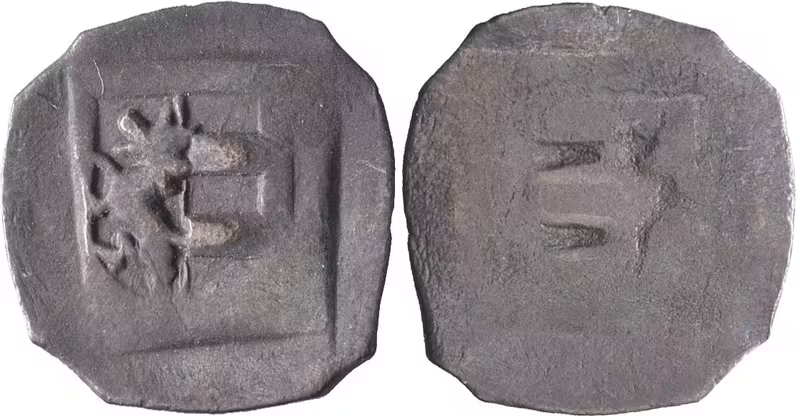
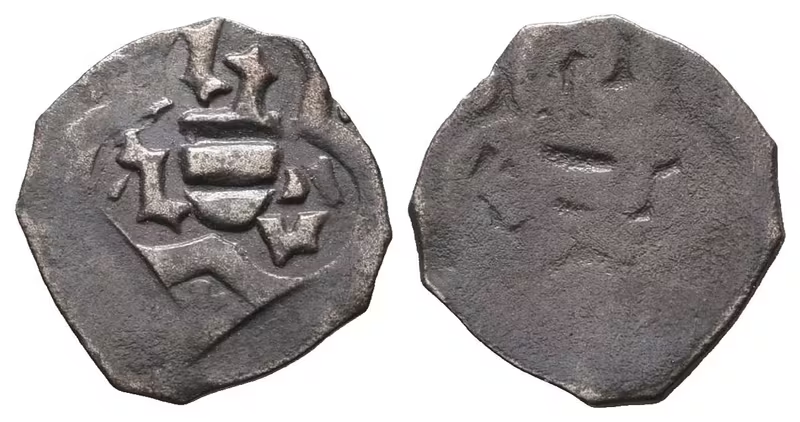
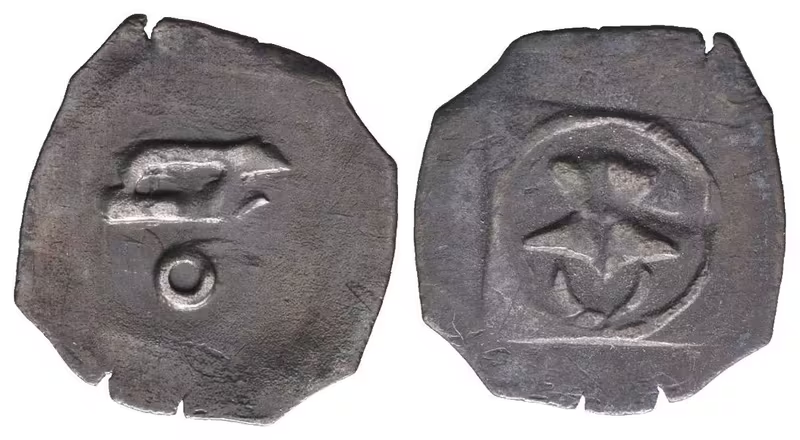
The čtyřráz (Latin quadratum supercussum) is a square frame within a circular border frequently found on small silver strikes of the 14th and 15th centuries. It arose from the hammering of an originally square blank into a circular shape during the manufacturing process of medieval coins, creating a characteristic square impression within the round coin.
The čtyřráz arose as a technological consequence of the medieval minting process, when metal sheets were prepared in square shapes and only subsequently hammered into the circular form suitable for striking. This technique was common in the 14th and 15th centuries, when medieval mints used relatively simple tools and procedures for preparing the coin blanks. The čtyřráz appeared above all on small silver coins such as hellers, pfennigs and small pennies, where this technological feature did not impair the coin's function and even became one of its characteristic marks. In some cases the čtyřráz was even deliberately emphasised as a decorative element or a recognition mark of a particular mint. It occurred most often on Czech, Moravian and Silesian coins, where it became a typical feature of regional coinage. In the course of time, with the development of minting technologies and the introduction of more precise tools, the čtyřráz began to disappear, and in the 16th century it was rather an exceptional phenomenon than a common characteristic of coins.
History
From a technical perspective the čtyřráz arose by inserting a square metal sheet between the dies and hammering it with successive blows into the circular shape corresponding to the size of the dies. During this process the four corners of the original square remained visible as lighter or darker lines forming a square frame within the round coin. This effect was especially pronounced on thin silver sheets, where the material was hammered evenly and the čtyřráz formed a clearly defined geometric pattern. For medieval mintmasters the čtyřráz represented a practical solution that allowed efficient use of metal material while preserving the standard round shape of the coins. Coins with a čtyřráz are today sought after by collectors precisely because of their characteristic appearance and historical value as evidence of medieval production techniques. For numismatists the study of the čtyřráz provides important information on the technological practices of individual mints and periods. Analysis of the way the čtyřráz was executed can help in determining the origin and dating of medieval coins, since different mints used slightly different techniques and tools. The čtyřráz thus represents one of many technical details that make medieval coinage a fascinating field of coin study.
In our auction and shop
- Code: MCSS-1429
Salzburg, Fenik se čtyřrázem
Salzburg - biskupství, Johann II. von Reisberg (1429 - 1444) Pfennig se čtyřrázem, CNA A 55, pěkná zachovalost a patina
Skladem 1 ks - Code: MCSS-1429.2
Salzburg, Fenik se čtyřrázem
Salzburg - biskupství, Johann II. von Reisberg (1429 - 1444) Pfennig se čtyřrázem, CNA A 55, pěkná zachovalost a patina
Skladem 1 ks - Code: NALEU-1407
Hals - Leuchtenberg, Fenik se čtyřrázem
lantkrabě Johann III. (1407 - 1443) Pfennig se čtyřrázem, pod. Friedl 45 a-d, CNA F d 7 pěkná zachovalost a patina_R!
Skladem 1 ks - Code: NABAVLA-1393
Bavorsko - Landshut, Fenik se čtyřrázem
Bavorsko - Landshut, Jindřich IV. (1393 - 1450) Pfennig se čtyřrázem, minc. Landshut, Rad.48, pěkná zachovalost, patina, ned.
Skladem 1 ks