Eggenbergs
The Eggenbergs were a significant noble family of Austrian origin who in the 17th century ranked among the most powerful families of the Habsburg Monarchy. The family produced imperial chancellors, diplomats and military commanders, attained the ducal title and the Czech princely rank.
The Eggenberg family originated in Styria, where they had owned Ehrenberg Castle from the 13th century. The rise of the family began with Balthasar of Eggenberg, who served Archduke Charles of Styria. His son Hans Ulrich of Eggenberg became the closest adviser to Ferdinand II and the de facto ruler of the Habsburg Monarchy. In 1623 he was elevated to the rank of imperial prince, and in 1625 acquired the Duchy of Krumlov in southern Bohemia after the extinction of the Rosenbergs.
Hans Ulrich of Eggenberg was the chief architect of the re-Catholicisation of the Czech lands after the Battle of White Mountain. As supreme court councillor and privy councillor he directed imperial policy during the Thirty Years' War. He negotiated the alliance with Spain and Bavaria and organised Wallenstein's assassination in Cheb in 1634. For his services he obtained vast estates, including Český Krumlov, which he rebuilt as a baroque residence. In 1628 he gained the Czech princely title with the right to sit at the provincial diet.
History
After Hans Ulrich's death in 1634 his son Johann Anton I of Eggenberg continued the family's politics. He held the office of imperial privy councillor and chamberlain. His son Johann Christian I of Eggenberg was the last male member of the family. He died in 1710 without male heirs. The Eggenberg estate was inherited by his sister Marie Ernestine, married to Adam Franz of Schwarzenberg, by which the Krumlov estate passed to the Schwarzenbergs.
The Eggenbergs left a marked imprint on architecture and the arts. They rebuilt the chateau in Český Krumlov as a baroque residence with a unique theatre and gardens. The Eggenberg Palace in Graz, with allegorical paintings of the planets, ranks among the high points of baroque architecture. The family were patrons of the arts, and their picture collections and library were among the most important in the monarchy. The Eggenberg cultural heritage forms part of the UNESCO World Heritage to this day.
Eggenberg coinage
In 1622 the Eggenbergs obtained from Emperor Ferdinand II the right to strike their own coins for the Duchy of Krumlov. The Krumlov mint operated from 1622 to 1696 and struck gold ducats and multiple ducats, as well as silver thalers, half thalers and quarter thalers. The coins bore the duke's portrait, the Eggenberg coat of arms with three ravens' heads and Latin inscriptions with the princely titulature. The quality of Eggenberg strikes was exceptionally high; they ranked among the most artistically accomplished coins of their era.
Hans Ulrich of Eggenberg struck representative ten-ducat coins and commemorative thalers for important events. His son Johann Anton continued to mint high-quality coins with his own portrait. Eggenberg coins were struck in accordance with the imperial coinage ordinance, with a high content of precious metal. The mint employed leading engravers from Vienna and Prague. After the extinction of the family the Schwarzenbergs took over the minting right, but the quality of strikes never again reached the Eggenberg level. Today Eggenberg coins are rare and highly prized by collectors.
In our auction and shop
- Code: ZD-2019CKRU
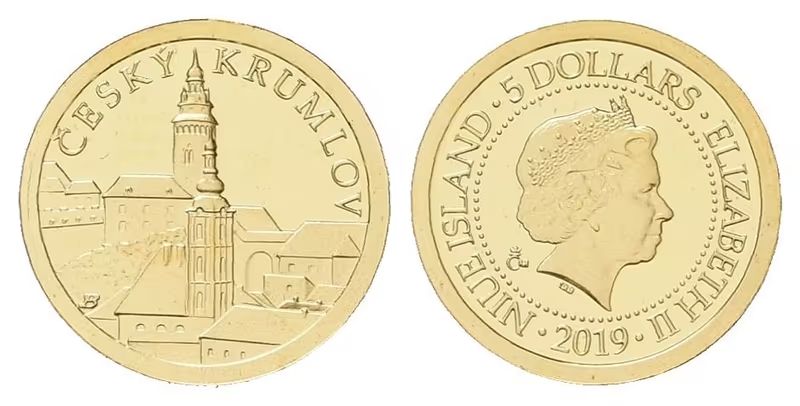
Zlatá mince Český Krumlov - dobová pohlednice
Niue 5 Dollars 2019 (Petra Brodská) - Zlatá mince Český Krumlov - Hrad a zámek v dobové pohlednici Au 0,9999, 11 mm (0,5 g), náklad 1000 ks, PROOF V minulosti si Český Krumlov za své sídlo zvolila celá řada velkých šlechtických rodů – Vítkovci, pánové z…
- Code: RALUK-MINC7
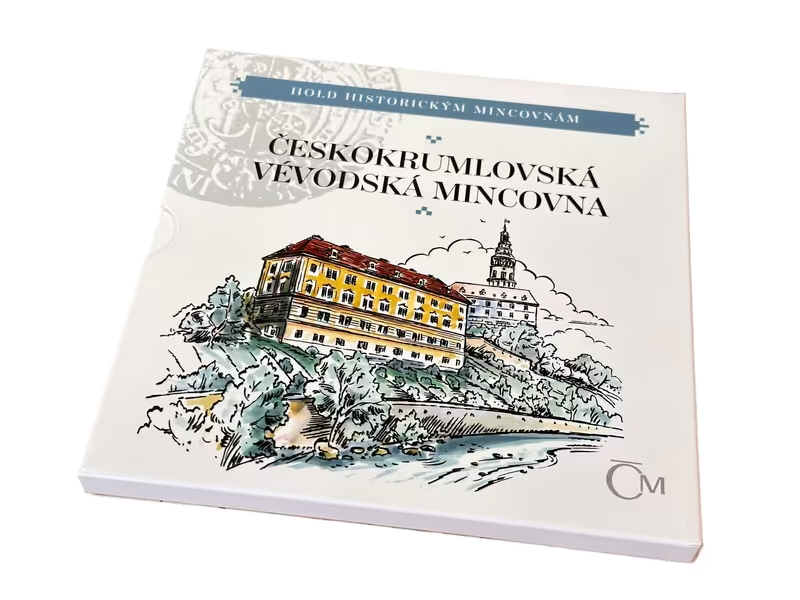
Lukáš Jan - Českokrumlovská vévodská mincovna
Lukáš Jan (1944 - ) AR Medaile b.l. (2013) - replika českokrumlovského tolaru Jana Jindřicha z Eggenberga z cyklu Hold historickým mincovnám/ Českokrumlovská vévodská mincovna Ag 0,999, 37 mm (31,1 g), provedení BK, kapsle, papírový přebal komisní prodej…
- Code: XB-ZALO
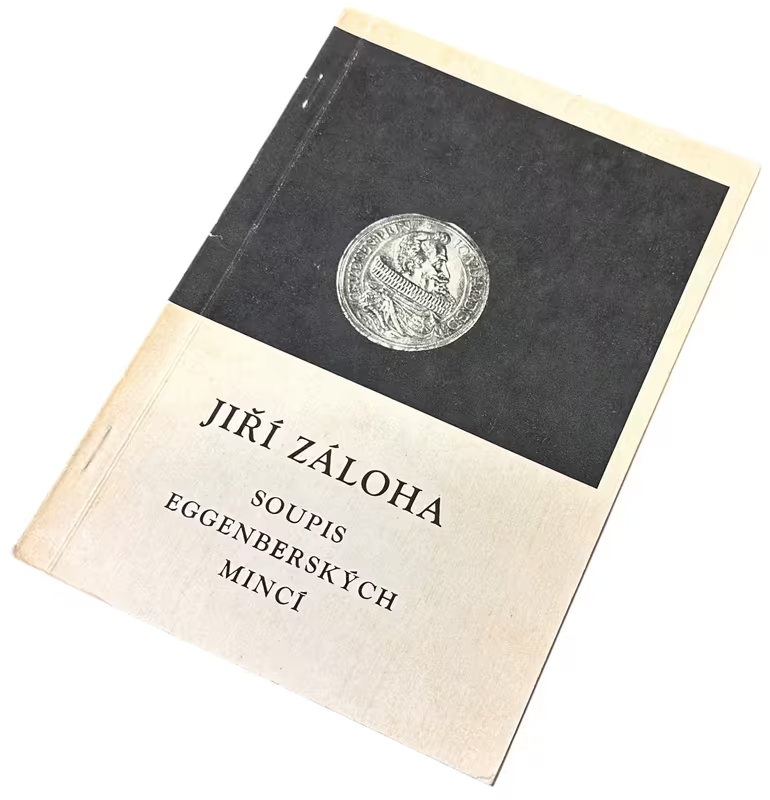
Soupis Eggenberských mincí
Záloha, Jiří Soupis Eggenberských mincí 1629 - 1688 České Budějovice 1969, 65 stran a vyobrazení, brožované