Charles II Eugene
Charles II Eugene was Duke of Württemberg who reigned from 1737 to 1793, an absolutist ruler renowned for the luxury of his court and his conflicted relationship with the provincial estates. In numismatics Charles II Eugene represents a controversial figure whose extensive coinage, from conventional thalers to prestigious gold ducats, financed one of the…
Charles Eugene was born on 11 February 1728 in Brussels as the eldest son of Duke Charles Alexander of Württemberg, who converted to Catholicism and served the emperor. After his father's death in 1737 he became duke at the age of nine, with regency carried out by relatives until he came of age in 1744. The young duke received his education at the military academy in Berlin under the supervision of Frederick the Great, which shaped his authoritarian style of rule. His marriage to Elizabeth Frederica of Brandenburg-Bayreuth in 1748 was politically motivated and soon collapsed.
The reign of Charles Eugene was marked by constant conflicts with the provincial estates over finances and absolutist claims. The duke maintained a court of more than 2,000 people, built the Solitude Palace, enlarged Ludwigsburg and founded the famous Karlsschule. Charles II Eugene sought to raise Stuttgart to a European cultural metropolis: he engaged eminent artists, founded a ballet school and supported the sciences. His court, however, consumed most of the state's revenues, leading to repeated financial crises and conflicts with the Protestant estates.
History
The Seven Years' War brought heavy trials to the duchy: the Württemberg army fought alongside Austria against Prussia, and the country was repeatedly plundered. Charles Eugene used the war to strengthen his absolute power, ignored the provincial diet and ruled by decree. The estates appealed to the imperial court, which in 1770 limited the duke's powers. Charles Eugene had to accept constitutional restrictions, dismiss part of his court and reduce expenditure.
The last decade of his reign brought partial reconciliation: the ageing duke turned to Enlightenment reforms and supported education and economic development. His relationship with Franziska von Hohenheim, whom he later took as his wife, brought a more human dimension to his rule. Charles Eugene died on 24 October 1793 at Hohenheim Palace without legitimate heirs. His brothers Louis Eugene and Frederick Eugene inherited the duchy in turn. Despite his controversial reign, Charles Eugene left a significant cultural legacy, including an extensive numismatic collection.
Coinage policy and strikings
Charles's coinage was extensive and costly, reflecting the duke's ambitions. The Stuttgart mint produced conventional thalers, gold ducats and carolines in above-standard quantities. The design of Württemberg coins emphasised ducal power: Charles Eugene in a general's uniform with orders, the Württemberg arms with crown and Golden Fleece.
Technically the Stuttgart mint was among the most modern: hydraulic presses, with steam power from 1780. The quality of strikings was high, especially commemorative medals for court occasions. Charles Eugene, however, repeatedly manipulated the precious metal content to raise revenue, which damaged confidence in the Württemberg currency. Total production exceeded 5 million thalers, a significant share of which financed the duke's luxurious court.
In our auction and shop
- Code: RX-Z-007
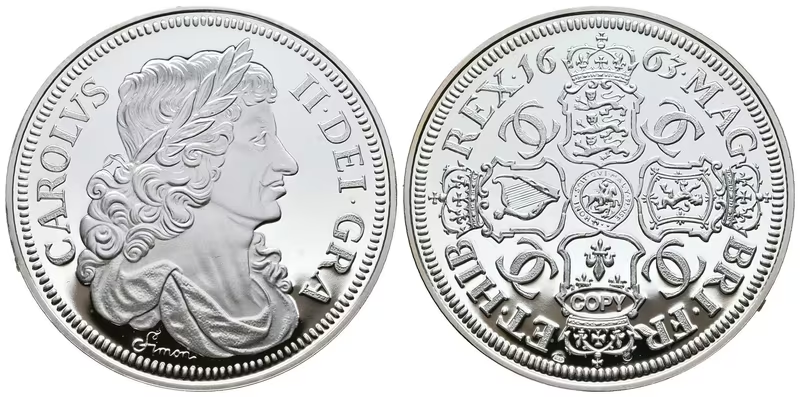
Velká Británie, Crown 1663 - Portrét Karla II., Petition Crown Thomase Simona, replika
Království Anglie - Karel II. (1660-1685) Crown 1663 - Portrét Karla II., Petition Crown Thomase Simona Ag (.925), 40 mm (20 g), v kapsli. Stav mince odpovídá fotografii.
Skladem 1 ks - Code: FA-235D
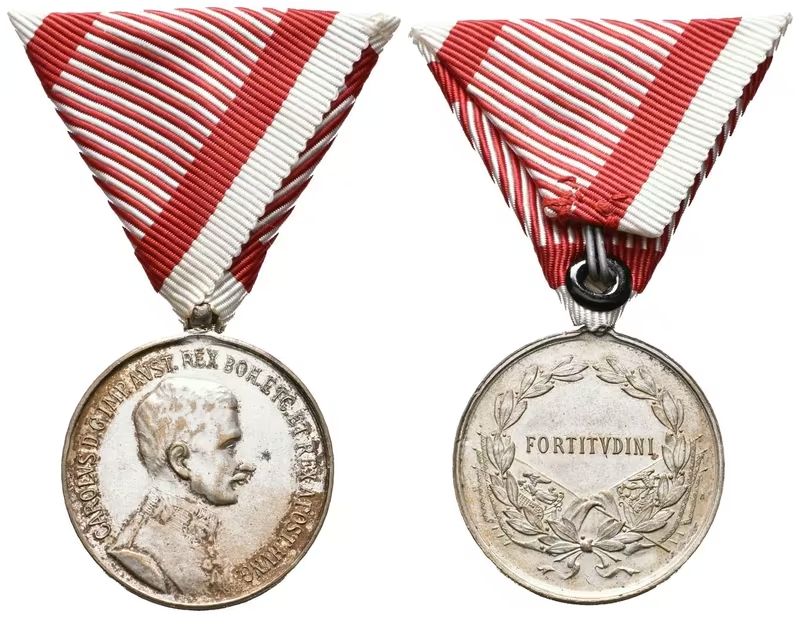
Medaile za statečnost, II. třída, postříbřená
Rakousko - Uhersko / Rakouské císařství Medaile za statečnost, stříbrná medaile, II. třída, IX. vydání 1917 - 1918, Karel, válečný kov stříbřený/pocínovaný, nesignováno, Marko 235d Pěkná zachovalost, patina, zbytky lesku, drobné rysky
Skladem 1 ks - Code: 68092
Rudolf Kremlička
autor Karel Srp Obrazová monografie významného českého malíře (1886–1932), který byl jedním z hlavních představitelů moderního českého umění. V roce 1918 se zúčastnil první výstavy skupiny Tvrdošíjní, byl především vynikajícím portrétistou, ale i…
Skladem 3 ks - Code: RG-ZTOL1
Replika - Historický tolar - Karel II. 1717
Replika - Historický tolar - Karel II. 1717 Ag 999/1000 20 g Replika Tolar