Frosted relief
Frosted relief is a surface treatment of the raised parts of proof coins and medals, giving them a finely satin, "velvety" matt appearance. In combination with a highly polished mirror field, it creates a striking contrast through which the motif becomes more readable and the overall impression looks more luxurious.
Frosted relief is connected with the development of top-tier minting technologies, which began to gain wider use for representative and collector mintages. Proof coins originated as "sample" or exceptionally high-quality pieces, in which emphasis was placed on perfection of detail, sharpness of edges and a flawless surface. In order to set the motif optically apart from the background, mints sought ways to create a contrast between the field and the relief. Precisely here the frosting treatment of the raised surfaces was applied, while the field was polished to a mirror gloss.
In practice the frosting procedures evolved over time. In earlier periods, proof mintages often exhibited rather a natural contrast given by the quality of polishing and the freshness of the dies; later it became more common to work deliberately with differing textures. Decisive was the development of tools and techniques for treating the dies: mints perfected ways of achieving a stable, repeatable effect and of maintaining it across an entire run. In modern times, frosted relief has become one of the typical signs of proof execution, since at a glance it distinguishes the finest mintage both from ordinary circulation and from other collector finishes.
History
In specialised usage the term is often also described in English as frosted relief or frosting. In the Czech context, alongside "frosted relief", expressions such as "frosted motif" or "frosting of the relief" are also used, depending on whether the technique or the resulting appearance is being discussed. The essential thing is that this is not a random "hazy" surface, but a deliberately created fine microtexture that scatters light and creates a satin impression.
Frosted relief is produced by treating the surface of the die in the areas that are to form the raised motif after striking. The mint may use fine blasting, chemical frosting or other controlled methods that create a microscopically rough surface. The field of the die, by contrast, is precisely polished so that after striking it behaves like a mirror. In striking proof coins, carefully prepared planchets and higher standards of inspection are additionally used, so that the contrast stands out without scratches or marks.
How it is made and how to recognise it
The result is the typical "mirror field + matt motif" effect. In practice you can recognise it by the fact that when tilting the coin, the field strongly reflects the surroundings, while the raised parts appear lighter, finely grainy and do not reflect the image. The contrast tends to be most pronounced on fresh pieces; with some issues it may weaken over time, because the frosting of the die wears with use and the relief begins to shine more than on the first strikes.
Frosted relief is popular also because it enhances the legibility of detail (hair, textiles, fine lines) and emphasises the modelling of the motif. In coin descriptions it is therefore often listed as part of the execution alongside the designation proof or "polished mintage". This is not a universal rule, however: there are proof coins without prominent frosting and, conversely, coins of other finishes that may have partially frosted elements. It always depends on the specific issue and the technology of the mint.
In our auction and shop
- Code: RG-2020SLIK
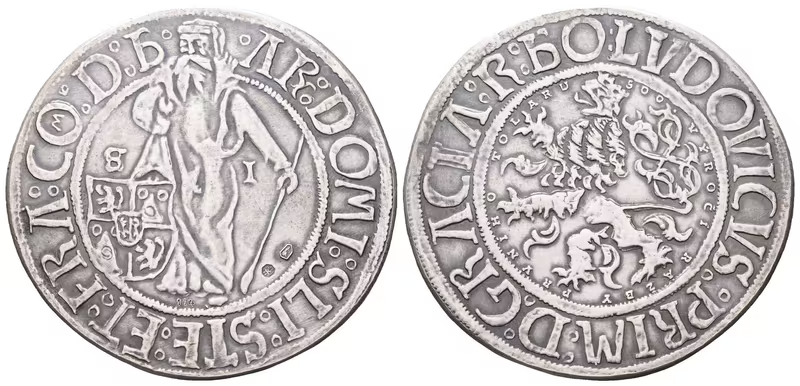
AR Medaile 2020 - Replika Šlikovského Tolaru 1520
Česká republika (1993 - ) AR Medaile 2020 - K 500. Výročí ražby prvního tolaru. Replika Jáchymovského tolaru Štěpána a Františka s titulem krále Ludvíka Jagelonského Ag 0,999, 40 mm (28 g), puncováno, značeno, číslováno "174", matovaný povrch. Bez etue a…
Skladem 1 ks - Code: RG-2020SLIK.2
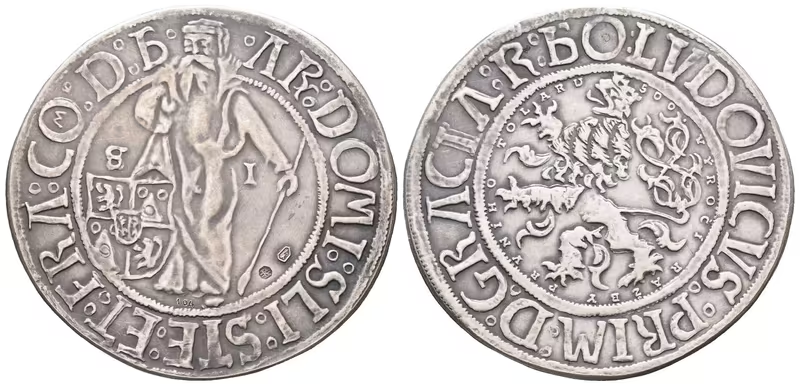
AR Medaile 2020 - Replika Šlikovského Tolaru 1520
Česká republika (1993 - ) AR Medaile 2020 - K 500. Výročí ražby prvního tolaru. Replika Jáchymovského tolaru Štěpána a Františka s titulem krále Ludvíka Jagelonského Ag 0,999, 40 mm (28 g), puncováno, značeno, číslováno "104", matovaný povrch. Bez etue a…
Skladem 1 ks - Code: MCZS1994-FIBEX
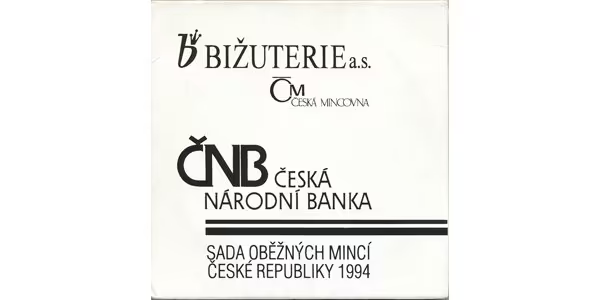
Ročníková sada mincí 1994-Fibex
Česká republika, 1993 - Ročníková sada mincí 1994 - u příležitosti účasti České mincovny na veletrhu Fibex v Brně, matované provedení 10, 20 a 50 haléře. komisní prodej - lehce poškozený papírový přebal
Skladem 1 ks - Code: Z98J-1915TECKA
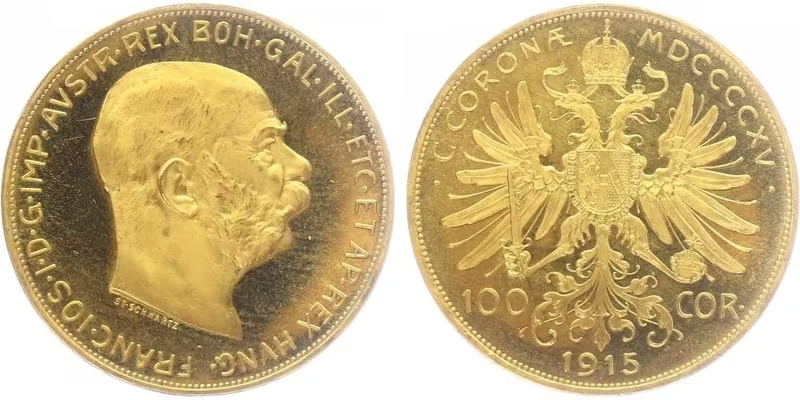
100 Koruna 1915 - podpis ST. SCHWARTZ, stará ražba
František Josef I. (1848 - 1916) 100 Koruna 1915 - podpis medailéra s tečkou ST. SCHWARTZ, stará ražba z leštěných razidel, Ves. 11, ilustrační foto Jedná se o mince ze sbírky a majetku rakouské šlechtické rodiny, která byla vytvořena patrně v období…