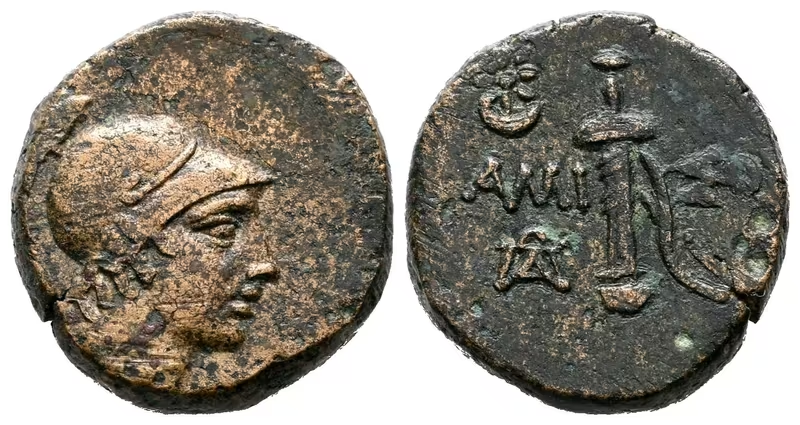
Mithradates
Mithradates — a dynasty of Pontic kings (3rd–1st century BC), especially Mithradates VI Eupator (120–63 BC), the last great opponent of Rome in the east. For numismatics, Mithradatic coins are crucial as a record of the Hellenistic royal cult and propaganda, depicting the ruler as a new Alexander or Dionysus.
Mithradates VI Eupator created an elaborate royal cult combining Persian, Greek and Anatolian elements. Mithradatic propaganda presented the king as the liberator of the Greeks from Roman rule, a new Alexander, an incarnation of Dionysus and an envoy of Mithras. He claimed divine descent from the Achaemenids and the Seleucids. He commanded 22 languages and was immune to poisons thanks to mithridatisation.
The coin iconography reflected this syncretic cult. A portrait with a lion skin as Heracles, with a radiate crown as Helios, with an ivy wreath as Dionysus. Pegasus symbolised the Persian heritage, the star and crescent the Pontic identity. Tetradrachms with the idealised portrait spread the cult throughout Asia Minor and the Black Sea region.
Mithradates and the royal cult
The Mithradatic Wars (88–63 BC) saw the massive striking of propaganda coins. Cistophoroi with Dionysus for the Greek cities, gold staters with Athena for the mercenaries. After the massacre of 80,000 Romans in Asia in 88 BC, "liberator" issues were struck. Pompey's victories in 63 BC ended the Mithradatic cult. His son Pharnaces briefly revived the tradition.
Mithradatic coins are among the artistic high points of Hellenistic numismatics. The portraits are both realistic and idealised, with high relief and detailed workmanship. Dated strikings according to the Pontic era (beginning 297 BC). Extensive production — over 200 types. The mints in Sinope, Amisus and the Kingdom controlled Black Sea trade.
Numismatic legacy
Iconographic influence on the Bosporan Kingdom, on Armenian and Parthian coins. The Mithradatic portrait style influenced Roman republican portraits. Emperor Nero drew on the Mithradatic solar symbolism. Modern Turkey regards Mithradates as a national hero — motifs appear on contemporary coins.
In our auction and shop
- Code: BB-HGC0007Recommended
Mithradates VI. Eupator, Pontos, AE, Amisos, HGC 7,241
Mithradates VI. Eupator (120 - 63 př.n.l.), Pontos mincovna Amisos, Ares s helmou doprava / meč v toulci, HGC 7,241 ,
Skladem 1 ks