Denomination
A denomination, or face value, is the numerical value indicated on a coin or banknote, determining its legal purchasing power. The denomination need not correspond to the actual value of the metal or paper from which the means of payment is made.
The concept of the denomination arose with the first coins in the 7th century BC in Lydia. Early coins did not have a marked value - their denomination was determined by the weight and fineness of the metal. Greek city-states struck standardised denominations - obol, drachma, didrachma, tetradrachma in fixed ratios. The Roman system of as-semis-quadrans created the first comprehensive denomination structure. Mediaeval coinage was chaotic - each lordship struck its own denominations with often changing values. The denarius, groschen and thaler gradually created internationally recognised denominations.
The modern period brought standardisation of denominations. Decimal systems simplified conversions - the pound/shilling/penny was replaced by the pound/100 pence. The franc/100 centimes became a model. Paper money made possible high denominations impossible in metal - million, billion. The inflation of the 20th century created absurd denominations - the German mark in 1923 reached 100 trillion, the Hungarian pengo in 1946 even 10^21. Denominations (the striking out of zeros) reset denomination systems.
History
Current denomination systems are optimised for practical use. The psychology of denominations influences consumer behaviour - prices 9.99 instead of 10. Electronic payments make physical denominations less important. Cryptocurrencies work with decimal fractions - 0.0001 of a bitcoin. Some countries experiment with abolishing the smallest denominations because of inflation. The highest denominations disappear due to electronic transfers. The future may bring the end of physical denominations.
The face value determines the legal purchasing power of a coin regardless of the market value of the metal. Modern circulation coins have a denomination higher than the value of the metal (fiduciary coins). Gold bullion coins have a denomination lower than the value of the gold - the American Eagle has a denomination of 50 dollars when the value of the gold exceeds 2,000 dollars. The denomination ensures the legal status of legal tender.
Denominations in coinage
The structure of denominations creates a functional monetary system. A typical series: 1, 2, 5 units in each order (1, 2, 5, 10, 20, 50, 100...). Some systems use 1, 2.5, 5 or 1, 3, 5. Optimal denominations minimise the number of items of legal tender in transactions. Special denominations - quarter dollar (25 cents), 2 euros - facilitate specific payments. Commemorative coins have unusual denominations - 10 euros, 200 koruna. Historical denominations survive in idioms - "not a vindra" (Viennese pfennig), "not a rizek" (Reich thaler). The denomination is a fundamental characteristic of every coin, determining its place in the monetary system.
In our auction and shop
- Code: BF001-0029
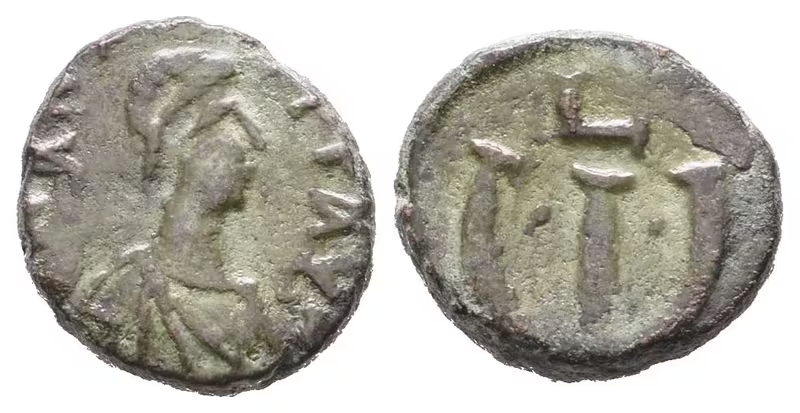
Anastasius I., pentanummium, Konstantinopol, Sear 29
Anastasius I. (491-518) mincovna Konstantinopol, císař doprava / nominál, Sear 29
Skladem 1 ks - Code: BF004-0375.1
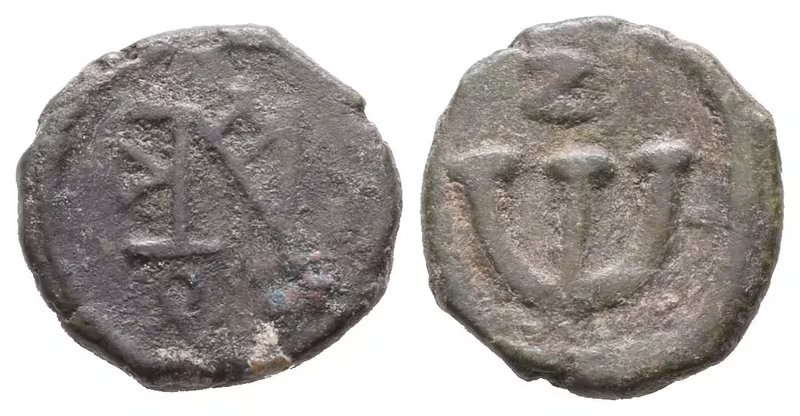
Justin II. a Sophia, pentanummium, Konstantinopol, Sear 375
Justin II a Sophia (565 - 578) mincovna Konstantinopol, monogram / nominál, Sear 375
Skladem 1 ks - Code: BUSZGA140
USA - Georgia, 5 Cent 1863
USA - Georgia Augusta, Bank of Augusta, 5 Cents 1. 1. 1863, vydání vytištěné na nevydané archy obligací 3 Dollars Bank of Augusta , krásná zachovalost, vzácnější nominál, Haxby GA-30-G140 0-/AU-
Skladem 1 ks - Code: BUSZGA32
USA - Georgia, 50 Dollar 1854
USA - Georgia Augusta, Mechanics Bank of Augusta, 50 Dollars 1. 1. 1854, velmi pěkná zachovalost, nejvyšší nominál! Haxby GA-60-G32 2/VF
Skladem 1 ks