Otto III
Otto III (980–1002) was the Holy Roman Emperor who reigned from 996 to 1002, son of Otto II and the Byzantine princess Theophanu, who became famous for his ambitious vision of restoring the Roman Empire ("renovatio imperii") and his attempt to unite the Western and Eastern Christendom, but who died at the age of only 22. Otto III is important in numismati…
Otto was born in June or July 980 as the only son of Emperor Otto II and the Byzantine princess Theophanu. His mother's Eastern Roman origin exposed him to Byzantine cultural influences from early childhood and shaped his later vision of a universal Christian empire uniting West and East. He was the last emperor of the direct Ottonian line.
His accession to the throne in 983 at the age of only three, after the sudden death of his father, created a regency crisis. Real power was exercised by women — first his mother Theophanu (983–991) and then his grandmother Saint Adelaide (991–994). This period was marked by Slavic uprisings on the eastern frontiers and revolts by German dukes against the child emperor.
Otto was educated by the finest teachers of his day, in particular Gerbert of Aurillac (the later pope Sylvester II), who taught him mathematics, astronomy, philosophy and rhetoric. Under Gerbert's influence Otto acquired a wide classical education and a vision of restoring ancient Roman glory in a Christian context.
His personal assumption of power in 994 at the age of 14 brought a radical change in imperial policy. Otto abandoned the traditional Ottonian orientation towards Germany and decided to move the centre of power to Rome as the legitimate successor of the Roman emperors. This policy provoked opposition from the German nobility.
The first Italian expedition (996–997) led to the imperial coronation in Rome on 21 May 996 by Pope Gregory V. Otto was only 16, making him the youngest Roman emperor in history. At the same time he appointed his teacher Gerbert as pope Sylvester II, thereby creating an ideal partnership for his renovatio imperii.
History
The concept of "renovatio imperii" represented Otto's vision of restoring a universal Christian empire on the foundation of Carolingian and ancient models. The emperor styled himself as a new Constantine or Charlemagne and sought to unite Western and Eastern Christendom under his authority. He adopted Byzantine court ceremonial and oriental titles.
The transfer of the court to Rome in 998 symbolised Otto's orientation towards Mediterranean politics. The emperor left Germany and settled on the Aventine Hill, where he established a Byzantine-style court with oriental rituals. This policy alienated the German nobility and weakened his power in the trans-Alpine lands.
The conflict with the Roman nobility escalated in 998, when the consul Crescentius expelled Otto from Rome and appointed his own antipope. Otto returned with an army, captured the Castel Sant'Angelo and had Crescentius executed. These brutal reprisals further deepened his unpopularity among the Romans.
The second Italian expedition (1000–1002) was to consolidate imperial power in Italy and prepare for an eastern campaign against Byzantium. Otto planned to unite both Roman empires under his rule and to liberate Jerusalem, but these grandiose plans were cut short by his premature death in January 1002, probably from malaria.
The death of Otto III on 23 January 1002 at Paterno near Rome, at the age of 22, ended the Ottonian dynasty and its vision of a universal Christian empire. The German crown passed to Henry II the Saint of the Saxon line, who abandoned Mediterranean policy and returned to the traditional orientation towards central Europe.
Otto III in numismatics
The coins of Otto III document his short but significant reign and reflect Byzantine cultural influences through oriental motifs and style. The portraits of the young emperor combine Western Ottonian traditions with Eastern Roman iconography, which reflects his mixed West-East cultural background and his political ambitions.
Characteristic motifs are the imperial insignia — crown, sceptre and imperial orb — combined with Christian symbols such as the cross and the chi-rho monogram. Some coins depict Otto in Byzantine imperial regalia with a diadem and paludamentum, which documents his orientation towards Eastern Roman models and his vision of uniting both empires.
The Roman coins struck during Otto's Italian expeditions combine Western and Eastern artistic traditions, with an emphasis on imperial universality. The design often includes inscriptions emphasising Otto's titles IMPERATOR AVGVSTVS or OTTO TERTIVS REX, while the quality of the Roman issues reaches a high level befitting the prestigious position of Rome.
Rare are commemorative coins for the imperial coronation of 996 and for various ecclesiastical events linked to Pope Sylvester II. These issues document the cooperation of the emperor and the pope on the renovatio imperii and often contain complex symbolism uniting secular and spiritual power. Otto's coins are valued as documents of the last Ottonian emperor and his grandiose visions.
In our auction and shop
- Code: NADORT-A1000
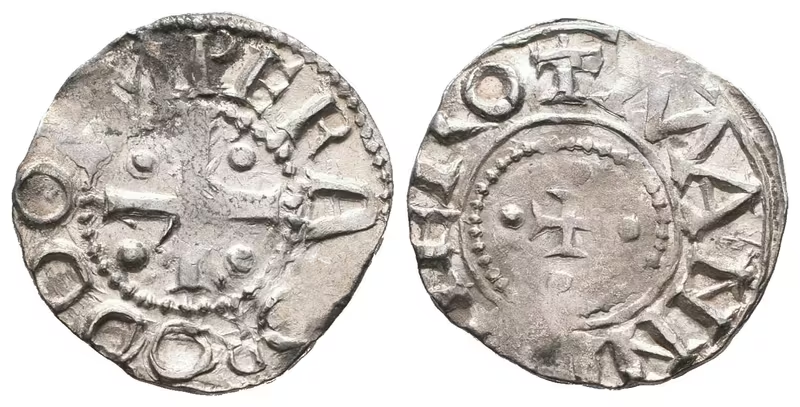
Dortmund, Denár
město Dortmund, Otto III., 983 - 1002 Denár b.l., Kříž se čtyřmi kuličkami v ploše, opis ODDO IMPERATOR / Malý tlapatý kříž, kolem kuličky, opis THEROTMAINI. Berghaus 7, Dannenberg 744, pěkná zachovalost a patina, lehce ned. a zvlněný
Skladem 1 ks - Code: NAMAIN-983
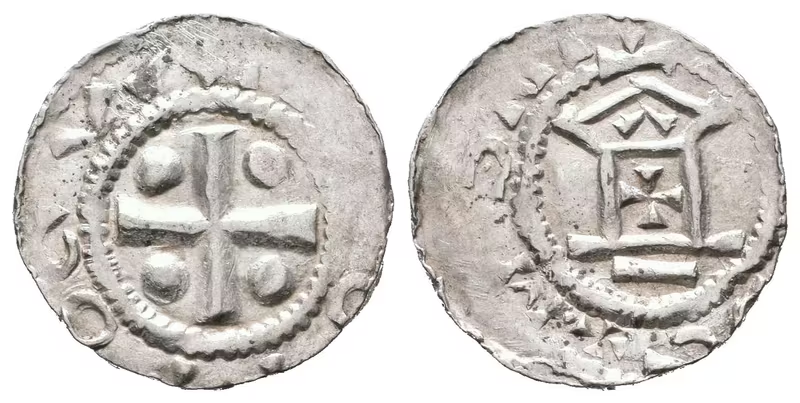
Mohuč, Denár b.l.
Mainz, Otto III. (983 - 1002) Denár b.l., Rovnoramený kříž, tečky mezi rameny, opis +OTTO SVACIM / Kaplice, opis OMOCIACIN, Danneberg 778, Walt.8, pěkná zachovalost, lehce ned. a exc., patina
Skladem 1 ks - Code: NAMAIN-983.1
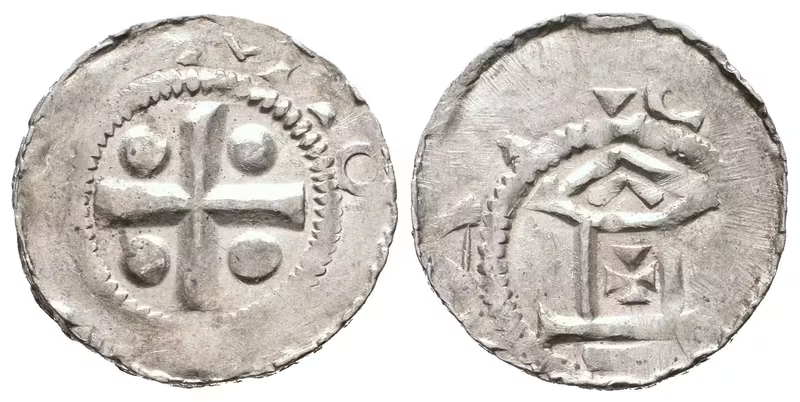
Mohuč, Denár b.l.
Mainz, Otto III. (983 - 1002) Denár b.l., Rovnoramený kříž, tečky mezi rameny, opis +OTTO SVACIM / Kaplice, opis OMOCIACIN, Danneberg 778, Walt.8, pěkná zachovalost, lehce ned. a exc., patina
Skladem 1 ks - Code: NAMAIN-983.2
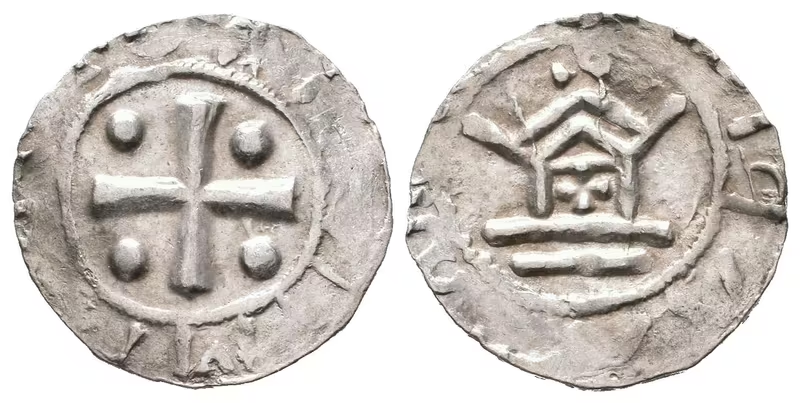
Mohuč, Denár b.l.
Mainz, Otto III. (983 - 1002) Denár b.l., Rovnoramený kříž, tečky mezi rameny, opis +OTTO SVACIM / Kaplice, opis OMOCIACIN, Danneberg 778, Walt.8, pěkná zachovalost, lehce ned. a exc., patina
Skladem 1 ks