Stephen Báthory
Stephen Báthory was Prince of Transylvania and King of Poland reigning from 1576 to 1586, one of the most capable military commanders and reformers of the Polish-Lithuanian Commonwealth. On Polish and Transylvanian coins he appears as a symbol of military strength and political wisdom, and his thaler strikes and trojaks are among the most sought-after num…
Stephen Báthory was born on 27 September 1533 in the Transylvanian Szilágysomlyó into the important Hungarian noble Báthory family. His father Stephen Báthory the Elder was Voivode of Transylvania, and his mother Catherine Telegdi came from the influential Hungarian nobility. The young Stephen received an excellent humanist education at courts in Italy and Vienna, where he studied languages, the art of war and diplomacy. He commanded Hungarian, Latin, German, Italian, and later learned Polish. His youth was marked by the complex political situation of Hungary divided between the Habsburgs and the Ottoman Empire, which taught him to manoeuvre diplomatically between the powers.
Báthory's political rise began with service to the Transylvanian prince John Sigismund Zápolya, whose close adviser and military commander he became. After Zápolya's death in 1571, Stephen Báthory was elected Prince of Transylvania with the support of the Ottoman sultan and the local nobility. During five years of rule in Transylvania he proved his abilities as a statesman - he reorganised the administration, supported religious tolerance among Catholics, Lutherans, Calvinists and Unitarians, and modernised the army on the model of Ottoman infantry. His successful rule in Transylvania built him a reputation as a capable monarch, which spread throughout central Europe.
History
A pivotal moment of Báthory's life came after the death of the Polish king Sigismund II Augustus in 1572, which ended the rule of the Jagiellon dynasty. After the brief interlude of Henry of Valois, who fled Poland for the French throne, the Polish nobility sought a new monarch. Stephen Báthory was elected King of Poland on 15 December 1575 thanks to the support of the middle nobility and the influential chancellor Jan Zamoyski. He had, however, to defeat militarily the Gdańsk patrician Maximilian Habsburg, who also claimed the crown. After the victorious siege of Gdańsk in 1577, Báthory's royal title was universally recognised.
The pinnacle of Báthory's reign was the successful wars against the Muscovite Russia of Ivan the Terrible between 1579 and 1582. The king personally led three campaigns into Livonia, during which he conquered the strategically important fortresses of Polotsk, Velikiye Luki and besieged Pskov. His modern army with infantry armed with arquebuses, mobile artillery and Hungarian light cavalry defeated numerically stronger Russian armies. The Treaty of Yam-Zapolsky of 1582 brought the whole of Livonia to Poland-Lithuania and strengthened the Commonwealth's position as an Eastern European power. Báthory planned a great anti-Turkish crusade in cooperation with the Pope and the Habsburgs, but his sudden death on 12 December 1586 in Grodno at the age of fifty-three thwarted these plans.
Coinage and monetary reforms
Stephen Báthory carried out a significant reform of Polish coinage, which stabilised the currency after the period of debasement under the previous kings. He restored the minting of quality silver thalers on the imperial model and introduced the popular trojaks - three-groschen coins with the royal portrait in Renaissance armour. The royal mints in Kraków, Vilnius, Riga and Olkusz produced coins with uniform precious-metal content and artistically elaborated portraits of the monarch with his typical Hungarian moustache.
Báthory's coins were distinguished by rich symbolism combining Polish, Lithuanian and Transylvanian heraldic elements. On the reverse sides appeared the Polish eagle, the Lithuanian knight Pahonia and the Báthory family coat of arms with the wolf's teeth. Gold ducats struck for diplomatic purposes were among the highest quality European strikes of their time and to this day remain sought-after collector pieces.
In our auction and shop
- Code: XB-1765
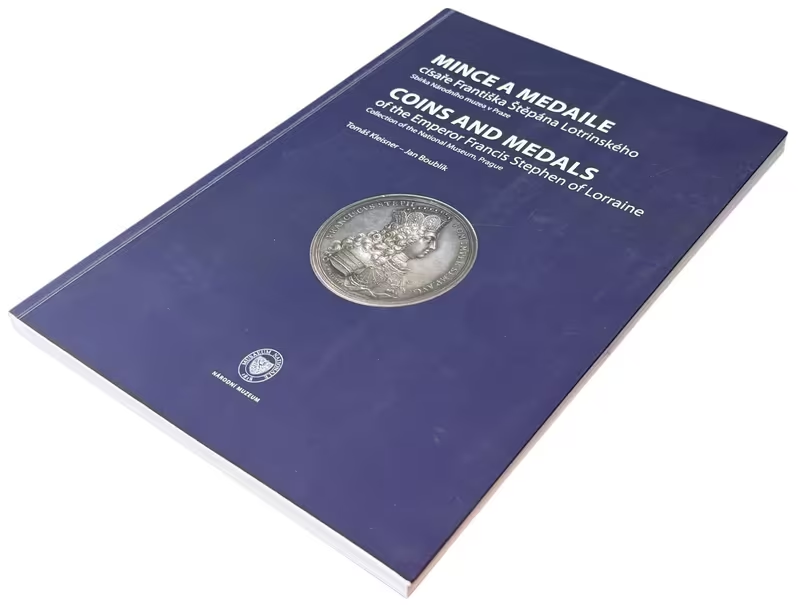
Mince a medaile císaře Františka Štěpána Lotrinského
Kleisner Tomáš, Boublík Jan Mince a medaile císaře Františka Štěpána Lotrinského Praha 2011, 208 stran a mnoho vyobrazení, brožované, jako nové, nep. opotřebovaný přebal
Skladem 1 ks - Code: SFRAMET-1633
Francie - Méty, Tolar 1633
Francie - město Metz 1 Tolar 1633 - Svatý Štěpán, KM.17, velmi pěkná zachovalost, tmavá patina, drobné rysky, naprasklý střížek ražbou (28,05 g)
Skladem 1 ks - Code: RG-1994SLIK
Jáchymovský tolar z doby Štěpána Šlika
AR Medaile 1994 - Replika jáchymovského tolaru z doby Štěpána Šlika z roku 1620, razila Česká mincovna, Ag 0,999, 42 mm (25,7 g), původní etue
- Code: RG-1994SLIK.1
AR Medaile 1994 - Jáchymovský tolar
AR Medaile 1994 - Replika jáchymovského tolaru z doby Štěpána Šlika z roku 1520 Ag 0,999, 42 mm (25,7 g), etue