Thessaloniki
Thessaloniki (often Soluň in Czech) is the second-largest city of Greece and the main centre of Greek Macedonia, lying on the Thermaic Gulf in the Aegean Sea. From Hellenistic times it was an important port and a crossroads of routes, and in the Byzantine era it ranked among the most important cities of the empire.
Thessaloniki was founded around 315 BC by the Macedonian king Cassander, who named the new city after his wife Thessalonike, the half-sister of Alexander the Great. It arose on or near the site of the older settlement of Therma and quickly became a key city of Macedonia thanks to its position by the sea and its connection to the hinterland. Already in the Hellenistic period it was a significant commercial and administrative hub, which attracted inhabitants and capital from a wide region.
After the incorporation of Macedonia into the Roman sphere, Thessaloniki was further strengthened. In 148 BC it became the capital of the Roman province of Macedonia, and its importance was supported by the Via Egnatia, the main road connecting the Adriatic with Byzantium. The city benefited from it as a marketplace, port and transit point between Europe and the eastern Mediterranean. In Roman times urban infrastructure developed, representative buildings arose, and Thessaloniki gradually became one of the liveliest centres of the Balkans.
History
In late antiquity and the early Middle Ages, the Byzantine chapter gained in importance. After Constantinople, Thessaloniki was for a long time one of the most important cities of the Byzantine Empire — economically, strategically and culturally. From this period date a number of monuments of early Christian and Byzantine architecture and mosaics, which today form an exceptional "layer" of the city. In 1988 fifteen early Christian and Byzantine monuments in Thessaloniki were inscribed on the UNESCO World Heritage List, including the Rotunda of Saint George, the city walls and the Church of Saint Demetrius.
The modern era brought further transformations under Ottoman administration and later integration into modern Greece. Thessaloniki retained its role as a port and trading centre and became a prominent university and cultural city. Today's Thessaloniki thus brings together Hellenistic roots, Roman urbanism, Byzantine monumentality and modern urban life in one unbroken historical band.
The city and numismatic context
For numismatics, Thessaloniki is important above all as a minting centre of several epochs. In antiquity, civic strikes arose here, which reflected the standing of the city in Macedonia and in the Roman world. In the Byzantine period, "Thessalonica" also appears as a minting place for some copper issues; in the specialist literature it is usually noted that Byzantine copper minting in the city began only in the 6th century under Justin I and that the operation of the mint was not continuous. This coin-centred trace complements the wider picture of the city as an administrative and military hub which needed to supply circulation with small change.
For the visitor, the iconic symbol of the city is the White Tower on the seafront, while the historical layer can be "read" in individual monuments and quarters. From the perspective of monetary history, Thessaloniki is a typical example of a port city where various currencies and minting traditions met: trade routes brought foreign currency here, and at the same time local issues arose here which bear, in their metal, the name of the city and the changes of state power.
In our auction and shop
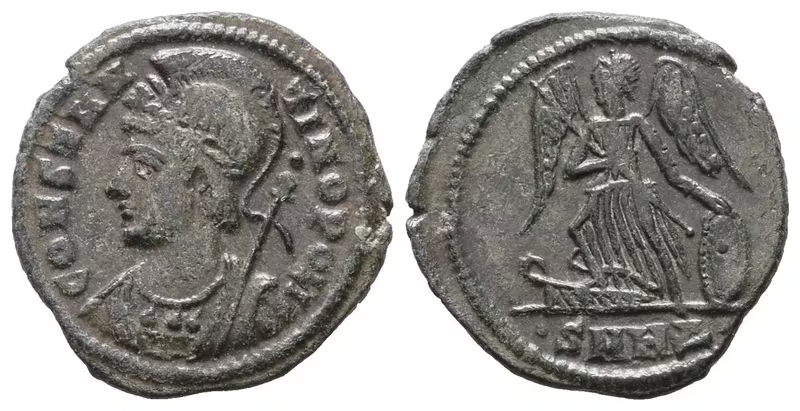
- Code: BE138-0188
Pamětní ražba, follis, Thessalonica, RIC 188
Pamětní ražba mincovna Thessaloniki, poprsí s helmou / Viktorie se štítem, RIC 188
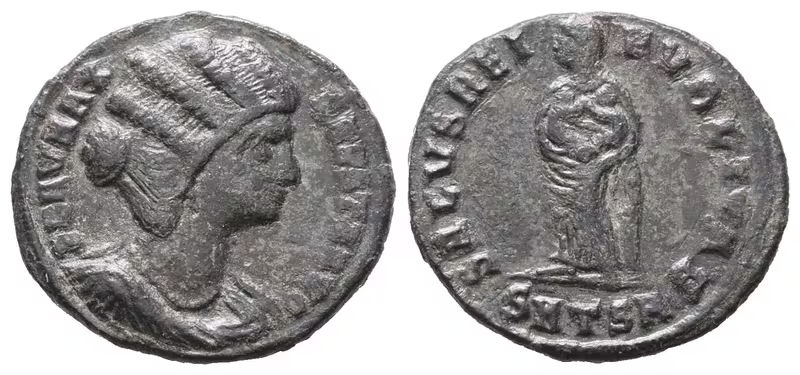
Skladem 1 ks - Code: BE141-0162.1
Fausta, follis, Thessalonica, RIC 162
Fausta (+ 326) mincovna Tessalonica, raženo 325 - 326, stojící Fausta se dvěna dětmi, SALVS REI - PVBLICAE, RIC 162
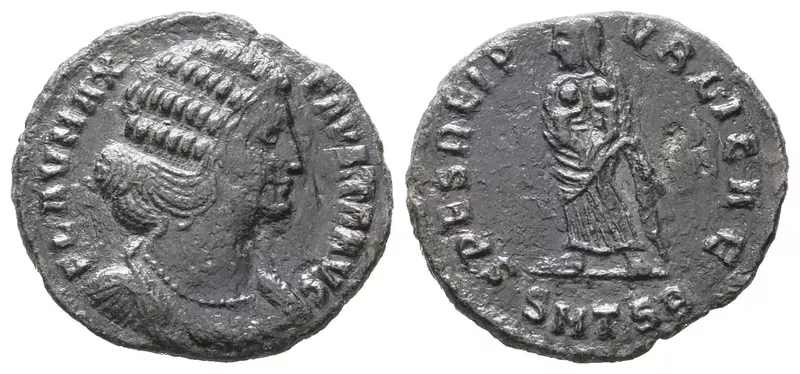
Skladem 1 ks - Code: BE141-0162.2
Fausta, follis, Thessalonica, RIC 162
Fausta (+ 326) mincovna Tessalonica, raženo 325 - 326, stojící Fausta se dvěna dětmi, SALVS REI - PVBLICAE, RIC 162
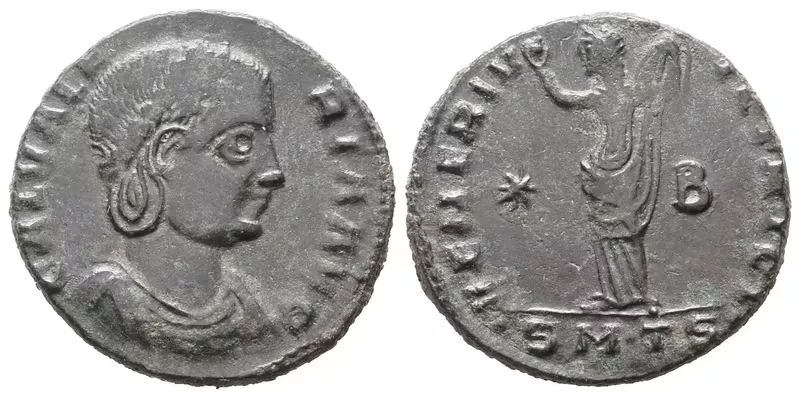
Skladem 1 ks - Code: BE123-0034Recommended
Galeria Valeria, follis, Thessalonica, RIC 34
Galeria Valeria (308 - 314) mincovna Thessalonica, raženo 308 - 310, stojící Venuše s jablkem, hvězda, VENERI V-ICTRICI, RIC 34
Skladem 1 ks