17 Kreuzer
The 17 kreuzer, or seventeen-kreuzer piece, is a silver coin which arose by a change of value of the original fifteen-kreuzer piece. In Habsburg monetary practice this was a denomination whose nominal value was adjusted to 17 kreuzer, while the denomination number on the coin did not have to change immediately, which is an important distinguishing detail…
The 17 kreuzer is closely connected with the development of the fifteen-kreuzer piece under the reign of Leopold I. Originally this was a silver coin in a value of 15 kreuzer with a weight of around 6.404 g. At a time when various kreuzer denominations were used in circulation and the state sought to keep a stable monetary system in operation, conversions and adjustments of value became part of monetary practice. It is precisely for this reason that the sources cite the instruction of 19 September 1695, which changed the value of this denomination to 17 kreuzer, however without changing the denomination number on the coin. In practice this meant that the coin could continue to look 'like a fifteen-kreuzer piece', but in accounting and circulation it was already being reckoned as a seventeen-kreuzer piece.
Such a situation is exceptionally interesting for numismatics, because it shows that the value of a coin is not always merely what is stamped on it. The state could change the tariff (how many kreuzer were counted for the coin) even without an immediate change of dies and design. For the circulation of the time this was a practical solution: it saved the cost of a quick exchange of the entire production and made it possible to react to monetary conditions relatively flexibly. At the same time, however, it placed greater demands on the awareness of the market and on the new tariffs actually asserting themselves in practice.
In the 18th century the 17 kreuzer already appears as a clearly delimited denomination on strikings under the reign of Maria Theresa. In our lands it was struck in the Prague mint, in the years 1751–1755 (mintmaster B. Schaumberger) and 1761–1763 (mintmaster P. Erdmann). For these strikings a weight of 6.12 g is given, which suggests that compared to the older parameters there were adjustments corresponding to the contemporary setting of silver denominations and to the requirements of circulation.
History
The Prague striking of the seventeen-kreuzer piece under Maria Theresa is at the same time a typical example of the centralisation of coinage: in the lands of the Bohemian Crown at this time the striking of important denominations was concentrated in a smaller number of mints, which were easier to control in terms of quality, accounting and metal stocks. The seventeen-kreuzer piece thus became one of the denominations on which one can see well how the state monetarily 'tuned' middle values between small circulating coinage and higher silver coins.
The 17 kreuzer is collector-attractive mainly because of its 'double' nature. On one side stand older coins originally tariffed as 15 kreuzer, which after the instruction of 1695 were counted as 17 kreuzer, without the denomination number on the coin being changed. On the other are the newer Prague strikings of Maria Theresa, where this is already a deliberate seventeen-kreuzer piece with specific years and mintmasters. This combination gives the subject depth: the same value but a different logic of origin.
When determining it is important to follow the ruler, the year, the mint marks and also whether the coin bears a denomination indicated by a number corresponding to the actual value in the given period. With the Prague strikings of Maria Theresa it is an advantage for collectors that the year range is relatively narrow (1751–1755 and 1761–1763), so a clear series can be built. At the same time it holds that this is a circulating silver coin, so state of preservation decides markedly: wear shows first on the highest points of the relief, on the legends and on the fine details of the coat of arms.
How to recognise the 17 kreuzer and why it is of collector interest
The seventeen-kreuzer piece is thus a fine 'study' denomination: it teaches us to read coins not only as metal and image, but also as an instrument of monetary policy. And it is precisely for this reason that it often appears in a well-arranged collection of kreuzer strikings – sometimes as a separate year series, at other times as part of a larger story of the transformations of value and tariffs in the Habsburg currency.
In our auction and shop
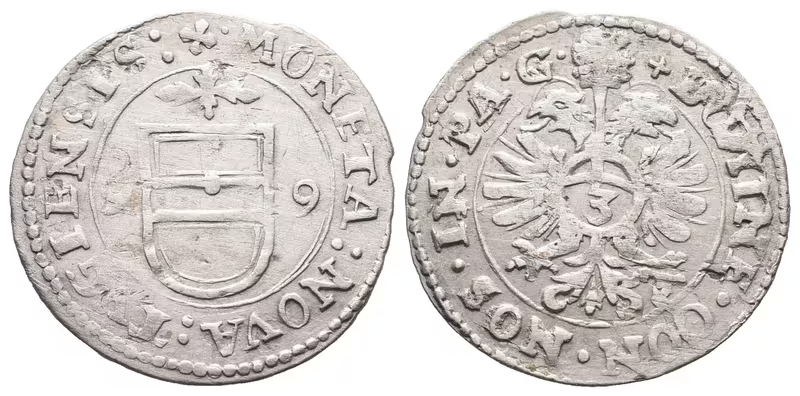
- Code: SSVY-ZUG1599
Švýcarsko-Zug, 3 Krejcar 1599
Švýcarsko, kanton Zug 3 Krejcar 1599, KM.17, zbytky lesku, patina, vady stříže
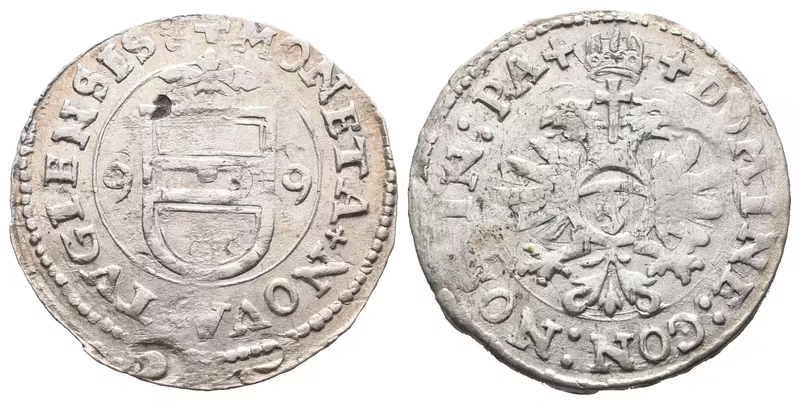
Skladem 1 ks - Code: SSVY-ZUG1599.1
Švýcarsko-Zug, 3 Krejcar 1599
Švýcarsko, kanton Zug 3 Krejcar 1599, KM.17, zbytky lesku, patina, vady stříže
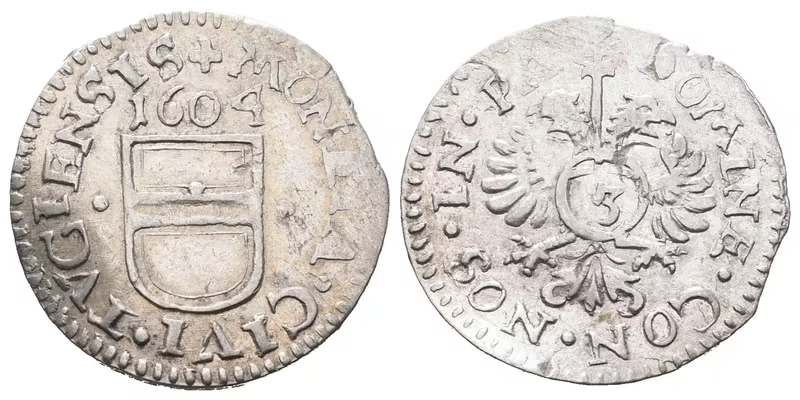
Skladem 1 ks - Code: SSVY-ZUG1604
Švýcarsko-Zug, 3 Krejcar 1604
Švýcarsko, kanton Zug 3 Krejcar 1604, KM.17, patina, zbytky lesku, rysky, koncový střížek
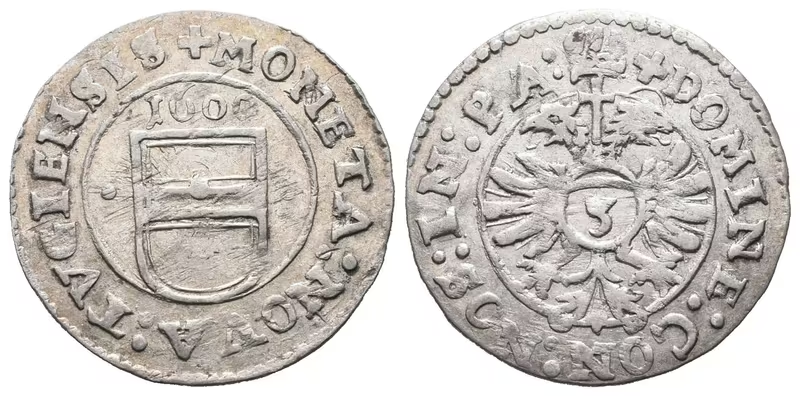
Skladem 1 ks - Code: SSVY-ZUG1600
Švýcarsko-Zug, 3 Krejcar 1600
Švýcarsko, kanton Zug 3 Krejcar 1600, KM.17, zbytky lesku, patina, vady stříže